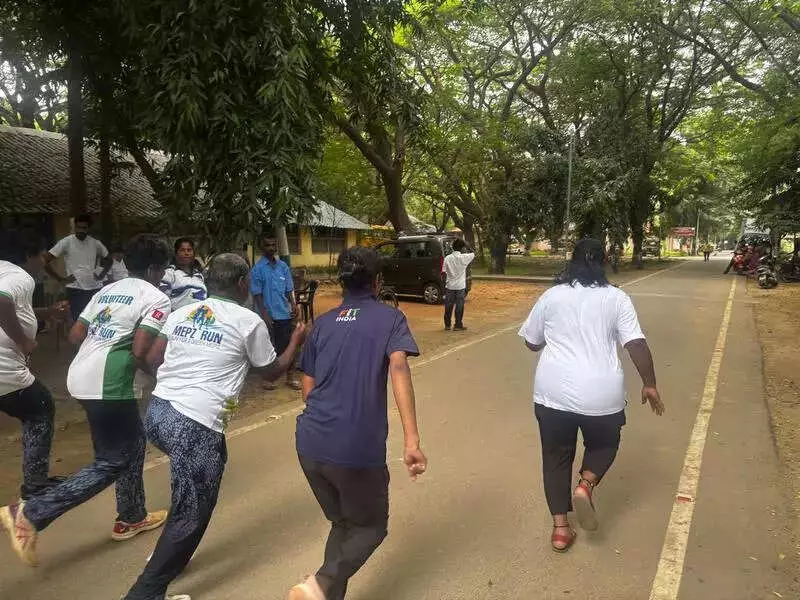
Every dawn at the Institute of Mental Health (IMH) campus in Chennai's Kilpauk area marks the beginning of an inspiring transformation. The grounds become a dedicated training arena where 18 determined patients with intellectual disabilities push their limits. Their goal is clear: to excel at the 24th state para athletic championship, scheduled for early next year in Melakottaiyur, Kancheepuram.
A Dedicated Team and Rigorous Regime
A specialized 10-member support team guides the athletes through their three-hour daily grind from 9 am to 12 noon. This squad includes a sports medical officer, a counsellor, a nurse, an attender, and a personal trainer. Their commitment is unwavering, continuing training even during rains under protective umbrellas, ensuring the athletes' preparation is as rigorous as that of any neurotypical competitor, according to sports medical officer Dr J Sangeetha.
The athletes focus on four key events: the 400m and 1500m track races, long jump, and shot put. Their daily schedule is meticulously planned, starting with a one-hour warm-up session. This is followed by 45 minutes of cardiovascular exercises and concludes with 75 minutes of drills specifically designed for their chosen events.

Qualifying Standards and Inspiring Personal Journeys
The training is not just about participation; it's about meeting high competitive standards. Personal trainer Samuel outlined the strict qualification criteria for para athletics. To qualify, men must complete the 400m run within 1 minute 10 seconds and achieve a long jump exceeding 4.5 meters. For women, the benchmarks are set at 1 minute 17 seconds for the 400m and a long jump of more than 3.8 meters.
Among the trainees are national-level champions who have previously won gold and silver medals. Their journeys are profoundly motivating. Karthick, a 23-year-old aspiring UI/UX designer, finds that running makes him feel "alive" and significantly sharpens his focus during computer skills classes. Another athlete, Debanshi, 45, a silver medalist at the national bocce championship for Special Olympics, views the state games as a crucial stepping stone. Her eyes are set on larger arenas, including the Special Olympics World Summer Games in Santiago, Chile, in 2027.
Holistic Support and Logistical Hurdles
The institute's support extends beyond the track. As the competition nears, athletes are taken to the Jawaharlal Nehru Stadium for advanced training. Their nutrition is also carefully managed. Nurse S Sarala explained that their diets are modified a month before tournaments, with increased intake of protein-rich foods like bananas, eggs, and chicken.
IMH Director Dr M Maliappan emphasized the therapeutic benefits of this sporting endeavor. He noted that sports naturally elevate mood and help patients manage anxiety. The physical activity triggers the release of endorphins, which boosts motivation and complements their overall treatment.
However, the path to competition is not without obstacles. Psychiatrist Dr Venkatesh Madan pointed out a significant logistical challenge. Since intellectual disability is a recognized form of disability, athletes require a Unique Disability ID (UDID) from the Commissionerate for Welfare of the Differently-Abled. The process of obtaining this UDID, along with necessary documents like Aadhaar for international events, can be time-consuming and sometimes leads to participants dropping out due to delays.
Despite these hurdles, the spirit at the IMH campus remains undeterred. Each morning's training session is a testament to resilience, determination, and the powerful role of sports in empowerment and healing.