Indian Chess Prodigies Show Signs of Exhaustion and Declining Creativity
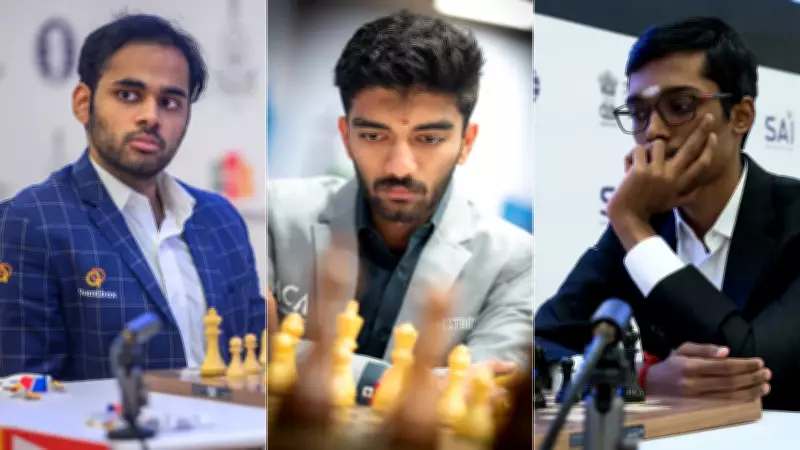
The recent disappointing performances of India's chess triumvirate at the prestigious Tata Steel Chess tournament in Wijk aan Zee have raised serious concerns about their current form and future prospects. Grandmasters D Gukesh, R Praggnanandhaa, and Arjun Erigaisi, who represent the pinnacle of Indian chess talent, displayed uncharacteristic weaknesses that experts attribute to potential burnout and loss of strategic originality.
The Perils of Excessive Tournament Play
One of the most significant factors affecting India's top chess players appears to be their packed tournament schedules. Unlike international counterparts such as Fabiano Caruana and Hikaru Nakamura, who strategically limit their competitive appearances, the Indian trio has been participating in events almost continuously since before the FIDE World Cup. This relentless pace raises questions about sustainable performance in a mentally demanding sport.
Historical chess legends provide contrasting approaches to tournament frequency. Former world champion Anatoly Karpov famously maintained a grueling schedule of approximately two tournaments monthly during his prime. However, his successor Garry Kasparov adopted a more conservative approach, limiting himself to just four to six tournaments annually when not engaged in World Championship matches. This deliberate restraint allowed Kasparov to maintain peak performance levels throughout his career.

Financial and Social Pressures
The decision to participate in numerous tournaments isn't purely competitive. Financial incentives play a substantial role, with appearance fees sometimes exceeding prize money at certain events. Additionally, personal relationships with tournament organizers create social obligations that make refusal difficult, even when rest might be more beneficial for long-term performance.
Many players mistakenly believe that rapid and blitz formats offer mental respite compared to classical chess. However, these faster time controls demand intense concentration and can be equally mentally draining, contributing to overall fatigue when combined with classical tournament commitments.
The Crisis of Original Thinking
Beyond physical and mental exhaustion, a more subtle problem has emerged: diminishing strategic creativity. Modern chess preparation often involves trainers providing opening plans that may not align with a player's natural style. This over-reliance on prepared lines has eroded the originality that once characterized these players' games.
When book knowledge ends during games, players find themselves in unfamiliar positions requiring independent thinking—a skill that appears to have diminished. The contrast between playing styles becomes evident when examining chess legends: while Anatoly Karpov excelled in defensive positions, Viswanathan Anand consciously avoided such situations, preferring active counter-attacks instead.
Loss of Personal Playing Identity
D Gukesh's recent performances illustrate this identity crisis particularly well. Previously celebrated for his defensive prowess reminiscent of Karpov, Gukesh now makes uncharacteristic tactical errors. His game against Hikaru Nakamura in the Global Chess League demonstrated this decline dramatically, where a winning position transformed into a loss through a single blunder—a mistake he rarely committed before 2022.
Similarly, Arjun Erigaisi's ability to introduce novel strategic ideas in established positions appears to have diminished. Both players seem to be operating outside their natural styles, compromising the originality that once defined their chess.
The Closed Tournament Conundrum
Another structural issue affecting elite players involves tournament formats. Invitational events have largely replaced open tournaments, creating an insular competitive environment where players face the same limited pool of opponents repeatedly. This leads to conservative play where draws become acceptable outcomes, gradually eroding tactical sharpness.

The tactical accuracy that flourished during Swiss League tournaments in 2022 and 2023 has diminished as players engage in safer, less dynamic positions. When confronted with aggressive, unconventional play from lesser-known opponents, they struggle to respond with precise tactical solutions.
Crucial Year Ahead
2026 represents a pivotal year for all three Indian chess stars. Gukesh must regain form before the World Championship in November-December and the Olympiad in September. For Arjun Erigaisi, the Olympiad stands as the most significant event of the year. However, Praggnanandhaa faces the most immediate challenge with the Candidates tournament beginning March 26—arguably the most important competition of his career thus far.
The current situation demands careful consideration of tournament schedules, adequate rest periods, and a return to authentic playing styles. Without addressing these fundamental issues, India's chess prodigies risk compromising their potential during a year filled with career-defining opportunities.