India's Rowing Revolution Begins on Goa's Shores with Historic Beach Sprint Nationals
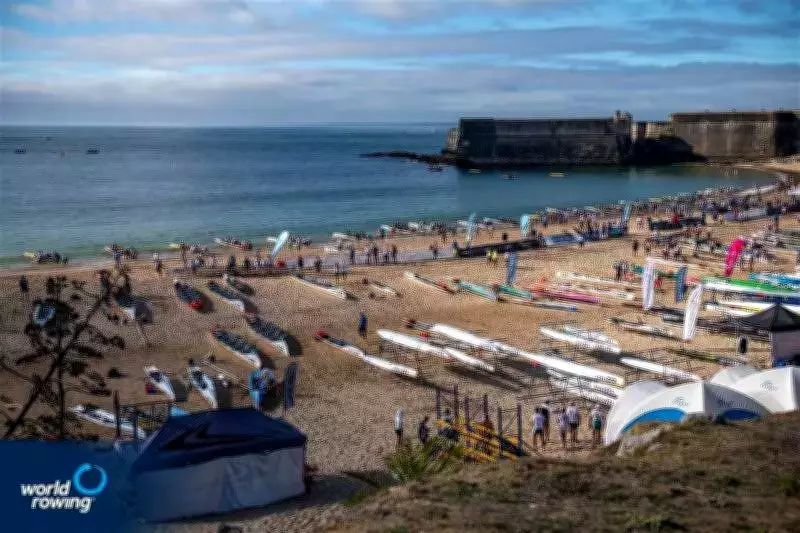
Indian rowing has officially entered a dynamic new era with the successful completion of its inaugural Beach Sprint National Championships. The landmark two-day event unfolded at Dona Paula in Goa on Saturday, February 28, 2026, marking a pivotal shift in the sport's domestic landscape.
Medals and Momentum: Services and Maharashtra Lead the Charge
The honors board reflected a competitive field, with Services and Maharashtra emerging as the standout performers, each securing one gold and one silver medal. Karnataka claimed third position with a gold and a bronze. Additional gold medals were captured by the teams from Andaman & Nicobar and the Navy across the five contested events.
In the individual categories, Services' athlete Ravi clinched the men's solo title, while Amrita Minj of Andaman & Nicobar triumphed in the women's solo event. The men's double scull gold was won by the Navy duo of Prabhakar Rajawat and Robin, and the women's double scull title went to Maharashtra's Shivrani Kateria and Arushi Barar. The mixed double scull event was dominated by Karnataka's pairing of Ekshith Sai and Manasa SM.

Beyond the Podium: A Strategic Shift for Olympic Relevance
This championship represented far more than just medals and statistics. With the Olympic movement actively seeking to engage younger audiences by introducing new, exciting formats, coastal rowing events like beach sprints have surged in global popularity. Their inclusion in the LA 2028 Olympic program underscores this trend, suggesting India's foray, while timely, is a crucial step to catch up.
"Rowing needs eyeballs and beach sprint is going to be a crowd puller," declared Balaji Maradappa, President of the Rowing Federation of India (RFI). "It has lots of action—rowers run, jump into boats, navigate zig-zag courses into the sea, and face the challenges of choppy waters and winds, unlike flatwater rowing. Then they return to shore, run again, and press the buzzer. With music and high energy, this is the future of our sport."
Maradappa, who recently met with World Rowing officials in Lausanne, emphasized the urgency. "This format is already part of the World Championships. We have to get going. Goa had hosted the National Games, and the boats were available, so it was the perfect launchpad."
Incentives and Infrastructure: Building a Sustainable Framework
In a significant move, the RFI awarded small cash prizes to the winners—a first for Indian rowing. "It is not much, but it is a start. This is a special moment for the rowing fraternity," Maradappa noted. The winners will be selected for a national camp, from which the Indian team for future international competitions will be formed.
Addressing logistical aspects, Maradappa highlighted that while coastal rowing boats carry a cost similar to flatwater boats, the opportunity is vast. "India has an extensive coastline. States are eagerly participating—Tamil Nadu has identified Ramanathapuram, Andhra Pradesh has Vizag, plus Kerala, Odisha, and Mumbai's Mazgaon. This is a major opportunity for regional development."
Bridging the Gap: From Army Dominance to Widespread Excellence
Historically, the Army Rowing Node (ARN) has been the epicenter of Indian rowing, with Services athletes accounting for the majority of international medals. However, this has often left civilian athletes struggling to match that standard.
Coastal rowing could help narrow this gap, especially with the imminent appointment of a high-performance director (HPD)—a first for Indian rowing. "Other sports have had one, but rowing has not. It's one of the biggest Olympic sports," Maradappa explained. "Once we get an HPD, the first task will be a 'gap analysis'. We now have more facilities beyond the traditional few, like Bara Pani in Meghalaya and Ramgarh Lake in Gorakhpur, the constituency of Honourable UP Chief Minister Yogi Adityanath."
The overarching goal is grassroots improvement. "When that happens, all states will start to perform well. There has to be a change," he asserted.

Game-Changing Developments and International Recognition
Positive changes are already materializing. "The Tamil Nadu government has offered jobs to seven rowers who were medallists in the senior national championships. This is a game-changer, as more families will now consider rowing a viable career path," Maradappa revealed.
Furthermore, international rowing is set to return to Indian shores. "In December, ARN will host the Asian Junior Championships, recognizing ARN as a premier training hub—a status for which they recently won a World Rowing award. This marks the first international rowing event in India in nearly two decades," he announced. "ARN is also slated to become World Rowing's Para continental hub," he added, signaling growing global confidence in India's rowing infrastructure.
The inaugural Beach Sprint National Championships have not only crowned champions but have firmly set Indian rowing on a new, exciting course toward Olympic relevance and broader national participation.