India's Unfinished Race: The Dream of a Homegrown Cycling Team
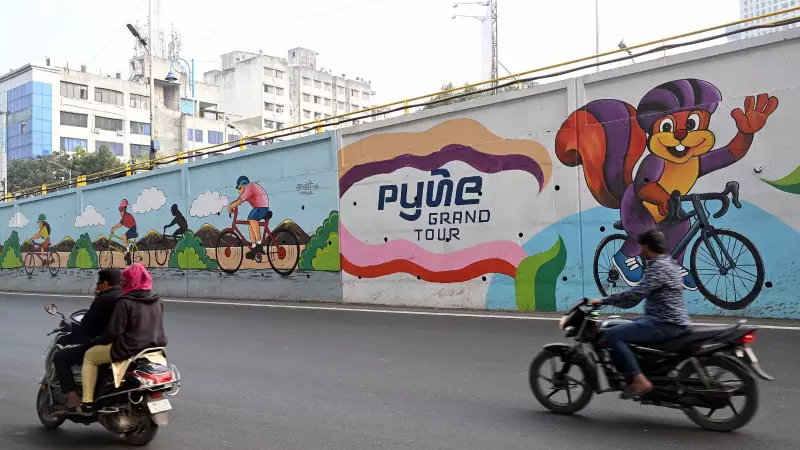
India's cycling landscape presents a curious paradox. While weekend cycling groups flourish among startup founders, business leaders, and engineering professionals, the nation still lacks a professional road cycling team. This gap becomes particularly noticeable as international riders descend upon Pune for India's premier cycling event, the Pune Grand Tour.
The Visionary Champion's Long Journey
Naveen John, India's senior-most competitive cyclist and ten-time national champion, has spent years attempting to assemble India's first professional cycling unit. Now forty, John's journey began unexpectedly during his engineering studies at Indiana University in the American Midwest. There, he discovered his passion while riding a second-hand 1960s Raleigh steel racing bike.
"I started professional cycling at 26-27 when most athletes wind down their careers," John reveals. "Engineering took a back seat as I applied my electrical engineering knowledge to solve cycling problems."

Unlikely Collaborations and Resource Challenges
John's efforts have brought together remarkable collaborators. He has worked with rural blacksmiths from Mysore who possess an intuitive understanding of bicycle mechanics. The team even included the grandson of Nobel laureate CV Raman among its technical brains.
"We operated for four to five years with matching kits and everything," John recalls about his earlier team-building attempts. "But Western cycling technology operates at another level entirely."
Modern professional cycling has evolved into a high-tech arena featuring battery-operated gear systems and advanced carbon fabrication. British Cycling, for instance, tests aerodynamics and material sciences at Lotus' Formula One factories.
Corporate Interest and Missed Opportunities
John's networking has extended to corporate circles. He has engaged with OLA's Bhavish Agarwal and representatives from KIA looking to enter Indian markets. One memorable encounter occurred when a "goofy seven-footer" approached him in a café after John developed a cult following in Indian cycling circles.
"KIA Cycles wanted pan-India presence," John remembers. "We discussed creating an Indian professional team because they possessed substantial resources."
Despite these conversations, concrete support has remained elusive. The Pune Grand Tour, however, renews hope that corporate interest might finally translate into action.
The Cyclist's Personal Evolution
John's career has mirrored the sport's development in India. In his twenties, he was hailed as the "next big thing" in Indian cycling. His thirties brought questions about how he continued defeating rivals half his age. Now approaching forty, he faces inquiries about how long he can sustain his performance.
"There's a dark phase where if you beat younger competitors, you wonder whether the sport is progressing at all," John confesses.
Discipline, Technology, and National Potential
The Kuwait-born Kannadiga maintains rigorous discipline, waking at the same time daily for years and consuming identical meals. His engineering background helps him appreciate cycling's technological evolution.
"Cycling technology has reached almost Formula One levels," John observes. "The machine has become as crucial as the athlete. India possesses the talent to field top teams—we're fundamentally a cycling nation. But achieving this requires proper resources."
He emphasizes that building a professional team demands both resources and a particular kind of madness—the sort that drives engineers to reinvent wheels and challenge conventions.
Pockets of Change and Future Prospects
Positive developments are emerging across India. Business leaders regularly gather as weekend cyclists in Ooty, indicating growing interest among influential circles. The Pune Grand Tour's UCI 2.2 classification has placed Indian routes on the international racing map, attracting professional teams from Europe, China, Malaysia, and Thailand.

John continues riding professionally for a Gulf team while nurturing his dream. "I've waited patiently for a UCI race in India," he says. "My recent networking focuses entirely on building an Indian professional team."
The quest continues—a story of perseverance, unconventional partnerships, and the enduring belief that India can field its own "wolf-pack" in professional cycling's competitive arena.