India's National Sports Governance Act: A Seismic Shift in Sports Administration
In a quiet conference room in New Delhi on January 6, 2026, a seemingly routine meeting signaled what may become the most significant transformation in Indian sports governance since independence. Fourteen Indian Super League club representatives gathered to hear Sports Minister Mansukh Mandaviya deliver an unambiguous message: each club would pay ₹1 crore to participate in a truncated football season starting in February, with no option to decline or withdraw.
The Dawn of a New Regulatory Era
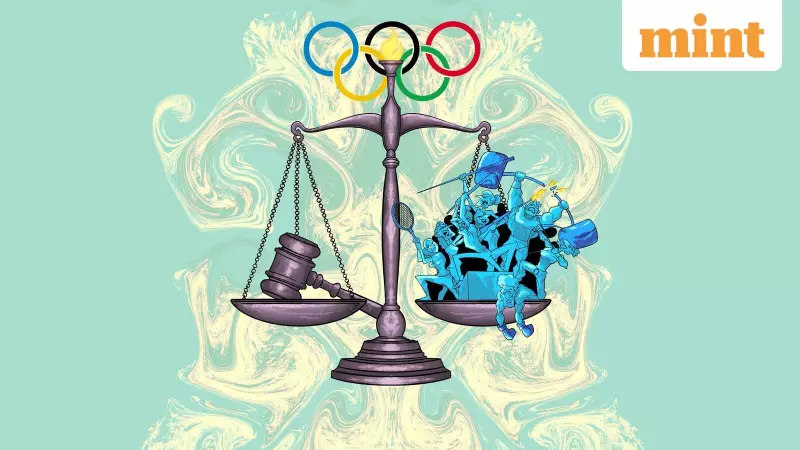
The meeting represented the first practical implementation of India's National Sports Governance Act, which became operational at midnight on December 31, 2025. This legislation grants the government unprecedented authority to regulate sporting bodies, oversee elections, resolve disputes through a central tribunal, and intervene where administrative failures paralyze sports activities.
"The minister was courteous, but the message was firm," recalled one ISL club chief executive speaking anonymously. "There was no option of not signing. You either accepted the deal or risked being shut out."

Cricket's Special Status Under Threat
For decades, the Board of Control for Cricket in India (BCCI) has maintained its position as a private, non-profit association operating outside government regulation. This exceptional status allowed cricket to develop differently from every other sport in the country, commanding an overwhelming 85% share of India's ₹16,633 crore sports industry in 2024.
Ratnakar Shetty, former administrative head of the BCCI, believes this exceptionalism may no longer be tenable. "The BCCI has always projected itself as an independent body," he says. "But under the current dispensation of the law, cricket will come under the government's ambit."
The stakes are substantial. Cricket's commercial dominance is even more pronounced in media spending, where it accounts for 94% of all sports-related advertising investments. With cricket's expected inclusion in the Olympic programme from 2028, the pressure for regulatory alignment increases significantly.
Addressing Administrative Paralysis
The ISL crisis perfectly illustrates the kind of administrative deadlock the Act was designed to address. The league had been in limbo for over six months after its master rights agreement with Football Sports Development Ltd expired at the end of 2025. When the All India Football Federation floated a new tender seeking a replacement operator, no bidder submitted a final offer.
"Today, we are not sure if federations have any skin in the game except the revenue they get from franchisees," says an official from the Reliance-backed FSDL.
Under the new Act, the government possesses explicit authority to step in, and exercised that power in less than a week of its passing. The financial implications are stark in a sector where emerging sports—everything beyond cricket—contributed ₹2,461 crore in 2024, showing impressive 19% year-on-year growth.
From Judicial Intervention to Statutory Control
For years, Indian courts became the default regulators of sport. Almost every major sport has needed legal intervention, with courts appointing committees of administrators to oversee the functioning of the BCCI in 2019 and the AIFF in 2022.
"For a long time, courts became the default regulators of sport," says Nandan Kamath, a sports law expert. "Every election dispute went to court. Every governance failure was litigated. There were hundreds of cases."
No individual shaped that judicial phase more than Rahul Mehra, a lawyer whose petitions led to landmark Supreme Court judgements. Courts mandated that close to 40% of a federation's governing body comprise sportspersons, coaches and referees.
"I went to court for the voiceless players," Mehra says. "My fight was about transparency, accountability and player representation."
The Olympic Ambition Driving Reform
India's preparation to bid for the 2036 Olympics represents a significant driver behind these governance reforms. A senior Reliance executive reveals that top cabinet ministers view sport as a strategic sector capable of unifying the nation's youth.

"The government is willing to do what it takes to advance the prospects of sports," the executive says. "The idea is to set the stage to win more medals in an Indian Olympics, whenever it takes place."
Saba Karim, a former India cricketer and ex-BCCI board member, views the Act through this lens: "For grassroots sport, governance matters. If India is serious about the Olympics, systems have to improve."
Private Investment at a Crossroads
The government's intervention in the ISL—rewriting commercial terms and imposing participation requirements—represents precisely the kind of midstream rule change that gives private investors pause. Yet, paradoxically, some industry experts see the new law as an enabler.
"A lot of young industrialists in the country want to invest in sports—we see it as a $40 billion opportunity by 2030," says Prasanth Shanthakumaran of KPMG. "A key deterrent was the state of federations in the country and at this juncture we see the new sports law as an enabler to get the house in order."
The Unanswered Questions
The broader industry data reveals what's at stake. Media spending on sports grew 7% in 2024 to reach ₹7,989 crore, with digital advertising surging 25% to ₹3,588 crore. Athlete endorsements crossed ₹1,000 crore for the first time, reaching ₹1,224 crore with 32% year-on-year growth.
This growth was built on a relatively light regulatory touch. Whether greater government control will enhance or undermine this momentum remains uncertain. Cricket may chafe under regulation while emerging sports may welcome government support.
"Sport does not thrive in fear," warns Rahul Mehra. "It thrives on trust." He believes the ISL restart sets a precedent: "Once the state becomes the ultimate fixer, every future stalemate will be resolved the same way."
The National Sports Governance Act fundamentally alters the balance that built the ₹16,633 crore industry. The government has demonstrated it can impose order and restart leagues. Whether it can build institutions that endure—without discouraging the private capital that fuelled nearly sevenfold growth or marginalizing athletes—remains the unanswered question that will define Indian sport for the next decade.