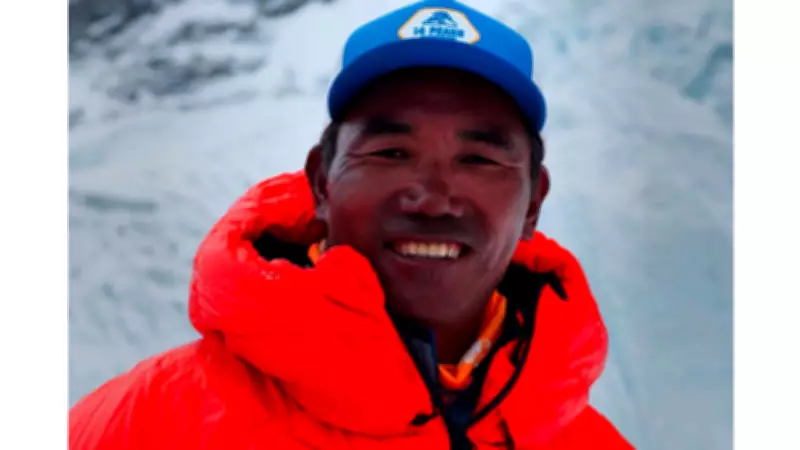
For most climbers, reaching the summit of Mount Everest even once is considered a lifetime achievement. But for Nepali Sherpa guide Kami Rita, climbing the world's highest mountain became a decades-long journey that rewrote mountaineering history. On May 17, 2026, the veteran climber reportedly reached Everest's summit for the 32nd time, extending his own world record for the most successful ascents by any individual. What makes the feat even more extraordinary is that his first Everest summit came back in 1994, meaning he has spent 32 years repeatedly climbing one of the planet's most dangerous mountains while guiding expeditions through extreme Himalayan conditions.
Kami Rita Sherpa's Journey to Becoming the 'Everest Man'
Kami Rita Sherpa was born in Nepal's Solukhumbu region, the mountainous area surrounding Everest that is home to many Sherpa communities deeply connected to Himalayan climbing traditions. His father reportedly worked as one of the early Sherpa guides assisting foreign mountaineering expeditions after Everest opened to international climbers in the mid-20th century. Growing up in the shadow of the Himalayas, Kami Rita became familiar with high-altitude trekking and mountain life from a young age. He began working in the mountaineering industry during his early twenties and successfully reached Everest's summit for the first time in 1994 at the age of 24. Since then, he has returned to the mountain almost every year, often climbing multiple times during a single season while leading commercial expeditions.
Kami Rita Sherpa currently holds the record for the highest number of Everest summits in history. His 32 ascents place him ahead of every other climber, Sherpa or non-Sherpa, ever recorded on the mountain. He first broke the overall record in 2018 and has continued extending it by repeatedly surpassing his own previous totals. Other experienced Sherpa climbers, including Pasang Dawa Sherpa, have also reached Everest many times, but none have matched Kami Rita's total. His achievement is widely recognised within the mountaineering world because Everest climbs require years of technical experience, physical endurance and adaptation to extremely low oxygen levels.

The Dangerous Work Sherpas Do on Everest
Although international climbers often receive most of the media attention, Sherpas play the central role in making Everest expeditions possible. Sherpa guides frequently carry oxygen cylinders, tents, ropes and supplies through dangerous terrain. They also fix climbing ropes, establish safe routes and assist climbers struggling at high altitudes. One of the most hazardous sections is the Khumbu Icefall, a constantly shifting maze of ice towers and crevasses that Sherpas may cross multiple times during a season while transporting expedition equipment. Many mountaineering experts say commercial climbing on Everest would not function without the experience and skill of Sherpa teams.
Why Climbing Everest Remains So Difficult
Standing at 8,849 metres above sea level, Everest presents extreme challenges even for experienced mountaineers. Oxygen levels near the summit are only about one-third of those at sea level, creating severe physical stress on the human body. Climbers face risks including frostbite, avalanches, exhaustion, altitude sickness and sudden weather changes. Temperatures can fall far below freezing, while strong winds near the summit can become life-threatening. Even with modern equipment and guided expeditions, Everest remains one of the world's most dangerous mountains.
Sherpa Culture and Spiritual Traditions
The Sherpas are an ethnic community originally from the Himalayan regions of Nepal. Their culture is strongly influenced by Tibetan Buddhism and deep spiritual respect for the mountains. Before Everest expeditions begin, Sherpa teams often conduct religious blessing ceremonies known as pujas. During these rituals, monks pray for safe passage and protection on the mountain. Everest itself holds spiritual significance in the region. In Nepal, it is called Sagarmatha, while Tibetan communities know it as Chomolungma. For many Sherpas, mountaineering is not just a profession but also part of a cultural relationship with the Himalayas.

How Commercial Everest Climbing Changed the Mountain
Over the past few decades, Everest has transformed from a remote mountaineering challenge into a major international climbing industry. Hundreds of climbers now attempt the summit during the short spring weather window each year. This has led to famous images showing long queues of climbers waiting near the summit ridge. Commercial expeditions have increased access to Everest, but they have also raised concerns about overcrowding, environmental damage and climbing safety. Despite these changes, experienced Sherpa climbers like Kami Rita remain essential to nearly every expedition attempting the summit.
Climate Change Affecting the Climbing Routes
Climate change is increasingly affecting Everest and the wider Himalayan ecosystem. Researchers and climbers have observed melting glaciers, unstable ice formations and changing snowfall patterns across the region. Some climbing routes that were once permanently covered in snow are now exposing loose rock and thinning ice. Scientists warn that rising temperatures could increase avalanche risks and make sections of the mountain more unstable in future. Melting glaciers have also exposed old climbing equipment and even bodies that had remained buried beneath the ice for decades.
Climbing Everest once is already considered one of the greatest physical challenges on Earth. Reaching the summit 32 times over three decades requires extraordinary endurance, technical skill and mental resilience. Kami Rita's repeated success has earned him global recognition as one of the greatest high-altitude climbers in history and a symbol of the vital role Sherpas continue to play on Everest.