From Tribal Village to Everest: Malavath Purna's Journey of Resilience and Education
Long before Malavath Purna became a name linked to Everest, she was a young girl growing up in a tribal family in what is now Telangana, where money was scarce and opportunities even more so. Her parents were daily wage laborers, and like many children in similar circumstances, her early life was defined by survival rather than ambition. What changed her trajectory was access to education. Enrolled in a state-run residential school designed for students from disadvantaged backgrounds, Purna entered a system that did more than teach; it recognized potential. It gave her structure, discipline, and something far more powerful: the idea that her life could stretch beyond the boundaries she was born into.
The Moment Opportunity Met Preparation
It was within this school system that Purna's athletic ability was noticed. She was selected for a mountaineering programme run under the Telangana Social Welfare Residential Educational Institutions Society, an initiative that sought to expose students to experiences far removed from their everyday lives. Her training began with rock climbing in Bhongir and later extended to more advanced preparation in Darjeeling. The transition from a village classroom to mountain terrain was not just physical; it was psychological. Purna had to learn endurance, risk, and resilience, skills that would later define her climb.
Climbing Everest at an Age Most Only Dream
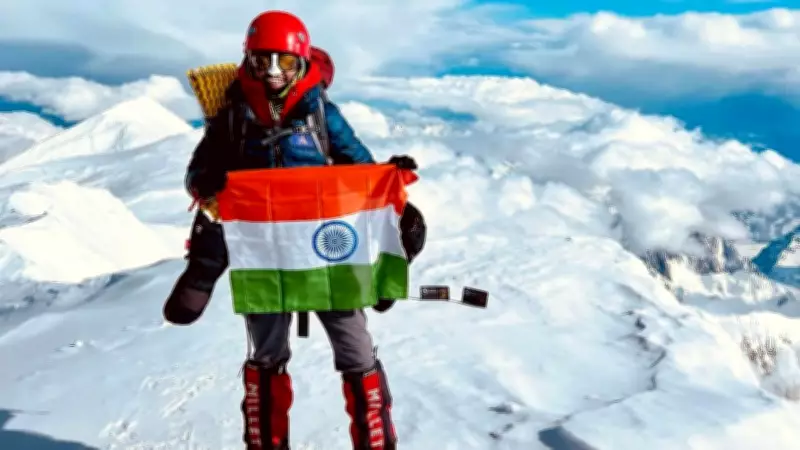
On May 25, 2014, at just 13 years and 11 months old, Malavath Purna reached the summit of Mount Everest, becoming the youngest girl in the world to do so at the time. Her expedition took the Tibetan route, as Nepal's regulations did not allow climbers under 16. The journey lasted over 50 days, involving extreme weather, thin air, and the constant physical toll of high-altitude climbing.

The climb was not romantic. It was demanding, often brutal. Purna later spoke about the fear she encountered, including the harsh realities of the mountain itself. Yet she continued upward, step by step, carrying not just her own ambition but the weight of everything she had overcome to get there.
More Than a Summit, a Statement
Purna's achievement was not just a personal milestone; it was a statement. In interviews, she made it clear that her climb was meant to prove something larger, that girls, especially those from marginalized backgrounds, are capable of extraordinary things when given the chance. "I wanted to prove that girls could do anything," she said, a line that continues to echo beyond the mountain.
In a country where access often determines ambition, her story disrupted assumptions. She was not from privilege, not from a mountaineering lineage, and not from a space where such dreams are typically nurtured. Yet she stood at the highest point on Earth.
Returning to the Classroom After the Peak
What sets Purna apart is what she did after Everest. She returned to school. While the world celebrated her record, she resumed her studies, focusing on subjects like science and mathematics, and later continuing her education abroad. For her, Everest was not the end goal. It was a chapter. Education remained the constant thread, the thing she chose over everything else.
That decision reflects a deeper understanding of success. The summit may have brought recognition, but education offered sustainability. It ensured that her journey would not end as a headline but continue as a life shaped by knowledge and opportunity.
A Story That Continues to Resonate
Today, Malavath Purna's story travels far beyond mountaineering circles. It is told in classrooms, in conversations about education, and in discussions about what happens when systems work the way they are meant to.
Her journey is not just about reaching the top of a mountain. It is about expanding the idea of who gets to dream that big in the first place. From a tribal village to the summit of Mount Everest, her life traces a line that feels almost improbable and yet entirely real. It is proof that sometimes, the most powerful climbs begin long before the mountain, in classrooms where someone is given a chance and chooses to take it.