Chamblee Foresees Renewed McIlroy-Reed Feud as LIV Golfers Rejoin PGA Tour
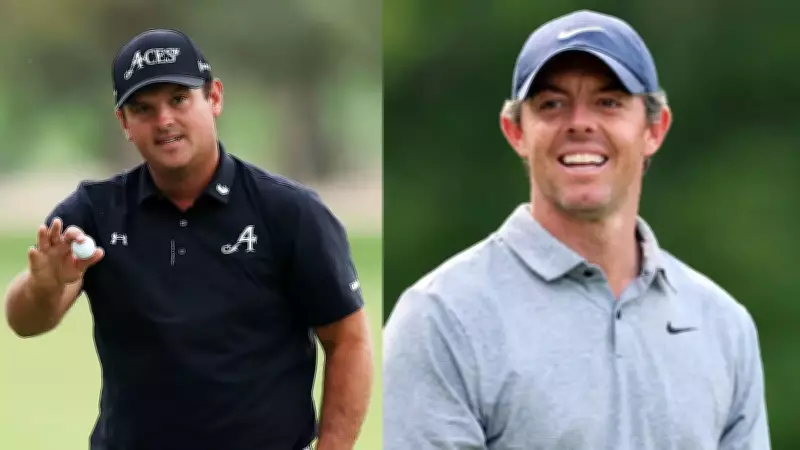
When Patrick Reed eventually tees off again on the PGA Tour, it will represent a modest yet symbolic triumph for the circuit. However, that moment remains in the future. For now, prominent golf analyst Brandel Chamblee has made a bold declaration, stating that the PGA Tour is experiencing positive days while the LIV Golf league faces significant challenges.
The Catalyst: Return of Old Rivalries
Chamblee believes the reintegration of former rivals is precisely what the sport and its fanbase have been craving. "The next best thing is rivalries," Chamblee remarked during an appearance on the Golf Channel. "There is sort of a Rory-Patrick Reed rivalry that's been dormant for the last few years. Maybe that comes back."
According to Chamblee, the contentious dynamic between Rory McIlroy and Patrick Reed could resurface because the return of LIV golfers, whom he describes as "a little rough around the edges," brings their inherent aggression back to the forefront. This is not manufactured drama; it stems from a genuine, deep-seated animosity that primarily disadvantages McIlroy, tracing its origins to a pivotal 2016 Ryder Cup singles match.

The History: A Rivalry Forged in Competition
The rivalry ignited during the 2016 Ryder Cup when Patrick Reed employed psychological tactics against Rory McIlroy. Reed allowed the crowd to taunt the Northern Irishman, gesturing with a wagging finger and cupping his ear to amplify the noise. Spectators described the showdown as an "adrenaline-fueled slugfest."
Reed's strategy proved effective, contributing to the United States' victory. Two years later, at the Masters, Reed again thwarted McIlroy, this time preventing him from achieving the career Grand Slam. This defeat was compounded by McIlroy's subsequent major-less decade, intensifying the stakes.
The feud reached a boiling point in 2023 with the infamous "Teegate" incident. At the Hero Dubai Desert Classic, Reed attempted to greet McIlroy, who had been a vocal critic of the LIV Golf league. McIlroy ignored him, prompting Reed to throw a LIV Golf t-shirt in his direction. The confrontation escalated when McIlroy later revealed he had received a subpoena from Reed's legal team, naming him as a witness in Reed's antitrust lawsuit against the PGA Tour.
McIlroy found a measure of redemption by winning that tournament with a dramatic 20-foot putt on the final hole, a victory made sweeter by the context. However, by January 2026, Reed had reclaimed dominance, winning the Dubai Desert Classic by a staggering 12 shots while McIlroy finished tied for 33rd.
The Business Rationale: Why Rivalries Matter
Chamblee's assertion is underpinned by substantial sports research. Decades of studies indicate that rivalry-driven conflict is the single biggest motivator of fan engagement. Audiences are significantly more likely to tune in when outcomes carry personal or emotional stakes tied to specific athletes.
For instance, the 2024 World Series, which revived a dormant forty-year enmity between the Yankees and Dodgers, attracted 15.2 million viewers—the highest since 2017. Similarly, the personal rivalry between Patrick Reed and Rory McIlroy captivates fans beyond mere athletic prowess; they are invested in the narrative and the outcome of their clashes.
When McIlroy won the Masters, his fervent supporters celebrated wildly, and the broadcast on CBS drew 19.5 million viewers. Historically, rivalries have been instrumental in golf's commercial success. The Jack Nicklaus-Arnold Palmer rivalry in the 1960s drove major television ratings and gallery attendance. The Tiger Woods-Phil Mickelson duels between 2000 and 2010 had a comparable impact.
This narrative power has proven to be a reliable tool for generating profits. By welcoming back LIV players, the PGA Tour could harness this dynamic, potentially revitalizing viewership and fan interest in the coming seasons.