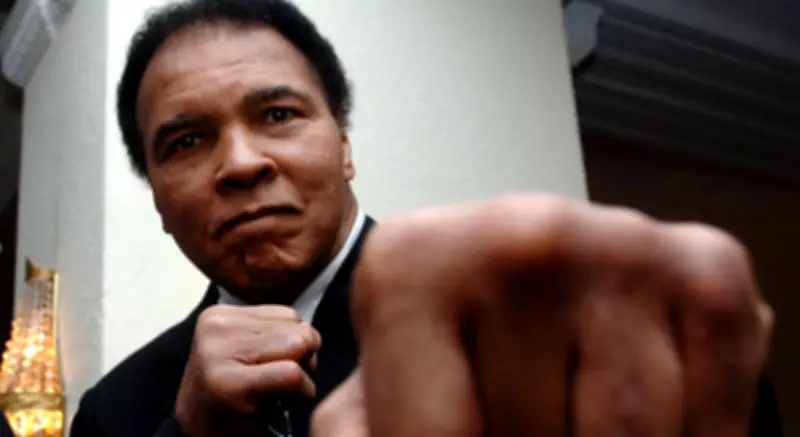
Muhammad Ali's Enduring Insight: The Art of Building a Life Beyond a Career
The famous line from Muhammad Ali has been repeated so frequently that it risks becoming cliché, yet its profound truth resonates deeply upon reflection: "We spend more time learning how to make a living than we do learning to make a life." This statement doesn't present itself as a dramatic proclamation but rather as a quiet observation that gradually makes sense as you navigate your daily existence. It explains why certain aspects of life feel richly satisfying while others seem curiously hollow and incomplete.
A Champion's Perspective on Priorities
Muhammad Ali did not speak these words as someone who rejected ambition or professional dedication. He was arguably the most driven athlete of his generation, completely obsessive about training regimens, performance excellence, and maintaining competitive superiority. If anyone understood what it meant to build a livelihood at the absolute pinnacle of achievement, it was Ali. His insight points not to ambition or work itself being problematic, but rather to how we allocate our attention and energy throughout our lives.
Most people receive systematic training from early stages to pursue measurable outcomes: a specific salary, a particular job title, a promotion, or any forward momentum that can be quantified through numbers or professional designations. This type of learning comes with established roadmaps, clear expectations, and shared societal understanding of what constitutes progress. The quieter, more subtle work of constructing a meaningful life that extends beyond these career markers rarely receives similar clarity and is often left to be discovered in fragmented, haphazard ways.

Public Life with Private Convictions
Muhammad Ali lived his life in the public eye, though not merely for the obvious reasons of athletic fame. His career could easily be summarized by surface achievements: Olympic gold medals, multiple heavyweight championship titles, the monumental scale of his fights, and the enormous global audiences they attracted. This version of his story fits comfortably within conventional notions of "making a living" taken to its ultimate expression.
What complicates this narrative and makes Ali's observation feel genuinely earned rather than merely decorative is everything that existed alongside his athletic accomplishments. His principled refusal to be inducted into the U.S. Army during the Vietnam War demonstrated profound conviction, despite knowing the substantial personal and professional costs this decision would incur. Ali lost several prime competitive years as a direct result—not due to physical injury or athletic decline, but because of a choice that defied conventional career management logic. At that historical moment, his decision appeared not as a move protecting his livelihood but as one actively threatening it.
This choice doesn't require transformation into a simplistic moral lesson to be understood as integral to Ali's philosophy. It demonstrates what occurs when the concept of a life—shaped by personal beliefs, identity, and a fundamental sense of what truly matters—begins to carry equal weight alongside the practical mechanics of earning a living.
Transformation Beyond the Spotlight
Later in life, circumstances changed in ways completely beyond Ali's control. His diagnosis with Parkinson's disease during the 1980s fundamentally altered everything that had once come naturally to him. The legendary speed, lightning reflexes, and physical grace that defined his boxing career gradually diminished in a visible, public manner.
At this stage, there existed no athletic career to pursue in the traditional sense, no additional championships to win, no obvious "next step" as typically demanded by professional sports. What remained was how Ali chose to live with his condition. He maintained public visibility, though in a manner different from his earlier fame. He continued appearing at events, speaking when physically possible, and remained a figure people looked to for inspiration, even as his voice softened and movements became less certain.

His iconic lighting of the Olympic flame at the 1996 Atlanta Games, hands visibly trembling, became one of those moments people remember differently from any championship fight. This wasn't about winning or competition; it carried an entirely different kind of emotional and symbolic weight.
Contemporary Relevance of Ali's Wisdom
The distinction between making a living and making a life does not advocate abandoning professional pursuits. Ali himself never retreated from work or ambition. Instead, it highlights how easily career development becomes the sole focus of our energy and education. Most people receive practical instruction about earning: study specific subjects, train for particular professions, develop skills that have market value. This comes with established structures and easily trackable progress metrics.
The other dimensions of existence tend to be left to chance or afterthought. Meaningful relationships, quality time outside work obligations, the ability to disengage without feeling something valuable is being lost, developing clarity about what matters beyond the next professional milestone—none of these receive comparable systematic attention or educational priority.
Ali's life never followed a neat, balanced template. It moved through dramatic extremes. During certain periods, his athletic career consumed nearly all his energy. At other times, principled decisions pulled him completely away from professional advancement. What provides coherence to his journey is that he never treated boxing success as the only measure that mattered, even when doing so would have been considerably easier.
The Lasting Power of the Observation
The reason Ali's statement continues to resonate across generations isn't because it provides easy answers. It doesn't offer specific formulas for time allocation or prescribe ideal work-life balance ratios. Instead, it functions more like an internal checkpoint people return to unexpectedly. If the majority of your energy and education already flows toward learning how to earn, the question it leaves behind concerns what's happening on the other side of that equation—and whether that dimension of existence is being constructed with similar intentionality or merely squeezed into whatever residual space remains.
Muhammad Ali's life doesn't present a perfect, imitable model for everyone to follow. It accomplishes something more valuable: it demonstrates, in highly visible ways, what occurs when the concept of a meaningful life is given substantial weight alongside the work that sustains it, even when such choices create immediate difficulties or professional complications. His legacy reminds us that while making a living is necessary, making a life is essential.