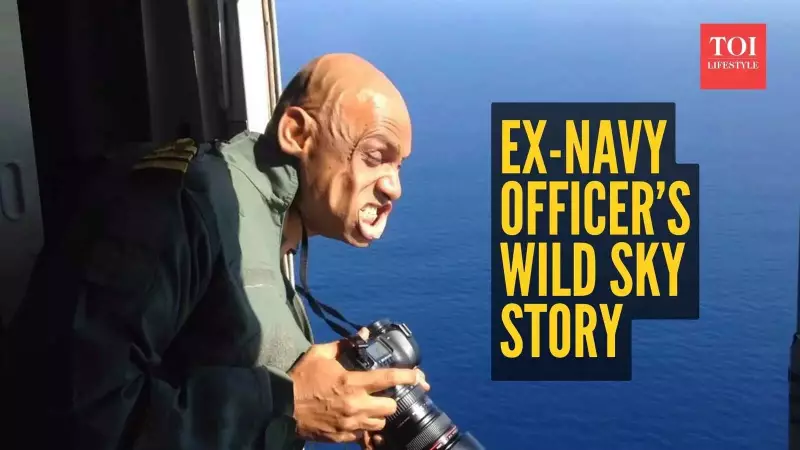
Capturing the perfect shot from thousands of feet above ground requires more than just photographic skill - it demands military-grade endurance and precision. Former Indian Navy officer Captain Navtej Singh has revealed the extraordinary challenges faced during high-risk aerial photography missions from open aircraft doors.
The Brutal Force of Wind at Extreme Altitudes
According to The Free Press Journal report, Captain Singh described operating from military aircraft like the C-130 at altitudes between 10,000 and 20,000 feet. The aircraft was deliberately depressurised, a standard procedure for military operations involving photography, supply drops, and rescue missions.
The moment the aircraft door opens, photographers face an immediate physical challenge. Wind forces equivalent to sticking your head out of a bullet train multiplied several times hit with devastating power. At speeds approaching 400 knots, maintaining focus and physical stability becomes an immense struggle.

Captain Singh emphasized that no one simply stands at an open aircraft door - remaining in position requires continuous physical effort against the wind. The constant resistance strains joints and makes holding equipment a battle in itself.
Military-Grade Safety for Survival
Surviving these conditions requires elaborate safety measures. Singh was secured using a full-body harness, steel carabiners, and a safety tether engineered to withstand extreme forces. This protective gear becomes the photographer's lifeline against the violent elements.
The high-altitude environment introduces additional hazards. Oxygen support becomes essential due to thin air that can impair both judgment and physical performance. The combination of freezing temperatures, deafening wind roar, and aircraft motion creates an environment where even simple camera adjustments become monumental tasks.
Precision Art Amidst Elemental Violence
Despite these overwhelming conditions, photographers must maintain exact control over technical aspects. Captain Singh had to meticulously manage exposure, shutter speed, and framing within the brief window before the aircraft moved past the target.
He described the effort as fighting gravity, velocity, and pure elemental violence to freeze a moment in time. This unique combination of disciplines led him to characterize high-altitude aerial photography as a form of combat art - requiring military discipline, technical expertise, and complete physical control while securely tethered at the open door.
The account provides rare insight into the extreme conditions behind dramatic aerial images, highlighting how physical endurance, technical skill, and rigorous safety protocols combine to capture extraordinary photographs under some of the most challenging conditions on earth.