NBA Western Conference Showdown: Denver Nuggets Face Portland Trail Blazers in Late-Season Matchup
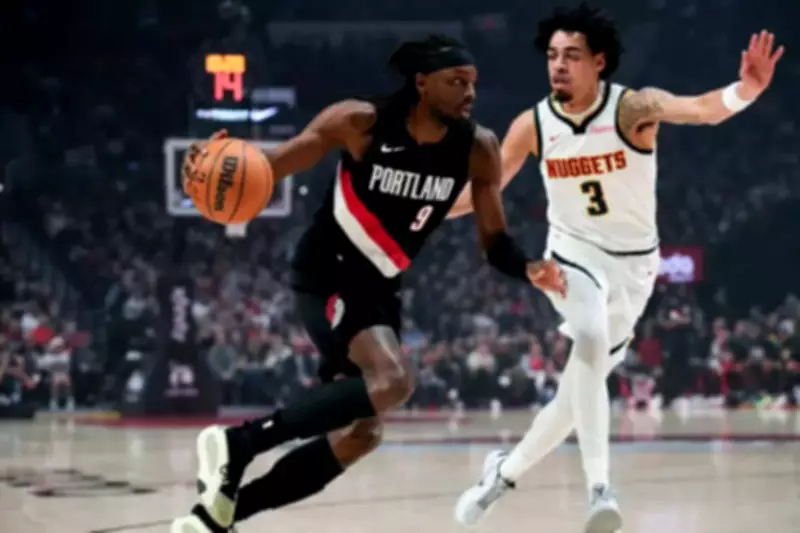
The Portland Trail Blazers travel to Ball Arena to challenge the Denver Nuggets on Sunday, March 22, 2026, in a significant late-season Western Conference contest. This game presents contrasting team priorities as the regular season approaches its conclusion, with Denver concentrating on playoff preparation while Portland navigates injury challenges and assesses its developing roster.
Team Priorities and Strategic Approaches
As the NBA regular season enters its final stretch, both franchises approach this matchup with distinct objectives. The Denver Nuggets, positioned for postseason competition, are focused on refining their rotation and maintaining competitive rhythm. Meanwhile, the Portland Trail Blazers continue managing significant injury absences while providing valuable experience to their younger players.
Availability and playing time will significantly influence both teams' strategies. Denver benefits from having most of its core players available and seeks to establish consistency before the playoffs. Portland faces the challenge of competing on the road while dealing with key personnel limitations, requiring increased contributions from their depth players.

Portland Trail Blazers Injury Report and Roster Analysis
Portland's injury situation remains largely unchanged, though the continued absence of their primary scorer impacts offensive production. The team's injury report features several significant names:
- Damian Lillard: Out for season with left Achilles rupture
- Shaedon Sharpe: Out with right calf strain until early April 2026
- Vít Krejčí: Questionable with day-to-day calf strain
- Jerami Grant: Questionable with foot soreness and calf monitoring
Most of Portland's rotation remains available despite these absences. The backcourt responsibilities fall primarily to Jrue Holiday and Scoot Henderson, while Deni Avdija and Matisse Thybulle provide wing support. Interior presence comes from Donovan Clingan and Robert Williams III, giving Portland necessary size in the paint.
Should Jerami Grant or Vít Krejčí be unavailable, increased minutes will likely go to Blake Wesley, Caleb Love, and Chris Youngblood. Portland may implement adjusted lineups to address potential scoring and defensive gaps created by these absences.
Denver Nuggets Injury Status and Rotation Outlook
Denver enters this contest in superior health, with only one rotation player appearing on their injury report. Peyton Watson carries a questionable designation with a Grade-2 right hamstring strain, though his availability will be determined closer to game time.
The Nuggets expect contributions from their core trio of Nikola Jokić, Jamal Murray, and Aaron Gordon. The remainder of their rotation remains consistent, featuring Cameron Johnson, Tim Hardaway Jr., and Bruce Brown providing support to the primary unit.
If Peyton Watson cannot participate, Denver will likely increase playing time for Christian Braun and Cameron Johnson, particularly for perimeter defensive assignments against Portland's guards and wings.
Team Structure and Roster Composition Analysis
Portland's current roster construction emphasizes guard and wing positions with reduced reliance on individual star power. Their lineup breakdown includes:
- Backcourt: Jrue Holiday, Scoot Henderson, Vít Krejčí (if active), Blake Wesley, Caleb Love, Chris Youngblood
- Wings/Forwards: Deni Avdija, Matisse Thybulle, Toumani Camara, Jerami Grant (questionable)
- Centers: Donovan Clingan, Robert Williams III, Hansen Yang
This collective emphasizes defensive intensity and player movement, though offensive consistency has presented challenges throughout the season.
Denver maintains a more structured offensive system centered around Nikola Jokić's unique skills. Their rotation includes:

- Guards: Jamal Murray, Curtis Jones
- Wings: Cameron Johnson, Christian Braun, Peyton Watson (questionable)
- Frontcourt: Nikola Jokić, Aaron Gordon, DaRon Holmes II
The Nuggets employ a tighter rotation that prioritizes consistency and established chemistry among their primary contributors.
Historical Matchup Trends and Recent Results
The all-time regular season series between these franchises remains remarkably close, though Denver has established recent dominance. Historical data reveals:
- All-time regular season record: Nuggets – 100 wins, Trail Blazers – 105 wins
- Last 20 meetings: Trail Blazers – 5 wins, Nuggets – 15 wins
- 2025–26 season results:
- February 20, 2026: Nuggets 157–103 Trail Blazers
- November 1, 2025: Trail Blazers 109–107 Nuggets
The February contest demonstrated Denver's explosive offensive capabilities, while the November meeting concluded with a narrow two-point margin favoring Portland.
Statistical Comparison and Performance Metrics
Offensive production and efficiency metrics entering this matchup show clear distinctions between the teams:
Denver Nuggets offensive statistics: Approximately 118–120 points per game, 49% field goal percentage, 37% three-point percentage, 80% free throw percentage, 13–14 turnovers per game
Portland Trail Blazers offensive statistics: Approximately 112–114 points per game, 45% field goal percentage, 34% three-point percentage, 77% free throw percentage, 15–16 turnovers per game
Denver maintains status as one of the league's most efficient offensive units, featuring strong shooting percentages and effective ball movement. Portland's offensive numbers reflect greater reliance on individual creation and less consistent execution.
Defensive performance metrics further highlight the contrast:
Denver defensive statistics: Approximately 113 opponent points per game, 45% opponent field goal percentage, 35% opponent three-point percentage
Portland defensive statistics: Approximately 117 opponent points per game, 47% opponent field goal percentage, 36% opponent three-point percentage
Denver demonstrates more consistent defensive execution, while Portland has experienced challenges limiting opponent scoring, particularly against efficient offensive teams.
Key Tactical Battles and Strategic Considerations
Several crucial matchups and strategic elements could determine this game's outcome:
Portland's scoring distribution without Damian Lillard: The absence of their primary scorer requires multiple players to contribute offensively. Scoot Henderson and Jrue Holiday will handle most creation responsibilities, while other players must provide consistent scoring support. Should Jerami Grant be unavailable, Portland's offensive options become further limited.
Denver's offensive orchestration through Nikola Jokić: Denver's entire offensive system revolves around Jokić's exceptional passing and scoring abilities. His capacity to create advantages presents significant challenges for opposing defenses. Against Portland's current roster, this provides Denver with a distinct tactical advantage if they maintain proper execution.
Bench depth and rotation flexibility: Portland may need to utilize more players depending on availability decisions, while Denver will likely maintain a more compact rotation. This disparity could prove significant during the game's latter stages, particularly if fatigue becomes a factor.
Game Context, Venue Details, and Projections
This Western Conference matchup occurs at Ball Arena in Denver on Sunday, March 22, 2026. Broadcast coverage includes regional networks and NBA TV, with streaming availability varying by geographic region.
Denver has established strong home court performance throughout the season, accumulating multiple victories at Ball Arena. Portland confronts a challenging road environment, particularly given their current roster limitations and injury situation.
From a competitive perspective, Denver enters as the projected favorite based on recent performance, roster stability, and home court advantage. The anticipated total score range falls between 225–235 points based on recent offensive trends from both teams.
Final Outlook and Game Prediction
This contest illustrates two franchises operating in distinctly different competitive phases. Denver focuses on postseason preparation with an established core and consistent rotation. Portland continues adjusting to roster changes while developing younger talent within their system.
For Portland to remain competitive, controlling game tempo and minimizing mistakes becomes essential. Denver needs to maintain offensive structure and execution efficiency to establish control.
Should the game maintain a slower pace, Portland possesses capability to remain competitive throughout. If Denver establishes early offensive rhythm, their superior execution could create separation quickly. Ultimately, Denver's roster stability and home court advantage provide significant edges in this late-season Western Conference encounter.