The NFL Draft's Equalizing Power: How Struggling Teams Get Priority
The National Football League's draft system operates on a fascinating principle of competitive balance. Unlike many sports where the best teams reap the greatest rewards, the NFL intentionally structures its draft to give the weakest performers from the previous season the first opportunity to select the most promising new talent. This mechanism ensures that no franchise remains perpetually at the bottom, fostering hope and improvement across the league.
2026 First-Round Pick Distribution: Rewarding Struggle
The 2025 season results have directly shaped the 2026 draft order. Teams with the poorest records receive the earliest selections in the first round, slots 1 through 20. This system provides a tangible advantage to organizations needing the most help. Meanwhile, playoff teams are assigned picks 21 through 32, with their exact positions determined by how deep they advanced in the postseason.
Playoff team draft slots follow a specific hierarchy:

- Teams eliminated in the wild card round select in positions 21-24
- Conference championship losers pick at 29 and 30
- The Super Bowl participants receive the final two selections at 31 and 32
Key Teams and Their Valuable First-Round Assets
Several franchises enter the 2026 draft with particularly advantageous positions, holding multiple first-round selections or premium early picks.
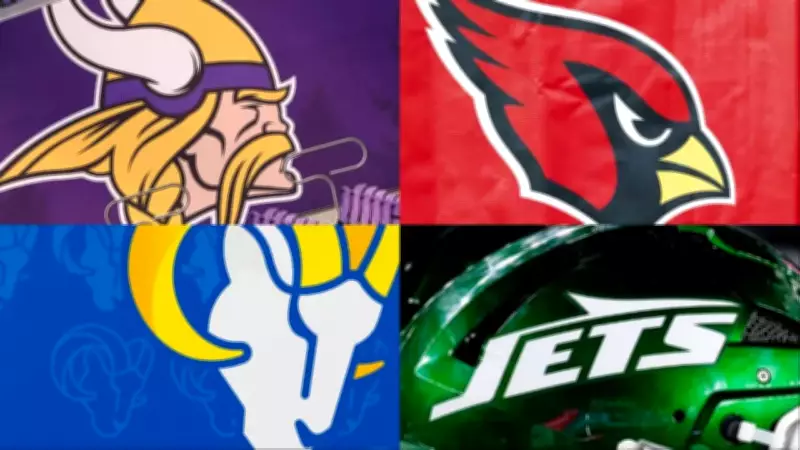
The New York Jets endured a difficult 3-14 campaign in 2025 but will benefit substantially in the upcoming draft. They possess two first-round choices: the No. 2 overall pick and the No. 16 selection, acquired through the trade of star cornerback Sauce Gardner to the Indianapolis Colts.
The Los Angeles Rams also hold dual first-rounders at No. 13 (obtained via trade with the Atlanta Falcons in 2025) and No. 29. The Arizona Cardinals, matching the Jets' 3-14 record, secure the valuable No. 3 overall selection. The Minnesota Vikings, with a 9-8 season, will pick at No. 18 in the opening round.
ESPN Analyst Predictions: Ideal Player-Team Pairings
According to ESPN draft expert Mel Kiper Jr., several prospects align perfectly with team needs. For the Minnesota Vikings, Oregon Ducks safety Dillon Thieneman represents an ideal selection. Standing at 6-foot with exceptional quarterback reading ability and football intelligence, Thieneman could seamlessly replace the potentially retiring Harrison Smith.
Kiper projects Clemson Tigers offensive tackle Blake Miller to the Los Angeles Rams, who face significant uncertainty at right tackle following Rob Havenstein's retirement and Warren McClendon Jr.'s contract situation. Miller's proficiency against pass-rush moves makes him a logical fit.
For the Arizona Cardinals, Texas Tech outside linebacker David Bailey emerges as a compelling option. His 2025 statistics—14.5 sacks, 23 tackles for loss, 71 pressures, 22 quarterback hits, and three forced fumbles—demonstrate game-changing potential. The New York Jets might target Clemson defensive tackle Peter Woods, whose 3-technique prowess could fill impending free agency voids along their defensive front.
Additional Draft Prospect Connections
Beyond Kiper's analysis, multiple sources have identified other potential first-round matches. The Vikings have been linked to Notre Dame running back Jeremiyah Love and Clemson cornerback Avieon Terrell. The Rams could consider Tennessee cornerback Jermod McCoy or Alabama quarterback Ty Simpson.
The Cardinals' options include Miami offensive tackle Francis Mauigoa and Ohio State linebacker Arvell Reese. For the Jets, possibilities extend to Alabama quarterback Ty Simpson and USC wide receiver Makai Lemon. These connections highlight how teams strategically approach the draft to address specific roster deficiencies with premium talent.

This comprehensive draft system ensures every NFL franchise receives equitable opportunity for improvement each offseason. By granting struggling teams access to elite prospects, the league maintains competitive balance while providing fans of all teams legitimate hope for future success. The 2026 draft promises significant roster transformations for teams like the Jets, Rams, Vikings, and Cardinals as they leverage their valuable draft capital.