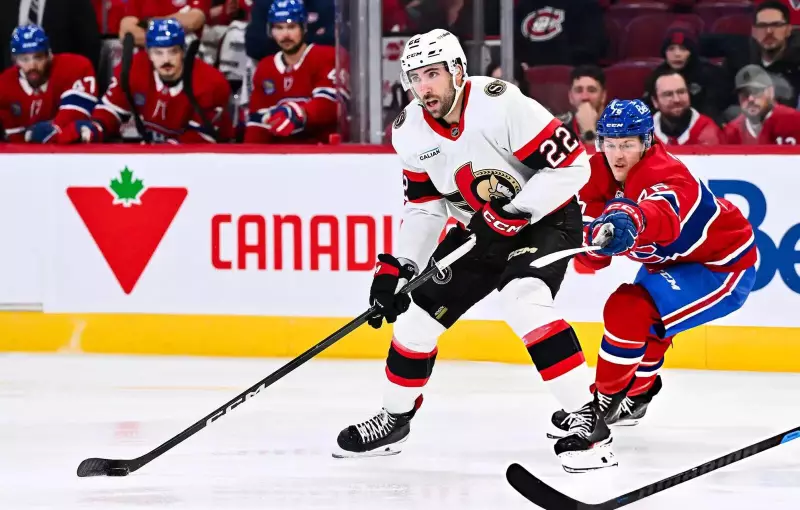
The National Hockey League (NHL) has been forced to issue a firm and public reminder to its clubs regarding a crucial player safety rule, following a spate of violations in late November. The league's intervention comes after three separate incidents where teams allowed players to skate without helmets during pre-game warmups, directly contravening established regulations.
A String of Violations Prompt League Action
The sequence of events that triggered the league's response unfolded rapidly. On November 27, the Ottawa Senators were the first to neglect the rule, followed by the San Jose Sharks on November 30, and finally the New Jersey Devils on December 1. This consecutive disregard for the mandate proved to be the final straw for the NHL's head office.
On December 2, NHL Deputy Commissioner Bill Daly stepped in to clarify the rule beyond any doubt. In communications with major media outlets, including ESPN, Daly explicitly stated the league's position. He confirmed that the rule, established in 2022, makes it mandatory for all players who entered the NHL beginning with the 2019-20 season or later to wear a helmet during the pre-game warm-up.

Daly pointed out that the memo was necessary to address a noticeable and concerning "rising trend" of teams forgoing helmets for motivational or celebratory purposes, often as part of rookie traditions.
Safety First: The Reason Behind the Rule
The NHL's helmet rule for warmups wasn't implemented arbitrarily. It was born out of a clear need to protect players, particularly younger ones, from unnecessary risk. Pre-game warmups are known to be chaotic and fast-paced environments where pucks fly at high speeds and players move quickly in confined spaces.
The dangers were starkly highlighted by past incidents, such as the 2012 event where forward Taylor Hall suffered a significant cut from a skate blade. The 2022 rule, which was endorsed by the NHL Players' Association (NHLPA), aimed to safeguard rookies and younger players who might feel pressured to participate in "hazing-lite" traditions of skating without a helmet before their debut games.
While fostering team camaraderie is important, the league and the players' union agreed it should not come at the expense of basic safety.
No Fines, But a Clear Message
In his communications, Deputy Commissioner Daly made it clear that the memo is intended as a reminder and an educational tool, not a precursor to punishment. In an email to the Bay Area News Group regarding the San Jose incident, Daly noted, "I don’t anticipate that San Jose will be singled out or disciplined."
Similarly, his comments to ESPN confirmed that no additional penalties are expected for the violating clubs. However, the message from the league is unambiguous: the period of casual tolerance for these violations is over. The memo serves as a formal warning that the NHL will insist on strict compliance moving forward.
The league's proactive stance underscores its commitment to player welfare, using these recent incidents as a teachable moment for all 32 teams. By publicly reinforcing the rule, the NHL hopes to eliminate the trend and ensure a safer environment for every player taking the ice, even before the official game begins.