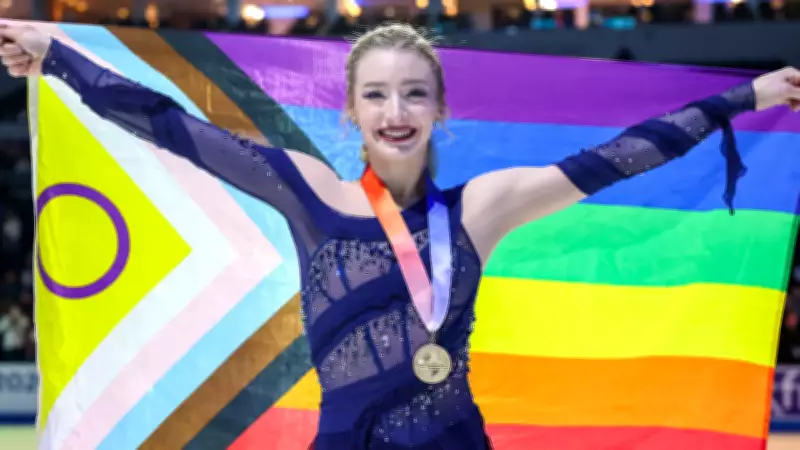
Olympic Triumph Meets Copyright Turmoil for American Skater Amber Glenn
American figure skater Amber Glenn experienced the pinnacle of athletic achievement at the Milano Cortina Winter Olympics, contributing to the United States team event gold medal victory. However, this celebratory moment was swiftly complicated by a burgeoning copyright controversy that cast a shadow over her Olympic performance.
Artist Objects to Unauthorized Use of Musical Composition
Shortly after the team event concluded, Canadian artist Seb McKinnon publicly raised objections regarding Glenn's use of his song The Return in her free skate program. McKinnon revealed he had just discovered an Olympic athlete was using his music worldwide without his explicit approval, questioning whether such practices were standard at the Games. The track had been integral to Glenn's routine for nearly two years, yet the artist asserted he had never granted permission for its use in this context.
McKinnon later clarified that his contractual arrangements stipulate only he possesses the authority to license his creative work, adding legal weight to his public complaint. This dispute emerged as Glenn had already withdrawn from social media platforms following substantial criticism over her political remarks and LGBTQ+ advocacy statements before the Olympic competition commenced.

Complex Music Licensing Landscape in Figure Skating
The copyright complaint introduced another significant challenge for both the skater and the U.S. Figure Skating federation. Music permission protocols in figure skating represent a notoriously complex ecosystem involving multiple rights holders, record labels, and licensing agencies. Determining precisely who holds approval authority for specific musical compositions can create confusion that sometimes escalates into public disputes during major international competitions.
This approval process has grown increasingly intricate since 2014, when figure skating officially permitted vocals in performances. Previously, programs predominantly utilized classical music existing in the public domain, minimizing copyright complications. Similar licensing disputes surfaced during the 2022 Beijing Olympics, prompting the International Skating Union to reexamine and potentially improve their procedural guidelines.
Social Media Criticism Compounds Olympic Challenges
The copyright issue developed alongside Glenn confronting online threats following her commentary about the political climate and LGBTQ+ rights. The skater expressed profound disappointment, noting she had never encountered such voluminous hostile messages simply for expressing support for fundamental human rights and kindness. This reaction substantially diminished her excitement about competing at the Olympic level.
Glenn previously suggested that such conflicts often appear financially motivated, while emphasizing that skaters depend heavily on musical accompaniment to express their athletic artistry. U.S. Figure Skating officials acknowledged they generally attempt to assist athletes in navigating copyright concerns, though their specific role in this particular situation remains unclear as neither Glenn nor the federation provided immediate responses to McKinnon's claims.
Industry Perspectives on Music in Figure Skating
Within the skating community, some voices offered support for Glenn's position. Retired Olympian Meagan Duhamel noted she would feel honored if an athlete performed to her musical compositions, recalling an instance where an artist attended the Olympics specifically to watch her skate live. Fellow teammate Alysa Liu reinforced that music constitutes an essential component of figure skating's artistic identity and competitive expression.
Companies like ClicknClear have emerged to help manage these complex permissions, as skaters frequently edit and combine multiple music pieces to create their unique competitive programs. This case highlights the ongoing tension between athletic expression and intellectual property rights in international sports, particularly when artistic elements intersect with commercial considerations at the world's most visible sporting events.