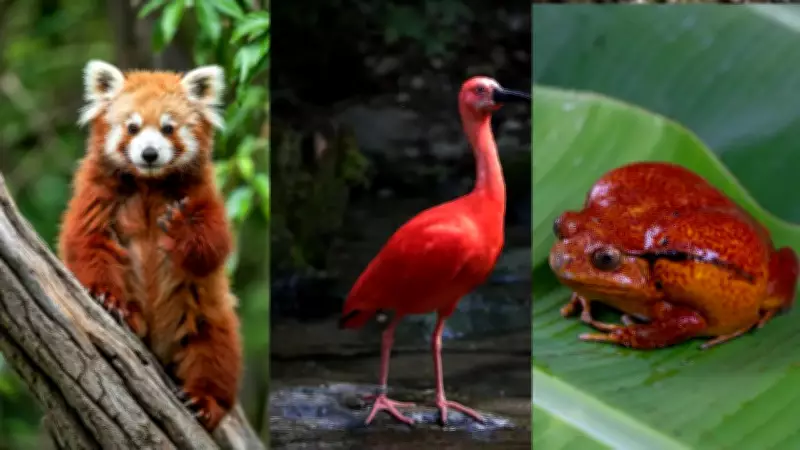
Ever come across a fiercely red-colored animal? While the mere thought of such creatures may seem like a bluff or straight out of a fictional movie, you will be amazed to know that nature has some of the best-kept secrets hidden in the deepest and darkest forests. Here is all you need to know about these unique yet deadly animals that are red in color and worth knowing.
Is the Color Red Just Beautiful or Scary?
Interestingly, nature is full of mystery and the colors of animals are not just to make them look enticing; rather, they are the mere mode of survival. Whether it is warning a predator of deadly toxins, signaling health to a potential mate, or acting as a fiery uniform in the treetops, these crimson creatures are some of the most striking masterpieces of evolution. Here are five fascinating red animals that prove nature has a flair for the dramatic.
The Scarlet Ibis
If you ever see a flock of Scarlet Ibises taking flight against a green mangrove swamp, it looks like a burst of living fireworks. Native to the wetlands of South America and the Caribbean, this wading bird is famous for its uniform, shockingly vibrant neon-red plumage. What makes them truly fascinating is that they are not born this way. Crimson chicks start their lives with drab grey and brown feathers. Their iconic red shade is completely manufactured by their diet. They gorge themselves on red crabs, shrimp, and crustaceans rich in carotenoids—natural pigments that gradually dye their feathers bright red over their first two years of life.

The Red Panda
Moving from the tropics to the high-altitude bamboo forests of Asia, the red panda uses its color for a completely different reason: stealth. This red panda has a thick coat that is a rusty red color and it has white markings on its face and a tail with rings on it which makes it look really beautiful. The color red does not seem like it would be a choice for hiding but it actually works really well in the red panda's natural home. The trees where the red pandas live in the Himalayas are covered in a lot of reddish-brown moss and white lichens. When a red panda curls up into a ball high up in the trees to sleep during the day, its red fur looks like the moss on the branches so it is completely hidden from eagles and snow leopards that are hunting from above. The red panda is really good at hiding. Its red color is a big part of that.
The Tomato Frog
True to its name, this plump amphibian looks exactly like a ripe, glossy tomato sitting on the rainforest floor. Found exclusively in the humid lowlands of Madagascar, the female tomato frog boasts a deep, fiery orange-red complexion that serves as a direct message to the local wildlife: look, but do not touch. This is a classic case of warning coloration. When a predator ignores the bright red paint job and tries to bite the frog, its skin secretes a thick, white, glue-like substance. This toxic slime is not bad for people. It is very bad for animals like snakes or birds that try to eat the frog. The slime gets over the eyes and mouth of these animals so they have to let the frog go and find something else to eat that is not so sticky. The frog is safe because the slime is like a protection for it. The animals do not like the slime so they leave the frog alone.
The Red Velvet Ant
Crawling across the dry fields of North America, this creature looks like a harmless, oversized ant wrapped in a luxurious, fuzzy scarlet sweater. But do not let the velvet fool you. The red velvet ant is actually a species of wingless wasp, and it possesses one of the most agonizing defenses in the insect world. The bright red, velvety bands on its body tell predators to stay far away. If a curious animal ignores the warning, the female velvet ant delivers a sting so blindingly painful that its historical folklore nickname is the "Cow Killer." Because she lacks wings, she evolved an incredibly tough, armored exoskeleton to protect herself while hunting on the ground, making her almost impossible to crush.

The Strawberry Poison Dart Frog
Hiding in the leaf litter of Central American jungles, the strawberry poison dart frog is barely the size of a paperclip, but its color packs a massive punch. Its head and torso are washed in a dazzling, jewel-toned crimson, contrasted sharply by dark blue or purple legs—a look that has earned it the nickname the "blue jeans frog." Like the tomato frog, its paint job is a billboard for danger. These tiny amphibians sequester deadly alkaloids from the toxic ants and mites they eat, making their skin highly poisonous. A single encounter with that bright red warning is usually enough to teach any jungle predator a permanent lesson.