Why Indian Skaters Are Trading Rinks for Road Racing
Indian athletes are discovering a surprising new path to success. They are leaving roller skating behind and embracing road cycling. This trend is gaining momentum across the country.
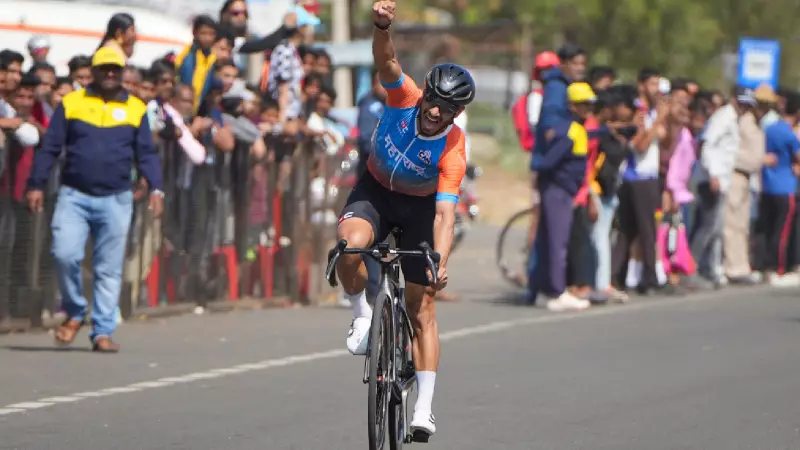
Surya Thathu embodies this shift perfectly. The 27-year-old athlete recently earned a spot on the Indian team for the upcoming Pune Grand Tour. This event marks the biggest international road race ever hosted in India.
From Skating Wheels to Racing Bikes
Thathu's journey began on roller skates. Like many others, he found his athletic skills were a perfect match for cycling. Officials from the Cycling Federation of India actively scout skaters for raw talent. They look for specific physical attributes that both sports share.

Harshveer Singh Sikhon led the way. This all-round rider from Ludhiana was the first notable skater to switch. He even represented India in skating at the 2018 Asian Games in Jakarta. However, he saw limited future in a sport lacking government priority funding.
Cycling coaches encouraged him to try a bike. He adapted almost instantly. Within months, Harshveer won his first track cycling medal. His success inspired a wave of change.
The Federation's Strategy for Talent
Maninder Pal Singh, the General Secretary of the Cycling Federation of India, explains the logic. "Cycling starts seriously only in the 12-14 age group," he says. "For road cycling, we look for skaters. Specific muscle groups are common to both sports. Skaters progress in cycling very quickly."
The Federation has a history of recruiting from other sports. Track stars like Esow and Ronaldo originally came from football backgrounds. Skaters represent the latest pool of talent.
Harshveer skated for 14 years before making the switch. His parents, a kabaddi player and a hockey player, always motivated him. "Skating had no government support," he recalls. "My muscles were already developed. My seniors, who were also former skaters, helped me by lending their expensive bikes. From Day 1, I synced and knew I was good."
The Physical and Tactical Overlap
Surya Thathu details the physical similarities. Skaters enter cycling with a strong base of balanced movements. They can handle road curvatures with ease.
"You have to build up endurance because road cycling lasts for days, not minutes," Surya notes. "But it's the same fast-twitch fibres in the leg muscles, quads, glutes, and calves. About 80% of the core and arm movement is identical to skating."
For Harshveer, the tactics feel familiar too. "It's a mix of endurance and explosiveness," he explains. "It's about who can maintain a high pace over a long period." He describes skating as giving a sense of flying in his teens. Cycling, however, is the adult version—addictive but brutally demanding on the limbs and lungs during a climb.
Personal Journeys and Family Support
Surya's personal story adds depth to his athletic shift. His father left Kashmir in 1990, settling in Dalhousie where Surya was born. The family later moved south for work. In Pune, Surya developed a love for sprinting up hills on his bicycle, even before formally switching sports.
Coming from a Kashmiri Pandit family focused on academics and professions like medicine or engineering, sports faced an uphill battle. Surya initially kept his cycling dreams secret. He convinced his mother to lend him money for a better bike.
His breakthrough came at an inter-University event in 2021. Riding a second-hand bike, he finished a surprising fourth. This gave him the courage to approach his father. "Dad, now we need to buy a bike for 40,000 rupees," he said. The moment turned emotional, marking his family's acceptance.
Even a serious accident in October 2022, where a truck hit him from behind and broke his scapula, did not deter him. He bounced back to win an inter-university bronze medal just two months later.
Looking Ahead to the Pune Grand Tour
Both Surya and Harshveer are now part of the eight-member Indian team for the Pune Grand Tour. They acknowledge they are rookies compared to seasoned European competitors. Yet, they see it as a crucial learning experience.

Surya misses the camaraderie of skating, where friends are always around. Cycling can be a solitary pursuit. However, the upcoming race offers a chance to work within a team, riding in a group known as a peloton and executing breakaway strategies.
For these athletes, cycling has become a powerful second act. It builds on their skating foundation while offering new competitive horizons. Their journeys highlight how adaptable Indian athletes can be when opportunity knocks on a different track.