From Battlefield Blast to Bionic Hands: Subedar Chand's Fight to Return to Duty
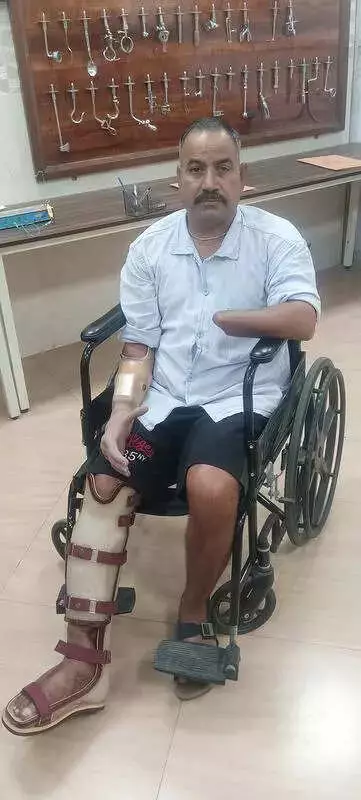
Forty-six-year-old Subedar Rachhpaul Chand once thought his military career had ended forever. A devastating IED explosion at the Pokharan firing range in Rajasthan took both his hands. Today, equipped with a bionic hand and standing on a prosthetic leg, this battle-hardened soldier refuses to surrender. He wants to return to his unit not for sympathy, but as a living symbol of resilience.
The Fateful Day That Changed Everything
Subedar Chand suffered catastrophic injuries during an internal exercise at Pokharan firing range. This happened shortly after Operation Sindoor concluded. He recalls that on May 27, his unit conducted IED identification and disposal operations using drones. While most explosives were neutralized successfully, seven unexploded IEDs remained on the field.
"The next day, we received orders to destroy those remaining IEDs," Subedar Chand remembers clearly. "Along with two other soldiers, I managed to destroy six of them. When we located the seventh device, it exploded before we could neutralize it."

The blast caused unimaginable damage. Both his hands were amputated below the elbow. His right leg was lost below the knee. He also lost his left eye and ear in the explosion. The two soldiers accompanying him sustained injuries too, though fortunately none were life-threatening.
The Long Road to Recovery
Medical treatment began immediately at a military medical unit in Jodhpur. From there, doctors transferred him to the Command Hospital, Southern Command. He underwent multiple surgeries before moving to the Artificial Limb Centre in Pune for rehabilitation.
"When I arrived here, I saw many others like me who were recovering," Subedar Chand shares. "That gave me hope—'ek ummeed aa gayi mujhe.' Until that moment, I had been thinking only negative thoughts about myself and my future."
Months of intensive rehabilitation have produced remarkable results. Subedar Chand can now walk short distances without assistance. He shaves independently using his bionic hand. He lifts glasses of water and performs basic daily tasks that once seemed impossible. A second bionic hand will be fitted in the coming weeks, further expanding his capabilities.
A Soldier's Unbreakable Spirit
"Mujhe wapas unit mein jaakar firing karni hai," Subedar Chand states with quiet determination. He wants to go back to his unit and fire weapons again. His goal extends beyond personal recovery—he aims to inspire his troops in the 16 Dogra Battalion of the Indian Army.
"My aim is to recover as early as possible and return to my unit," he says with a smile. "I want to fire a weapon again to show others that injuries cannot stop a soldier."
Originally from Khadergal village in Jammu & Kashmir's Samba district, about 20 kilometers from Jammu city, Subedar Chand has always been an exceptional soldier. He topped his course at the College of Military Engineering in Pune back in 2017. Before his injury, he served as a key member of a specialized platoon tasked with IED destruction in operational areas.
The Support System That Made Recovery Possible
"What matters most for a soldier is a never-say-die attitude," Subedar Chand emphasizes. "My recovery became possible because of tremendous support from multiple sources."
His unit deployed two soldiers specifically to assist him during rehabilitation. Army doctors constantly reassured him that he would live a normal life again. His family stood by him throughout the entire challenging journey.
Brigadier CL Satish, Commandant of the Artificial Limb Centre, explains their approach goes beyond medical treatment. "Our aim extends beyond treating patients," he says. "We work to restore their confidence and sense of normalcy. That's exactly what we achieved with Subedar Chand. His progress has been truly inspiring to witness."
For Subedar Rachhpaul Chand, the battle continues. But he faces it with the same unbreakable spirit that has defined his military career. His journey from battlefield devastation to bionic rehabilitation stands as a powerful testament to human resilience and the indomitable will of a soldier.