India's Olympic Ambition Confronts Environmental Reality: Athletes Sound Alarm Over Toxic Air and Scorching Heat
As India makes its ambitious pitch to host the 2036 Olympic Games, a stark environmental challenge is emerging that threatens to undermine the country's sporting aspirations. The Indian Express conducted extensive interviews with coaches and athletes across multiple disciplines, uncovering a troubling pattern of health and training disruptions caused by Delhi's toxic winter air and extreme summer temperatures that frequently approach 50 degrees Celsius.
International Athletes Raise Concerns with Olympic Committee
During the recent India Open badminton tournament, international stars openly questioned Delhi's suitability for hosting global sporting events, citing serious health concerns related to air pollution. Some competitors went so far as to file complaints with the International Olympic Committee. "We can confirm that the IOC Athletes' Commission has received the information and is in touch," an IOC spokesperson confirmed to The Indian Express.
Training Grounds Transformed into Health Hazards
At the Sports Authority of India's Sonepat center, Dronacharya Award-winning hockey coach Pritam Siwach described a disturbing cycle affecting her players. "They fall sick, recover and fall sick again. It doesn't end," she revealed, noting that dust and toxic air leave athletes coughing and suffering from allergies. Medical professionals at the facility have delivered a blunt assessment: both air and water quality are unfit for elite athletes.

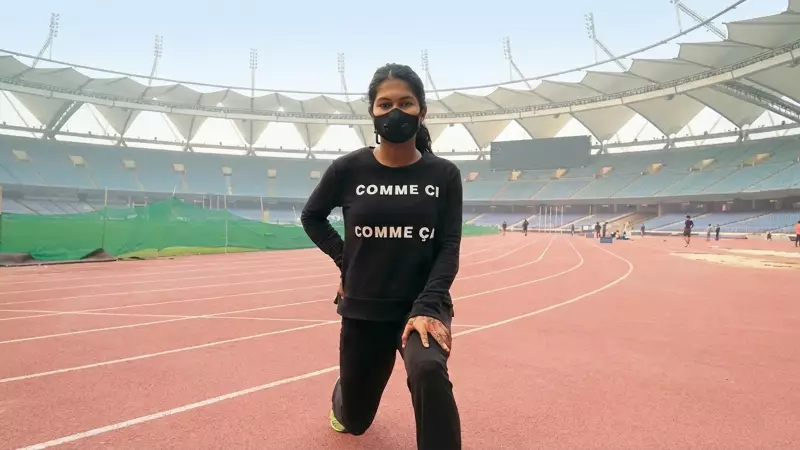
Decathlete Tejaswin Shankar, originally from Delhi, has been forced to adopt a nomadic training approach, moving first to Bhubaneswar, then South Africa, and currently the United States to escape pollution. "Winter training in Delhi is no longer about grit, but pollution," he stated, emphasizing that there are "real physiological costs for athletes in Delhi."
Unbearable Conditions Across Premier Training Facilities
The National Institute of Sport in Patiala faces a different but equally challenging problem with what athletes describe as "unbearable summers." Olympic and world champion Neeraj Chopra previously noted that "it becomes difficult to even stand outside in the heat for five minutes," calling training in such conditions "extremely difficult."
While international athletes can choose to avoid these conditions—as Denmark's Anders Antonsen did by skipping the India Open—Indian competitors have no such luxury. Their exposure is constant, and the health consequences cumulative.
Systemic Impact on Training Cycles
Interviews with athletes and coaches from boxing, wrestling, athletics, para-athletics, cycling, shooting, and hockey revealed unanimous concern. These environmental conditions aren't causing sudden training collapses but rather a slow, relentless erosion of carefully planned training cycles.
Dr. Randeep Guleria, former chief of AIIMS, warned that exercising in polluted air "puts extra strain on the lungs, reduces exercise capacity" and can affect both heart and brain function. His prescription is straightforward: "Ideally, they will need a base camp in a region where they can train safely—possibly outside central India, because the air quality is bad in the Indo-Gangetic belt."
Geographic Concentration of Training Infrastructure
This recommendation presents a significant logistical challenge, as many of India's premier sports institutions are concentrated in the affected region:
- National Institute of Sport in Patiala
- National Centres of Excellence for Olympic disciplines in Sonepat, Rohtak, Chandigarh, Lucknow, and New Delhi
- Major Delhi venues including Jawaharlal Nehru Stadium, Dr. Karni Singh Shooting Range, and Indira Gandhi Sports Complex
These facilities have historically served as nurseries for champions—nine of India's thirteen medalists from the last two Olympics trained at these centers.

Shrinking Training Windows Amid Olympic Preparations
The environmental challenges arrive just as India is implementing an ambitious Olympic preparation program. The Sports Ministry has enlisted legendary athletes to overhaul coaching systems, professionalize administration, and implement a ten-year roadmap targeting 12-14 gold medals. The vision includes a Rs 1,500-2,000 crore makeover of NIS Patiala and establishing Olympic Training Centers for each sport.
Yet coaches warn that a critical factor is being overlooked. Hockey coach Pritam Siwach estimates that athletes can now train without weather concerns for just "two or three months in a year," and even that period isn't continuous. "When we see dark clouds over our heads, we are happy because it means rain and fresh air," she admitted.
Alarming Environmental Data
The statistics paint a concerning picture:
- In 2024, Delhi and adjoining regions experienced their longest spell of extreme heat in 74 years, with temperatures above 40°C for over a month
- From June to August 2024, temperatures ranged between 46°C and 50°C, far exceeding the 32°C heat-stress threshold for sports like football and tennis
- According to aqi.in, Delhi recorded zero clean air days throughout 2025
- A report by Esri India and IPE Global projects a two-fold increase in heatwave days in Delhi by 2030
Personal Toll on Athletes
Gajendra Singh, coach and husband of Paris Paralympics bronze medalist Simran Sharma, described how Delhi's pollution "takes a toll on the body." "When we do repeated sprints in training, Simran vomits and her cough lasts longer. Our training programme revolves around the AQI levels," he explained.
This situation has created a troubling divide: elite athletes with resources are relocating to southern India or overseas for cleaner air and milder summers, while juniors and grassroots athletes—the very cohort from which India's potential 2036 Olympians will emerge—are left behind.
Medical Experts Confirm Growing Danger
Dr. Guleria confirmed that "the window for safe outdoor exercise is shrinking." He explained: "Because breathing rates increase during exercise, more polluted air is inhaled, increasing exposure to harmful particles, which over time can cause breathing difficulty, chest tightness, and reduced overall performance."
Call for Climate-Controlled Facilities
Coaches and athletes are increasingly advocating for indoor, temperature-controlled arenas. Neeraj Chopra emphasized this need in 2021: "I have been saying that there should be an indoor track for athletics at least in Patiala. If you see the smallest of countries, they have indoor tracks."
In his recent report on restructuring NIS Patiala, badminton legend Pullela Gopichand specifically recommended a "flagship multi-sport indoor complex housing climate-controlled training halls."
Hockey coach Siwach, who first encountered an indoor hockey center in the Netherlands, has proposed similar facilities for India. She warns that time is running out: "Even now, when I go to the ground, the irritation in my eyes and throat is so intense that I feel compelled to finish quickly and go back indoors. If I'm experiencing this, imagine what the players, who run constantly, must be going through. How can coaches develop quality talent under such conditions?"
As India positions itself as a future Olympic host, the country faces a fundamental question: can it create training environments that protect athlete health while developing champions capable of competing on the world's biggest sporting stage?