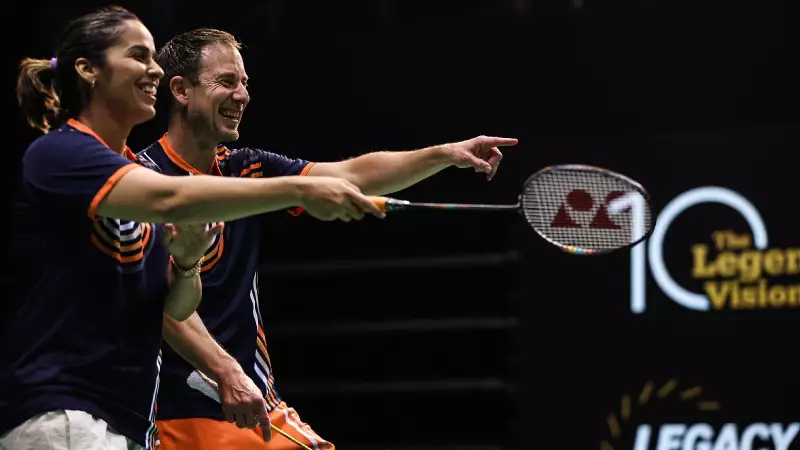
Legendary Indian shuttler Saina Nehwal has expressed that while the current generation of Indian badminton players possesses impressive technical skills, they lack the raw, explosive power that defined her game and that of fellow Olympic medallist PV Sindhu. She also pointed to smartphones and social media as factors making modern athletes soft
.
The Power Deficit in Modern Badminton
Reflecting on the state of Indian badminton during an exclusive conversation at the Siri Fort Badminton Complex, the same venue where she became India's first-ever BWF World No. 1 in 2015, Nehwal shared her candid assessment. She believes strength and power are often innate qualities that can be developed later, but are naturally present in some athletes from a young age.
The current set of players have really good strokes and shot-making ability, but I feel they lack the power game,
Nehwal stated. The explosiveness which can shock or surprise the opponent is needed in crunch matches.
She expressed optimism, however, noting that with dedicated trainers and support teams, this power can be cultivated over the next two to three years.

Smartphones, Soft Mentality, and Solo Training
Nehwal highlighted a significant shift in training ethos and mentality between her generation and the current crop of players. She attributed a part of this change to the pervasive influence of technology. Today's generation is very smart, but the difference is that I used to listen to my coach and trust like anything,
she explained. Today, if the coach gets angry, kids feel bad about it. They have become a little soft and I think social media and phones have a lot to do with it.
Another critical issue she identified is the trend of athletes training alone. Nehwal emphasized the irreplaceable value of group training, which she experienced during her prime. When we used to train in a group, we would have a variety of shuttlers to train with who had different playing styles,
she recalled. This exposure to diverse techniques, she argued, is invaluable preparation for the international circuit where players face a wide array of styles.
Promising Talents and India's Transition Phase
Despite her critiques, Nehwal is excited about the future, naming several young women's singles players who show great promise. She specifically mentioned Unnati Hooda, Anmol Kharb, and Tanvi Sharma as talents to watch.
She praised Anmol Kharb's role in the historic Asian Team Championships victory and her composure under pressure. Of Unnati Hooda, Nehwal said, Her deception is really good and she has quite a bit of endurance to grind out the three games.
She also noted Tanvi Sharma's strong leg power, which aids her court movement.
Commenting on the broader Indian badminton landscape, Nehwal acknowledged the recent success of Lakshya Sen, who won the Australian Open, as a positive sign. However, she identified a key missing ingredient: consistency in winning titles. All the Indians are playing well, especially the new generation. We have Indians defeating big players but consistent results are missing,
she observed.
Nehwal framed this as a natural transition phase for any sporting nation, drawing a parallel to the era dominated by legends like Lin Dan and Lee Chong Wei in men's singles. Transitions in sport is a tough phase and I think we are going through that,
she said, refusing to write off the current generation and expressing confidence that results will eventually follow their evident talent and smart gameplay.