In cricket, matches are decided by runs and wickets. But on December 27, 2009, at Delhi's Feroz Shah Kotla ground, it was the pitch itself that delivered the final verdict, forcing an unprecedented and premature end to an international contest. The fifth and final One-Day International between India and Sri Lanka was abandoned after just 23.3 overs because the playing surface was declared too dangerous, turning a celebratory series finale into one of the most uncomfortable episodes in Indian cricket history.
A Surface of Unpredictable Peril
India had already sealed the five-match series 3-1, but the Delhi encounter was supposed to offer a sporting conclusion. Instead, from the moment Sri Lanka was asked to bat first, it became a battle for survival. The relaid Kotla pitch exhibited "extremely variable bounce", with deliveries from similar lengths behaving in wildly different ways. One ball would shoot along the ground at shin height, while the next from an identical area would rear up alarmingly to shoulder height.
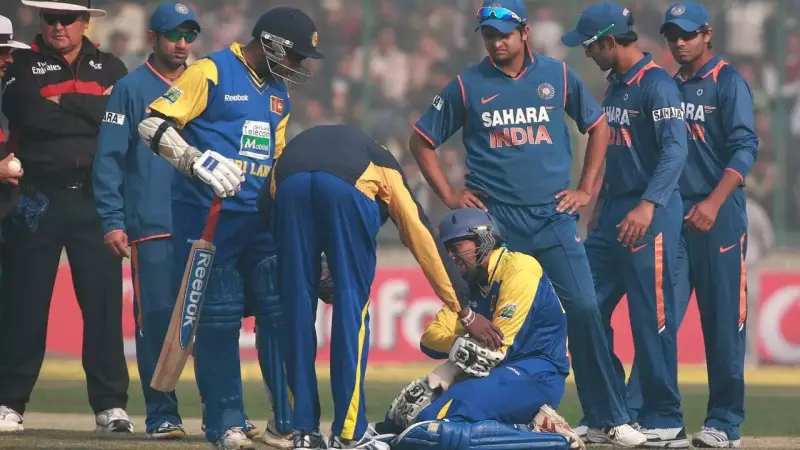
This wasn't just difficult batting; it was hazardous. Batters could not trust length, pace, or bounce, leaving them only to react and hope. The danger was palpable and immediate. Sri Lankan opener Tillakaratne Dilshan was struck painfully on the forearm by an Ashish Nehra delivery, requiring on-field treatment. Veteran Sanath Jayasuriya, who faced the most balls, was hit multiple times on the arm and wrist. Within the short span of play, the visiting team was fortunate to escape with only two blows needing medical attention.

The Decision to Halt Play and Fan Fury
The situation reached a breaking point in the 24th over. After a delivery from Indian debutant Sudeep Tyagi rose sharply, Sri Lankan batsman Thilina Kandamby approached on-field umpires Marais Erasmus and Shavir Tarapore. This triggered a high-level meeting involving match referee Alan Hurst, captains MS Dhoni and Kumar Sangakkara, coaches, and the curator.
Despite officials from the Delhi and District Cricket Association (DDCA), including vice-president Chetan Chauhan, offering an alternative pitch, the decision was made to abandon the match for player safety. This announcement, which came over an hour after teams had left the field, triggered chaos in the packed stands. Angry spectators, feeling short-changed, expressed their frustration by throwing water bottles and chair covers, damaging parts of the stadium.
Expert Condemnation and Lasting Consequences
The pitch drew severe criticism from experts. Legendary batsman Sunil Gavaskar, on pitch-report duty, famously likened the irregular grass cover to a "hair transplant" with bald patches. He explained that balls hitting grassy areas seamed and bounced excessively, while those landing on bare patches stayed dangerously low, with the contrasting zones being perilously close to each other.
The fallout was significant. The Feroz Shah Kotla (now Arun Jaitley Stadium) was barred from hosting international matches for one year by the BCCI. This penalty was considered lenient, as a harsher ICC ban could have stripped Delhi of its matches in the upcoming 2011 Cricket World Cup. The match remains a stark reminder that the quality and safety of the playing surface are fundamental to the sport's integrity, and its failure can bring even the grandest of contests to an ignominious halt.
In the 23.3 overs of play that were possible, India had reduced Sri Lanka to 83/5. Zaheer Khan took a wicket off the very first ball, and Harbhajan Singh claimed Jayasuriya's wicket. MS Dhoni, returning from a two-match ban, was impeccable behind the stumps. But these statistics were utterly overshadowed by the central character of that day: a pitch that became the opponent of every player on the field.