Abhishek Sharma's Amritsar: Where Cricket Meets Kulchas and Kites
India's ace destructive opener Abhishek Sharma grew up in a city that proudly displays captured Patton tanks and believes that the legendary Viv Richards left a bit of his swag behind for the young 'Abhe' to reclaim years later.
The Historic Grounds of Gandhi Sports Complex
On a typical Sunday evening at the Gandhi Sports Complex Ground, constructed in 1932, assistant curator Raju fields questions from local cricket league players. "Abhishek Sharma ethe hi khede ne?" they inquire, wondering if Sharma played there. Raju gestures toward the adjacent Badminton Hall. "Hanji, te ground toh bahar chakke uss badminton hall te marda si," he recalls, describing how Sharma's sixes would land at that hall.
Raju's grandfather, Rakha Ram, served as a curator at the ground post-independence. The storeroom holds a photograph of former Indian captain Kapil Dev receiving congratulations from Sir Richard Hadlee for breaking his world record of 431 Test wickets. The stadium also features images of pre-independence pacers Mohammad Nisar and Amar Singh. "My grandfather witnessed Bishen Singh Bedi and others in their prime," Raju shares. "Later, I saw 1983 World Cup winners Mohinder Amarnath and Madan Lal welcomed here."

When Abhishek's father, Raj Kumar Sharma, began dropping off his young son before heading to his bank job, the curators watched over him like guardians. "He would sit in the stands after nets and ask for juice, which he adored. Even on rainy days, he persisted with fitness drills," Raju remembers.
Curators' Insights and Community Pride
Fellow curators Hansraj and Mangal Das join the conversation. Hansraj worked during the 1995 India-New Zealand ODI, one of only two ODIs hosted at the ground. "Abhishek always requests bouncy wickets. While he focuses on tackling spin, he believes a skilled pacer can excel even on slow pitches," Hansraj explains, noting that hook and pull shots came naturally to Sharma. He has heard tales of Viv Richards' destructive batting in the 1980s. "But we've been fortunate to witness our Abhe—I mean Abhishek. To us, he is Abhe," Hansraj adds warmly.
Amritsar's Culinary and Cultural Tapestry
In a city where Sundays start with naan, poori, and kulchas for breakfast, mornings also involve visits to famous tea stalls. Giani Tea Stall on Cooper Road, near the Ram Bagha complex built during Maharaja Ranjit Singh's reign, has been served by septuagenarian Gurmit Singh since 1956. While Giani remains popular, new tea shops have emerged over the past decade, offering paneer bhurji, bun butter, butter toast, and bun omelette.
This Sunday, joggers enjoy a grand breakfast while discussing Abhishek's 16-ball 30 in the fifth T20I against New Zealand. "Politics or cricket dominate every table. I recall listening to radio commentary and debating the batting of Kapil Dev, Viv Richards, and Mohinder Amarnath," says Narinder Sandhu. "New tea stalls with glittering boards have opened, much like Abhishek Sharma, who brings pyrotechnics to cricket with his shots."
Iconic Eateries and Local Traditions
A 15-minute ride through the old city leads to Ahuja Lassi, a 72-year-old shop selling milk, ghee, cottage cheese, curd, and lassi. In an interview with anchor Gaurav Kapur, Sharma mentioned this iconic lassi as his favorite, praising the butter and cream on the steel glass. "Kapil paji visited our shop too. Once, Syed Kirmani brought the entire Indian team for lassi. Seeing Abhishek here now feels special. Jinni taarif kariye Abhishek di, ohni kat hai," says owner Brij Mohan.
Another ten-minute drive reaches Islamabad Nagar, passing Gobindgarh Fort, where a captured Pakistan Army Patton tank stands at a roundabout. The Sharma family lived here until eight years ago. Last month, Abhishek visited with singer AP Dhillon to fly kites at his old home during Lohri, a cherished tradition. Narender Sharma, who has run a kite shop since 1975, shares, "Like any Ambarsari boy, Abhishek loves flying kites. All of Amritsar takes pride in his representing India. We hope he soars high like a kite and wins the World Cup."

Family, Mentorship, and Spiritual Connections
The Sharmas have moved to a plush new locality, where a palatial home is under construction. Cricketer-turned-politician Navjot Singh Sidhu and comedian Kapil Sharma reside nearby. The shift from the old city to this glitzy neighborhood marks a significant milestone for any Amritsari.
Abhishek's father, Rajkumar, who played for Punjab, expresses gratitude for the city's blessings. "We are blessed to be born in Guru ki nagri Amritsar. With Guru Kripa, we have everything. When Abhishek was young, he only asked for new bats." He recalls buying a Rs 18,000 English Willow bat for his 12-year-old son, despite having only Rs 5,000 initially. "Abhishek cherished that bat all summer," he says fondly.
Scorer Sushil Diwan has been a constant presence in the cricketer's life, from his U16 debut to his first T20I in Mullanpur. "Rajkumar would bring Abhishek post-match for analysis. He believed scorers observe every batsman and should highlight strengths and weaknesses. Abhishek's leg glance and six-hitting ability have impressed us since his junior days," Diwan recalls.
Spiritual Foundations and Community Prayers
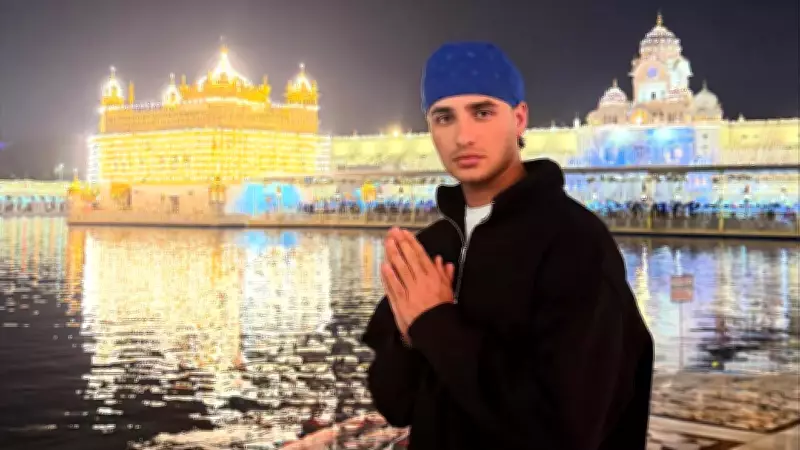
Amritsar, home to the Golden Temple, blends diverse cultures, from British-era churches to ancient temples like Durgiana and the revered Gurudwara Baba Deep Singh Shaheed. The Sharma family frequently visits these gurdwaras. "We pray for every member of the sangat, including Abhishek. He is Amritsar's, Punjab's, and India's pride. We pray for his World Cup success," says Jitendr Pal Singh, manager of the gurdwara committee.
As dusk falls at the Gandhi ground, Raju and his team store equipment. The last time they saw 'Abhe' was on Lohri, when he visited briefly. "As a child, I saw Viv Richards and Clive Lloyd play here, and Dara Singh's kushti in the early 1980s. We dream of watching Abhe play in India colors at this ground someday," Raju shares, encapsulating the city's hopes for its beloved cricketer.