Ajay Sharma's Redemption Arc: From Personal Turmoil to Coaching J&K to Historic Ranji Final
BENGALURU: Engaging in a conversation with Jammu and Kashmir's head coach Ajay Sharma is akin to experiencing a cinematic masterpiece—a narrative rich with emotional depth, transformative performances, and resonant dialogues. At 61, the former India batter, who assumed leadership before the 2022-23 season, characterizes his tenure with the J&K squad as nothing short of a rebirth. This profound sentiment is deeply anchored in his own life experiences.
Sharma's illustrious playing career was abruptly interrupted by match-fixing accusations, from which he was ultimately exonerated by the judicial system. This ordeal compelled him to reconstruct his life and professional standing from the ground up. Today, as a mentor, he has orchestrated an extraordinary revival. He has infused a once-underestimated team with a robust culture, unwavering belief, and a victorious mentality, propelling them to unprecedented heights.
Overcoming Initial Resistance and Fostering Unity
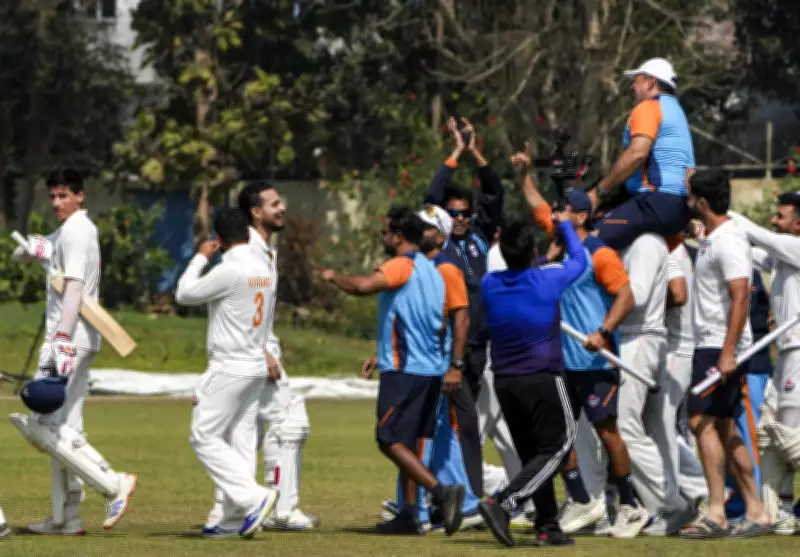
With Jammu and Kashmir poised to challenge the eight-time champions Karnataka in their inaugural Ranji Trophy final in Hubballi commencing Tuesday, Sharma elaborated on the squad's ascent, the adversities faced, and the relentless drive fueling their campaign. Reflecting on the initial challenges, he noted, "The first year was exceptionally difficult. At that time, the players' mindset was distinctly different. Their aspirations were narrowly focused on IPL participation, lacking the requisite temperament for the rigors of red-ball cricket. Regardless of the format, batsmen would aggressively charge from the very first delivery. I was initially furious, and it required considerable time to comprehend their perspective."

He continued, "I gradually became convinced that with proper mental grooming, their approach could evolve—and indeed, it did. However, this transformation was far from straightforward. In the inaugural season, the players were not receptive to my methods. Their attitude towards me was dismissive, essentially suggesting I pack up and leave. In fact, I requested them to provide reviews at the conclusion of my first season, and 13 players explicitly stated they disliked being coached by me. This feedback prompted a significant personal adjustment; I transitioned from a strict disciplinarian to engaging with them at their level, fostering open communication and mutual understanding. Since that pivotal shift, this team has remained cohesively united."
Red-Ball Cricket as a Second Chance
When questioned if red-ball cricket has afforded him a second opportunity, Sharma affirmed, "Absolutely. This represents my second birth after enduring numerous life hardships. When Mithun Manhas contacted me four years ago to assume this role, I was uncertain, as the J&K team was largely overlooked. Remarkably, many long-lost friends from around the globe have recently reached out, expressing pride in my accomplishments and cheering for the team to clinch the championship. This illustrates the profound change my life has undergone."
Strategic Mindset Ahead of the Final
Regarding his pre-final discussions with the players, Sharma shared, "My directive is unequivocal. We concentrate on playing the game itself, not the opponent. Our objective is victory. By focusing diligently on the process, the results will naturally follow. A championship triumph could dramatically alter their destinies. I've emphasized that this could unlock opportunities—such as national team selections, India A call-ups, and even IPL contracts. I've reminded them that a champion team can outperform a team of individual stars. Whether batting or bowling, red-ball cricket invariably offers a second chance, a lesson we internalized during the semifinal against Bengal, where we rebounded after conceding the first-innings lead."

The Rise of Key Players: Auqib Nabi and Sunil Kumar
Delving into the emergence of pace bowler Auqib Nabi, Sharma expressed, "I have never encountered a bowler quite like him. His dedication and work ethic are unparalleled; selection concerns are secondary to his focus. Consequently, he is now reaping the rewards with stellar domestic performances and an IPL contract. His journey hasn't been easy. Auqib Nabi shares similarities with Mohammed Shami; while he may lack extreme pace, he compensates with exceptional skill. Moreover, speed alone isn't the sole determinant of success. Whether on flat tracks, green tops, or turning pitches, his mindset remains consistent. He prioritizes bowling in precise areas and taking wickets, which has established him as one of the most formidable bowlers in domestic cricket."
Highlighting what galvanizes the team, Sharma explained, "The journeys and struggles of these young men are extraordinary. Given the regional circumstances, they've confronted challenges from an early age. Most of our players hail from districts with minimal facilities, though conditions have improved. A prime example is pacer Sunil Kumar, who has been exceptional this season. He emerged from a talent hunt program. This is an individual who once struggled to afford two meals daily, and today, alongside Nabi, he forms the backbone of our squad. That inherent hunger propels them. For us, performance is paramount—not reputation or fame. This philosophy explains the absence of Umran Malik from the team."
As Jammu and Kashmir prepares for their historic Ranji Trophy final, Ajay Sharma's narrative of personal redemption and professional triumph continues to inspire, underscoring the transformative power of resilience, mentorship, and collective belief in the face of adversity.