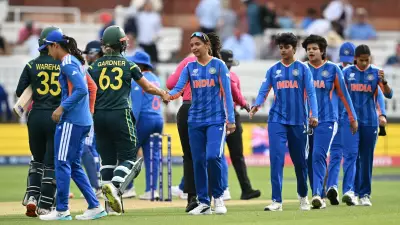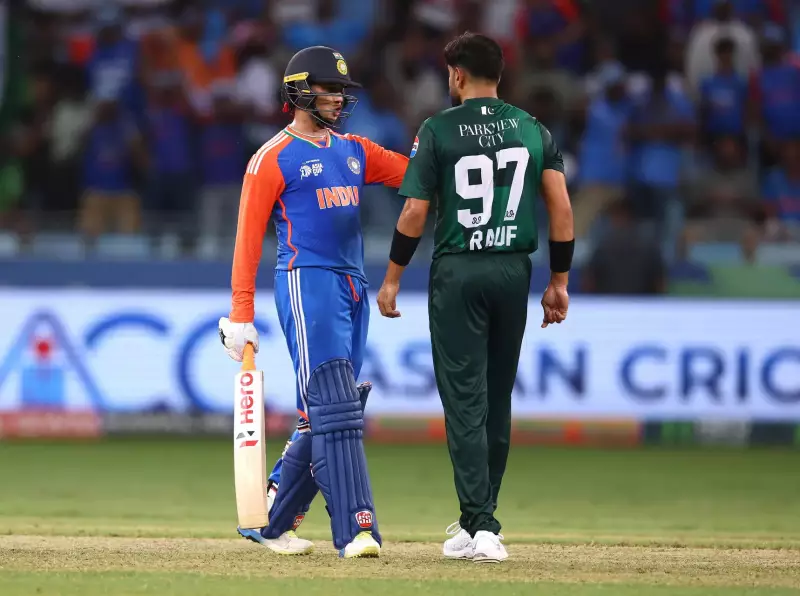
Former Pakistan off-spinner Saeed Ajmal has issued a sharp warning to the International Cricket Council (ICC), stating that the global governing body is in danger of becoming irrelevant. He attributed this risk to what he perceives as the overwhelming dominance of the Board of Control for Cricket in India (BCCI) within the ICC's decision-making processes.
Ajmal Questions ICC's Independence and Authority
Speaking at a public event, Ajmal directly challenged the ICC's ability to operate independently for the betterment of world cricket. He emphasized that the council's very purpose is undermined if it cannot enforce its own decisions, particularly on powerful boards like the BCCI. "If the ICC can't enforce its decisions on the Indian board then its very existence is unnecessary," Ajmal stated, as quoted by PTI.
The former cricketer claimed that his concerns are privately shared by officials from several other Test-playing nations, who however avoid speaking out publicly. He argued that the current structure stifles genuine governance.

India-Pakistan Cricket as a Case Point
Ajmal pointed to the long-standing issue of India's refusal to tour Pakistan as a prime example of the ICC's weakened position. He alleged that the council has been unable to persuade India to play in Pakistan, even for ICC events, due to its subservience to Indian interests. "There is no logical reason for India not to play in Pakistan but the ICC is helpless because it is dominated by Indians now," Ajmal alleged.
It is important to note that India's stance is officially based on persistent security concerns and the lack of approval from the Indian government for bilateral sporting ties. Consequently, matches between the arch-rivals are confined to multi-nation tournaments at neutral venues. The bilateral relationship hit a new low after the Pahalgam terror attack last year, further freezing cricket ties.
A Context of Perceived Power Imbalance
Ajmal's strong comments arrive at a time when the ICC is chaired by Jay Shah, the former secretary of the BCCI. This fact is frequently highlighted by critics who argue it symbolizes a significant power shift and potential conflict of interest within international cricket's administration. The critique underscores ongoing tensions about the balance of power, where the financial might of Indian cricket is often seen as translating into disproportionate influence over the sport's global body.
The former spinner's outburst adds to a long history of political and administrative friction impacting India-Pakistan cricket, raising questions about the ICC's role as an impartial arbitrator in the sport's most high-stakes rivalry.