Andy Flower Compares His Coaching Career to Blue Chip Stock
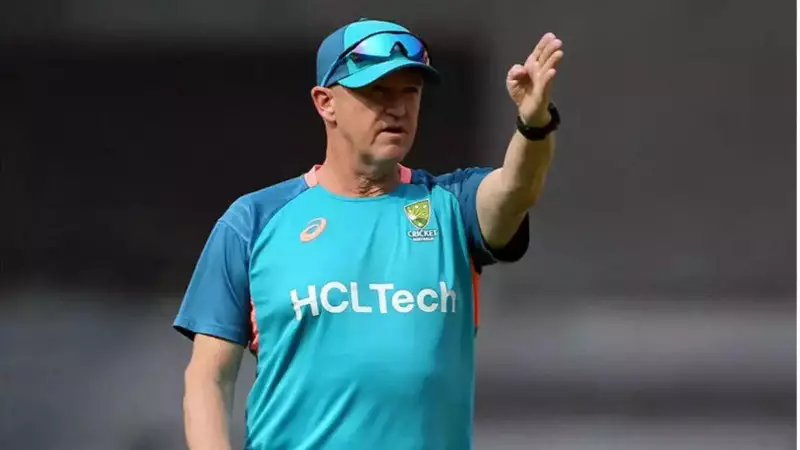
Andy Flower's coaching career resembles a blue chip stock. It is decorated, dividend-rich, and worth holding forever. He took charge of a fragmented and struggling England team back in 2009. Under his guidance, England secured three memorable Ashes series victories in 2009, 2010-11 in Australia, and 2013.
Flower was the head coach when England clinched their first global trophy. The team won the 2010 T20 World Cup in the West Indies under Paul Collingwood's captaincy. He also coached England to a historic Test series win in India during 2012. That victory ended a 28-year wait.
His influence extended to the Australian team as a consultant during the 2023 World Cup in India. Australia, led by Pat Cummins, broke a billion hearts by winning that tournament. Flower also guided Trent Rockets to victory in The Hundred during 2022. Last year, he played a key role in Royal Challengers Bengaluru's maiden IPL triumph.

This year, Andy Flower will coach London Spirit in The Hundred. He recently sat down for an exclusive chat, sharing insights on various topics.
Taking Over London Spirit: A Welcome Challenge
The interviewer wished Flower good luck for his stint with London Spirit. The team, barring 2022, has not performed to expectations. Flower was asked how challenging it is to take over a franchise with poor results.
"Look, to be honest, in a way, it is a little easier," Flower said. "The only way is up for a team that did not enjoy great results. Mo Mobat and I know each other quite well now. We worked together on and off for a long time. We both really like a challenge."
He expressed excitement about bringing success to London Spirit and Lord's. The challenge motivated them when they joined RCB. It motivates them now with London Spirit. When Mobat discussed the challenges, Flower immediately felt the same excitement.
Preparing for The Hundred's First Auction
With The Hundred heading into its first-ever auction this year, Flower's experience will be crucial. He was asked if he has a shopping list ready.
"We will very shortly announce our first four picks, our direct signings or retentions," he revealed. "I hope London Spirit fans will be excited by those picks. Experience from prior drafts and auctions is absolutely important. The auction outcome is vital for your chances of doing well."
Flower emphasized the importance of preparation. He and Mobat enjoy applying themselves to the auction process. They challenge themselves to get the best people into the dressing room. Good people in the room translate to better performance on the training ground and in competition.
He will rely on key individuals around him. Mo Mobat is one influential figure. Freddie Wilde, their analyst who also works with RCB, is another. Flower called Wilde an outstanding analyst. Using his analytical brain in the auction process is important.
The coaching staff includes Dinesh Karthik. Flower described Karthik's brain as wired differently. He is a great number two to have on board. Karthik is really useful in the auction environment. Flower finds the whole process fascinating. He looks forward to getting great guys into the dressing room.
The Hundred's Reception and Future
Given his long association with England and Lord's, Flower was asked how traditional members warmed up to The Hundred.
"I am going to plead a little ignorance," he admitted. "I did not pay much attention to that side. I was with Trent Rockets and threw myself into that job. But from what I can see, there is enthusiasm for The Hundred. I know there are various detractors in England."
He is genuinely excited about independent investment in the game. This investment will give The Hundred a huge injection of energy and status. Flower believes it will be a brilliant tournament, full of great energy in the middle of the English summer. It will feel quite different and genuinely vibrant. He cannot wait to get started.
Will a 100-ball event overtake T20's popularity globally? Flower responded cautiously.

"Firstly, I do not know. I am not a soothsayer," he said. "The Hundred was very popular in England. The ECB introduced it for various reasons. The 18 counties did not want a direct competitor in the same format. The BBC wanted a shorter game. The ECB wanted to attract a different demographic."
He believes the ECB succeeded in that regard. More women watched the game. More children came to the game. The stadium had a different, more family-friendly atmosphere. A few tweaks made the game more interesting for a different audience.
Financially, The Hundred created amazing value in five years. Whether it transfers globally, Flower does not know. He does not think it needs to. It can be an English thing. The ECB did not introduce it to be copied worldwide. T20 cricket is very popular globally. Mature acceptance of its success in England is sufficient now.
Innovations and Player Development
Flower discussed innovations brought by The Hundred. Bowling two overs in a row quickens the game by reducing over changes. He does not think there was a huge change, but shortened games heighten each ball's value.
He coached in T10 as well. Tactically, shorter formats are interesting. With fewer events, planning becomes simpler. Heightened pressure on each ball creates great training grounds for players. They learn to play under pressure and think clearly.
Young players grow in these environments with top overseas players. They face scrutiny in each match. These are brilliant growth environments. Indian cricket grew via the IPL. Young players will develop similarly in The Hundred, especially with IPL investors in at least four teams.
Could Indian talent play in The Hundred one day? Flower thinks it would be great but unlikely.
"I do not think that is going to happen," he stated. "I am not involved in politics, but I do not see it happening for well-publicised reasons. Indian players bring a different dynamic, high skill, interest, and finance. That would be great."
The Reverse Sweep and Coachability
As a terrific Test batter who legitimized the reverse sweep, Flower explained its effectiveness.
"I had to do it because I lacked power to bang people down the ground," he said. "It is effective because you can play it successfully to the bowler's best delivery. Good bowlers, especially spinners, bowl a good length. You can play aggressive sweep shots at good-length balls, which is off-putting."
The same applies to scoops. A good-length ball is simple to scoop because it bounces nicely. You get under it, give it momentum upwards, and it is gone. Sweeps and scoops work against the bowler's best balls.
Doing it a couple of times forces the opposition captain to adjust the field. The bowler finds it hard to combat. Flower is glad it became popular in Test cricket. It carries high risk, so balancing risk and reward is crucial. Better practitioners have a higher chance of success.
He admitted getting dismissed playing the reverse sweep in a Test match in Galle. Sanath Jayasuriya was bowling left-arm spin into the rough. The risk-reward was justifiable due to his high success rate.
On coachability, Flower emphasized curiosity.
"For all of us, curiosity is really valuable," he explained. "It opens your mind to possibilities. Curiosity about your own development is a good trait. But you need balance with confidence in what you have today."
Some players are never satisfied, thinking they are not ready. That is not ideal for high-quality competition. You want to trust yourself to react instinctively. At some stage, you must accept where you are and believe you have enough. Get that balance right, and you are on the right track.
One-on-One Coaching and Future Prospects
Flower has done one-on-one coaching since his early twenties. He played club cricket in England and Holland, often in coaching roles. In Zimbabwe, he and others were employed as coaches, even while playing international cricket.
He still chats with players about their games one-to-one. He loves it and finds it flattering. Coaches must be careful with their influence. Words, tone, and even facial expressions can significantly affect players. It is easy to damage confidence inadvertently.
Would he coach internationally or India? The question specified white-ball or red-ball job.
"The second part is good because it would be tough to take on everything now," Flower noted. "GG is doing everything, which is a big job. Many international coaches handle all three formats. That draws a lot of energy."
Would he return to the international game? He is not sure.
"I did not give it much thought," he confessed. "I am really enjoying my franchise experiences. I am lucky to work in the IPL, which I feel privileged to do. It is a great, exciting, and challenging environment. All ten teams are good. Winning the IPL trophy means you did damn well."
He also has a coaching job in The Hundred, which he believes will grow in status. These great jobs keep him engaged and satisfied.
Match-Ups and AI in Coaching
Discussing match-ups in cricket, Flower offered a balanced view.
"We have done match-ups since cricket began," he said. "If you have half a brain cell, you recognize certain bowlers trouble certain batters more. The main change now is more data and information. We can dig deeper and be more accurate. Using available information is something we should do as strategists."
Has he used AI for analysis? Flower admitted tinkering with it.
"Yes, we did," he shared. "Myself and some people around me tinkered a little. People with greater knowledge will use it more wisely. Some interesting results came out, but I will not give examples. That area is untapped, and we want to hold on to some information."