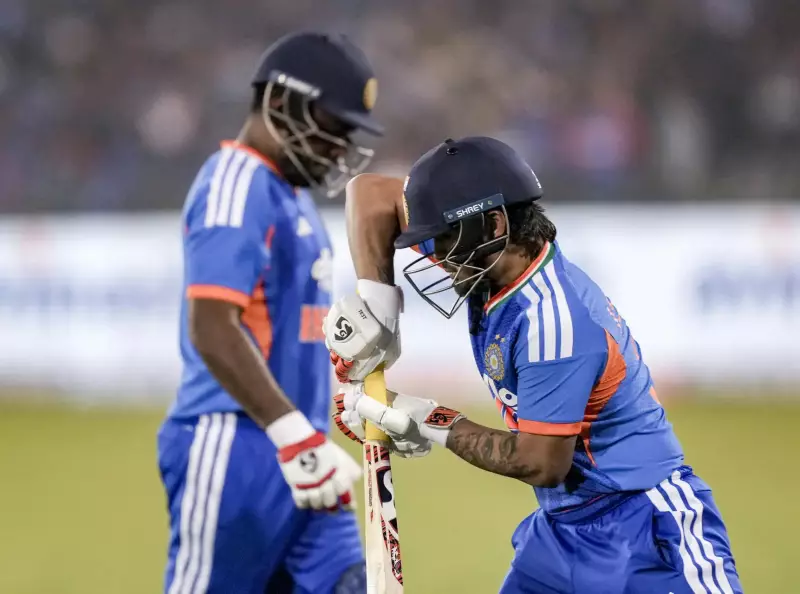
Former India all-rounder R Ashwin has issued a strong warning to the national cricket team management, urging them to avoid making quick changes in the playing XI, particularly concerning wicketkeeper-batter Sanju Samson. His remarks come during the ongoing T20 International series against New Zealand, where Samson has experienced consecutive failures in the first two matches.
Ashwin's Call for Patience Amid Selection Dilemma
Despite Samson's recent struggles at the crease, Ashwin firmly believes the Indian team should demonstrate patience and refrain from panic decisions. The veteran off-spinner emphasized that it is premature to consider dropping Samson from the lineup, especially given the competitive environment within the squad.
Samson's Rollercoaster Journey in the T20 Setup
Sanju Samson recently reclaimed his opening position after spending nearly three months away from that role. During this period, he missed approximately fifteen T20 International matches as Shubman Gill was preferred at the top of the order. However, Samson was reinstated as an opener during the final T20I against South Africa in Ahmedabad, where he delivered a solid performance.

Following that innings, the national selectors made the significant decision to drop Shubman Gill from the T20 World Cup squad, backing Samson as the first-choice wicketkeeper-opener alongside Abhishek Sharma. This decision appeared to solidify Samson's position in the team's plans for the upcoming global tournament.
Increased Competition from Ishan Kishan
The situation has become more complicated following Ishan Kishan's impressive knock of 76 runs in Raipur. This substantial innings has intensified the competition for the wicketkeeper's spot, placing additional pressure on Samson to perform consistently. The selection dilemma is expected to become even more challenging once Tilak Varma returns from injury, further crowding the middle-order options.
With only one wicketkeeper likely to feature in the final playing XI, the contest between Samson and Kishan has become one of the most closely watched selection battles in Indian cricket currently.
Ashwin's Detailed Analysis on His YouTube Channel
Speaking candidly on his popular YouTube channel, Ashwin elaborated on why he believes India should maintain faith in Samson. "It's way too early to think of dropping him," Ashwin stated emphatically. "If India keep doing such circus acts by playing Sanju when he did well before, and now Kishan because he's playing well now, I don't have to tell how it'll end for India. It's not ideal inside the dressing room. There is a lot of competition for places, but it's too early for this change."
Defending Samson's Aggressive Approach
Ashwin further argued that Samson should not face harsh criticism for getting out while playing attacking shots. "It'll be very unfair," he explained. "This opening combination has been reverted only for the last two games. A player has got out playing an attacking shot. If you penalize him for that and bench him, how will you witness the best of that player?"
The former cricketer provided specific analysis of Samson's dismissal in the second T20I, noting: "It wasn't that there was a rush of blood or that he wasn't calm. He just saw the ball and went for it. That's how you should instinctively bat, but it just didn't go his way."
The Bigger Picture for Team India
Ashwin's comments highlight the broader challenge facing Indian cricket selectors and team management as they balance immediate performance with long-term planning. With major tournaments on the horizon, including the T20 World Cup, the decision regarding the wicketkeeper-opener position carries significant implications for team stability and player confidence.
The ongoing series against New Zealand serves as a crucial testing ground for various combinations, but Ashwin's perspective suggests that consistency in selection might ultimately prove more valuable than reactive changes based on short-term form fluctuations.