Former England Captain Warns of Cricket's Fragile Future
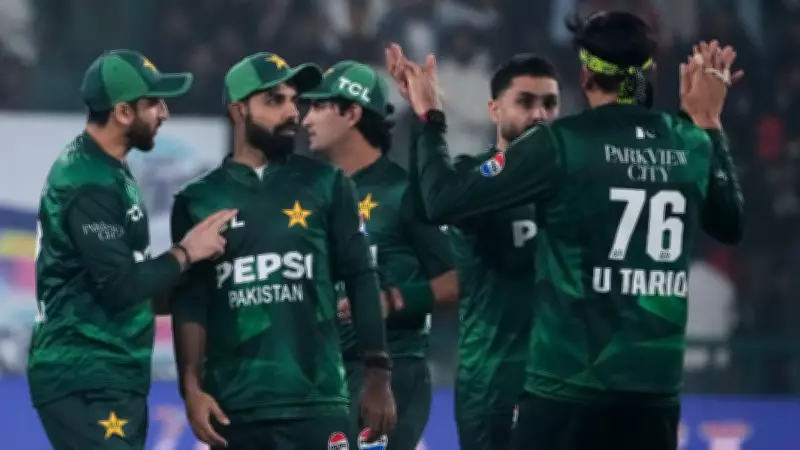
Michael Atherton, the former England cricket captain, has issued a stark warning about the potential consequences of Pakistan's decision to boycott its scheduled fixture against India at the upcoming T20 World Cup. In a detailed analysis for The Times, Atherton expressed grave concerns that this political maneuver could have devastating financial repercussions for the global cricket ecosystem.
The Financial Domino Effect
Atherton emphasized that while India and Pakistan remain deeply entangled in political turmoil, it is the economic fallout that could trigger a destructive domino effect across all cricket-playing nations. "The game and the players are being used for political ends," Atherton stated unequivocally. He highlighted the immediate financial impact, noting that "the India v Pakistan game is the most lucrative of any in world cricket." The substantial broadcast revenues from this marquee clash are crucial for the sport's financial health.
Broadcast Deal Vulnerabilities
The former captain's primary fear centers on future broadcast negotiations. Atherton predicted that JioStar, the host broadcaster, might exploit the current uncertainty to drive down prices in upcoming deals. "JioStar is likely to use the leverage of all this uncertainty to push down prices in the future," he explained. This strategy would disproportionately affect less financially secure cricket boards, including Pakistan itself, and essentially all nations outside the so-called 'Big Three' of India, England, and Australia.

Revenue Distribution at Risk
Even though recent India-Pakistan encounters have become somewhat predictable and one-sided, they continue to generate immense interest during ICC events. More critically, the revenues from these high-profile matches are redistributed to support other cricket boards. Vulnerable nations like:
- West Indies
- New Zealand
- South Africa
- Various other cricket-playing countries
heavily depend on this financial infusion. Atherton foresaw a troubling scenario where the disappearance of this lucrative, though laborious, rivalry would significantly reduce the share of revenue extended to nations outside the privileged few.
The Franchise Cricket Contrast
Atherton painted a concerning picture of cricket's evolving landscape. "The international game continues to fracture and weaken, as franchise cricket advances and strengthens," he observed. This statement underscores the growing tension between traditional international cricket and the rapidly expanding franchise-based tournaments that are reshaping the sport's economics and player commitments.
The Staggering Financial Stakes
Reporting from The Age in Australia provides context to the enormous financial stakes involved. According to their analysis, each India-Pakistan match scheduled between 2023 and 2027, as part of the ICC's US$3 billion deal with JioStar, carries an estimated value of approximately US$250 million (AU$358 million). This astronomical figure explains why "the ICC has manipulated scheduling to ensure the two nations have met during the group stage of every ICC men's event across the last 13 years."
Atherton concluded that regardless of whether Pakistan conducted thorough financial calculations before considering this boycott, the decision sends shockwaves through international cricket. The potential cancellation threatens not just bilateral relations but the very financial foundation supporting cricket worldwide, particularly for nations already struggling to maintain competitive teams and infrastructure.