Historic Ranji Trophy Victory Unfolds in Remote Kashmiri Village
Nestled approximately 40 kilometers west of Uri, close to the sensitive Line of Control, lies Sheeri village in the Jhelum Valley northwest of Srinagar. A narrow lane, barely wide enough for three people to walk abreast, branches off the main road leading to the humble home of cricketer Auqib Nabi Dar. This address, though modest, has now become unforgettable in the annals of Jammu and Kashmir's sporting history.
A Village United by Cricket
On Saturday, while shops in Sheeri remained open, business was unusually slow. The typical bustling energy of the tiny mountain village had transformed into a focused anticipation. Men gathered on narrow streets, and groups of boys huddled with mobile phones in hand. Their seemingly aimless milling had a clear purpose: tracking the Ranji Trophy final scores from faraway Hubballi in real-time, exhausting mobile data packages minute by minute to stay updated on Jammu and Kashmir's historic match.
Family Watch Party with Emotional Depth
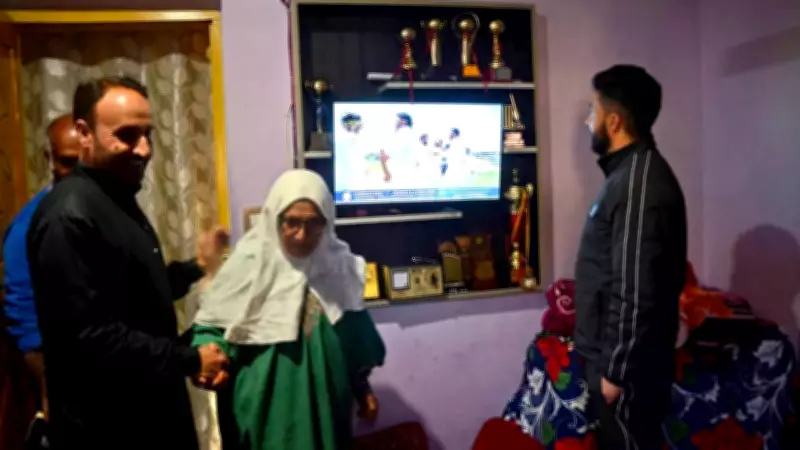
Inside the two-storey family home, relatives crowded into a small room, their attention fixed on a modest television set. Beside the TV, a simple almirah stood proudly containing Auqib's numerous cricketing medals collected over years of dedication. The room remained hushed except for the television commentary, creating an atmosphere of tense expectation.

Grandmother Fazi, her experienced eyes glued to the screen, smiled warmly whenever the camera captured Auqib. Father Ghulam Nabi Dar, a government school teacher, leaned forward intently, following each delivery with the concentration of a scholar. Like reciting prayers from memory, he quietly named players and match details as the final reached its climax. When Jammu and Kashmir secured their maiden Ranji Trophy victory, the family exchanged quiet, meaningful smiles. Women embraced one another, their joy contained but profound.
Player of the Tournament Honor
The room fell into reverent silence once more as the announcement came that Auqib Nabi Dar had been named Player of the Tournament. During his post-match interview, his father Ghulam Nabi smiled affectionately, noting "He is a shy boy," without taking his eyes off the screen. When the interviewer reminded Auqib that his father had once wanted him to become a doctor, and Auqib smiled in response, Ghulam Nabi removed his spectacles to wipe away emotional tears.
In Kashmir, where medicine traditionally represents a secure and respectable career path, Ghulam Nabi admitted he often worried cricket would distract his son from academics. He recalled extreme measures, including locking Auqib in a room and even tying him with rope to prevent him from playing. The father painfully remembered 2015, when Auqib missed securing a medical college seat by just two marks.
From Medical Aspirations to Cricket Stardom
"Later, I understood how serious my son was about the game, and I allowed him to play," Ghulam Nabi confessed, adding with a shy smile, "I too used to play cricket when I was young." Medicine's loss became cricket's gain as paternal understanding gradually replaced resistance.
Now, Ghulam Nabi dreams of seeing his son represent India on the international stage. "My dream is to see him in the Indian jersey," he declared proudly as his phone rang incessantly with congratulatory calls from relatives, neighbors, and journalists. "People are calling with affection," he explained while struggling to answer each call. Meanwhile, women from neighboring houses visited to congratulate Auqib's mother and grandmother, offering hugs and prayers.
Cousin's Perspective on Auqib's Journey
In another room, Bilal Ahmad Dar, Auqib's 30-year-old cousin, watched the match alone on his phone, preferring solitary viewing. Bilal highlighted the lack of proper cricket facilities in Sheeri during Auqib's childhood, noting that even today only basic amenities exist. To practice, Auqib would travel nearly five kilometers to a small ground near Lower Jhelum across the river.

Bilal meticulously tracks his cousin's career, remembering almost every match since Auqib's Ranji team selection. Over the past two seasons, Auqib has taken an impressive 104 wickets—44 last year and 60 this year. Bilal expressed particular pride when established cricketers praise Auqib on social media. "When senior players tweet about him, it means a lot," he emphasized.
Despite his rising fame, Auqib remains humble, holding a science degree from the University of Kashmir. Bilal recalled the tense IPL auction day vividly: "Auqib and I were watching the auction in this room. At first, when his name came up, no team picked him for a few seconds—we were silent. Then Delhi placed a bid and we were relieved."
As bidding intensified with multiple franchises participating, the price soared unexpectedly. "When it reached Rs 8.40 crore, we couldn't believe it. We were happy," Bilal recounted. Within minutes, celebration erupted throughout the village as people gathered outside the house, beating drums in jubilation. "There was a huge rush," Bilal remembered, "But he is very shy. He didn't even come out."
This remote Kashmiri village, once concerned about a young boy's unconventional career choice, now stands united in celebration of a local hero who has brought historic glory to Jammu and Kashmir cricket through determination, family support, and exceptional talent.