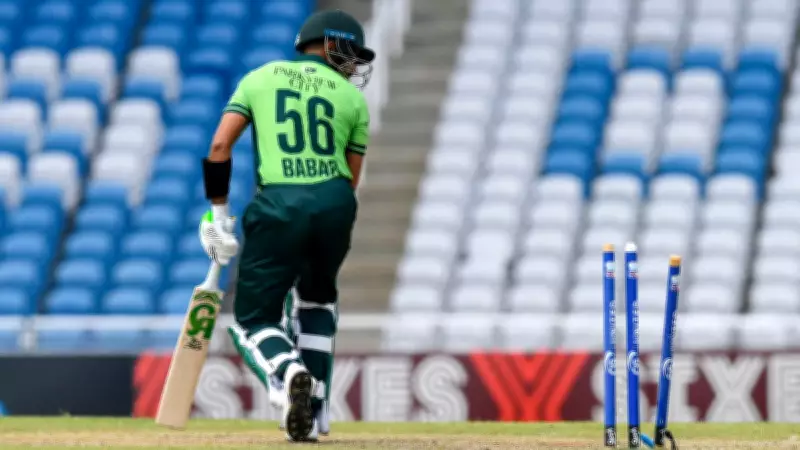
Babar Azam's Batting Under Immense Scrutiny Ahead of USA Game
Pakistan's cricket captain, Babar Azam, is facing intense criticism and scrutiny as he prepares for the upcoming T20 World Cup match against the United States. The pressure stems from a statistical record that has cast a shadow over his otherwise illustrious career in the shortest format of the game.
A Dubious Distinction in T20 World Cup History
Analysis reveals that Babar Azam holds what is being termed a "shameful" record in the history of the T20 World Cup. Among all batters who have scored more than 500 runs in the tournament, Babar possesses the lowest strike rate. This statistic has become a focal point for critics and fans alike, highlighting a perceived inefficiency in his batting approach during high-stakes global events.
The record underscores a significant contrast between his domestic and league performances and his output on the world stage. While Babar is renowned for his elegant stroke play and consistency in bilateral series and franchise cricket, his ability to accelerate and dominate in World Cup matches has been repeatedly questioned.

Mounting Pressure Before Crucial USA Encounter
The timing of this revelation could not be more critical, as Pakistan gears up to face the United States in a pivotal group-stage game. The match is seen as a must-win for Pakistan to bolster their chances of advancing in the tournament, adding layers of expectation on the captain's shoulders.
Team management and selectors are reportedly closely monitoring Babar's form and mindset. There is growing concern that his cautious approach might hinder Pakistan's ability to post or chase competitive totals, especially against associate nations like the USA, where aggressive batting is often key to securing comfortable victories.
Historical Context and Comparative Analysis
To put Babar's record into perspective, other top-order batters with similar run tallies in T20 World Cups, such as Virat Kohli, Rohit Sharma, and David Warner, boast significantly higher strike rates. This comparison has fueled debates about whether Babar's role as an anchor is still viable in modern T20 cricket, where power-hitting and rapid scoring are increasingly prioritized.
Former cricketers and analysts have weighed in, suggesting that Babar needs to adapt his game to meet the demands of contemporary T20 strategies. Some argue that his technical proficiency should allow him to rotate strike more effectively and find boundaries without compromising his wicket, thereby improving his strike rate.
The Path Forward for Babar and Pakistan
As scrutiny intensifies, all eyes will be on Babar Azam during the match against the USA. A commanding performance could silence critics and demonstrate his ability to lead from the front under pressure. Conversely, another slow innings might exacerbate calls for a tactical reshuffle or even question his position in the batting order.
For Pakistan, the situation presents both a challenge and an opportunity. The team's success in the T20 World Cup may hinge on Babar finding the right balance between stability and aggression. His response to this pressure could define not only his legacy but also Pakistan's campaign in the tournament.
In conclusion, while Babar Azam's talent is undeniable, his shameful T20 World Cup record has placed him under a microscope. The upcoming game against the United States serves as a critical test of his ability to overcome statistical criticisms and deliver when it matters most for his nation.