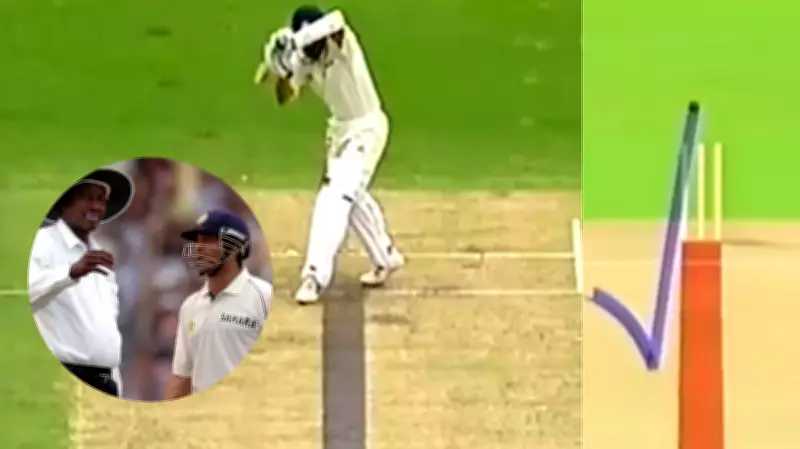
Steve Bucknor Admits Mistake in Sachin Tendulkar's 2004 Brisbane Test LBW Controversy
In a candid revelation, former international cricket umpire Steve Bucknor has publicly acknowledged that his decision in the 2004 Brisbane Test match, involving Indian batting legend Sachin Tendulkar, was a mistake. This admission brings closure to one of the most debated umpiring controversies in cricket history, shedding light on the immense pressure officials faced before the introduction of modern technological aids.
The Infamous 2004 Brisbane Test Incident
The incident occurred during the second Test between India and Australia at the Gabba in Brisbane in 2004. Sachin Tendulkar, then at the crease, was given out leg-before-wicket (LBW) by umpire Steve Bucknor off a delivery from Australian fast bowler Jason Gillespie. The decision sparked immediate controversy, with replays suggesting the ball might have been missing the stumps or that Tendulkar had edged it onto his pads. At the time, the absence of the Decision Review System (DRS) meant such calls were final, leading to widespread debate among fans, players, and pundits alike.
Bucknor's Candid Admission and Reflection
In a recent statement, Bucknor openly admitted, "It was a mistake," regarding the LBW decision against Tendulkar. He elaborated on the challenges umpires faced in that era, emphasizing that decisions had to be made in a split second, often in highly charged atmospheres against elite players like Tendulkar. Bucknor's reflection highlights the human element in umpiring, where even experienced officials could err under pressure, without the safety net of technology like ball-tracking or UltraEdge that is available today.

The Pressure of Umpiring in the Pre-DRS Era
Bucknor's admission underscores the immense pressure and scrutiny umpires endured before the widespread adoption of DRS. In matches involving high-stakes teams like India and Australia, every decision was magnified, and errors could significantly impact the game's outcome. Umpires had to rely solely on their judgment and on-field perspective, making quick calls in fast-paced environments. This era, as Bucknor notes, was marked by a lack of technological support, forcing officials to bear the brunt of criticism for controversial decisions.
Impact on Cricket and the Evolution of Umpiring
The controversy surrounding Tendulkar's LBW decision in 2004 contributed to ongoing discussions about improving umpiring accuracy in cricket. It played a part in the gradual implementation of DRS, which has since become a standard tool in international matches to review contentious decisions. Bucknor's honesty serves as a reminder of the sport's evolution, from relying purely on human judgment to incorporating technology for fairness and transparency. His admission also humanizes the role of umpires, acknowledging their fallibility while celebrating their contributions to the game.
In summary, Steve Bucknor's acknowledgment of his error in the 2004 Brisbane Test LBW decision against Sachin Tendulkar provides valuable insight into the pressures of umpiring in cricket's pre-technological era. It highlights the challenges officials faced and the sport's progression towards more accurate decision-making systems.