African Football Body Issues Heavy Sanctions After Chaotic Final
The Confederation of African Football (CAF) has taken decisive action following the tumultuous African Cup final, imposing financial penalties exceeding $1 million and handing down multiple match bans to players, coaches, and federations involved in the controversial match between Senegal and hosts Morocco.
Substantial Fines and Bans Announced
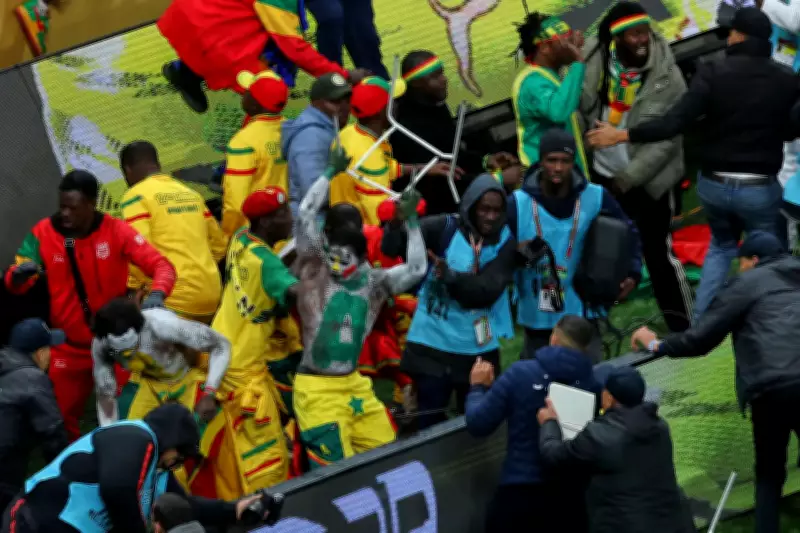
CAF announced the sanctions on Wednesday in response to the January 18 final that descended into protests, crowd disturbances, and unsporting behavior both on and off the pitch. The Senegalese Football Federation received the heaviest financial penalty of $615,000, while Morocco's federation was fined $315,000 for improper conduct by players, coaching staff, and supporters.
Senegal coach Pape Thiaw faced the most severe individual punishment with a five-match ban in CAF competitions and a personal fine of $100,000. This came after he led his players off the pitch in protest against a late penalty awarded to Morocco, causing a 15-minute stoppage in play.

Match Chaos and Additional Incidents
The final, which Senegal ultimately won 1-0 after extra time following Morocco's missed penalty, witnessed multiple flashpoints beyond the walk-off protest. Supporters attempted to breach the pitch perimeter, players from both teams clashed on the sidelines, and journalists from Senegal and Morocco engaged in altercations in press areas.
One particularly unusual incident involved Moroccan ball boys attempting to snatch a towel from Senegal goalkeeper Edouard Mendy, apparently to distract him during crucial moments. This specific episode resulted in an additional $200,000 fine for Morocco's federation.
Player Bans and Competition Implications
CAF also imposed match bans on several players. Senegal's Iliman Ndiaye and Ismaila Sarr each received two-match suspensions, while Morocco's Achraf Hakimi was given a two-match ban with one suspended. Ismael Saibari faced a three-match ban and a $100,000 fine for unsporting behavior.
Importantly, CAF clarified that these bans apply exclusively to African competitions and will not affect the upcoming World Cup in June, for which both Senegal and Morocco have already qualified.
Broader Repercussions and Reactions
The match's fallout extended beyond immediate sanctions. Morocco's appeal to have the result annulled and the title awarded to them was dismissed by CAF. The incident even strained diplomatic relations between the two nations, though Senegal Prime Minister Ousmane Sonko later characterized the reactions as "emotional outbursts produced by fervor" rather than a deeper political rift.
Morocco coach Walid Regragui expressed concern that the spectacle presented a "shameful" image for African football, a comment that carries particular significance as Morocco prepares to co-host the 2030 World Cup with Spain and Portugal. The country hopes to stage the final at the new 115,000-capacity Hassan II Stadium currently under construction.
These sanctions represent one of the most significant disciplinary actions in recent African football history, highlighting CAF's determination to address the multiple breaches of conduct that marred what should have been a celebration of continental football excellence.