Boston Celtics Strategize for Post-Vucevic Era with Draft Target
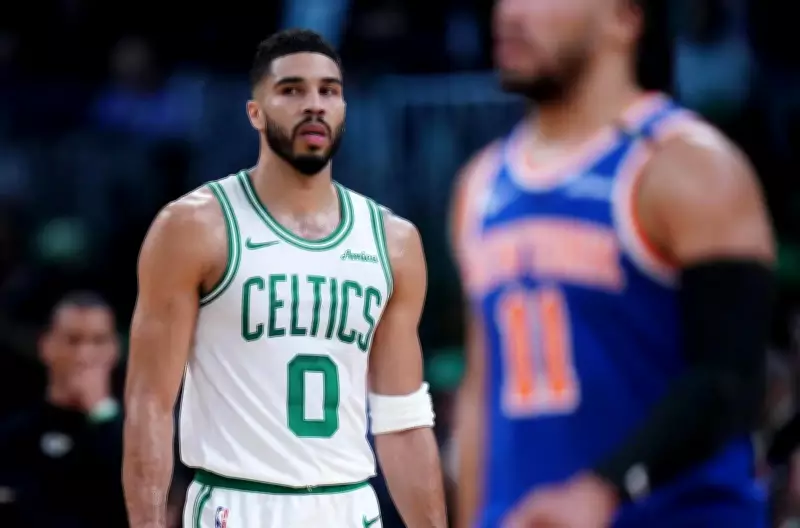
The Boston Celtics are navigating a pivotal offseason as they prepare for the eventual departure of veteran center Nikola Vucevic, whose contract is set to expire after the 2025-26 season. While the team's core remains anchored by stars Jayson Tatum and Jaylen Brown, the front office recognizes the urgent need to secure a younger, more agile big man to bolster the frontcourt. This strategic move aims to support emerging talent Neemias Queta and ensure long-term roster stability.
Current Celtics Frontcourt in Transition
Boston's frontcourt is undergoing a significant transformation. Vucevic continues to serve as the starting center, but his tenure is limited due to age and contract constraints. In contrast, Neemias Queta has demonstrated promising potential and is poised to assume a larger role, positioning him as the future cornerstone of the position.
Current Rotation Overview:

- Nikola Vucevic: Starting center, with his contract concluding after the 2025-26 season.
- Neemias Queta: A 7-foot, 248-pound center viewed as the long-term starter.
- Luka Garza and Amari Williams: Reserve big men with limited rotational duties.
Rather than investing heavily in another experienced veteran, the Celtics are likely to explore the NBA Draft for a more economical solution, aligning with their financial flexibility goals.
Patrick Ngongba II: A Perfect Fit for Boston
One name generating buzz in Celtics circles is Duke University sophomore Patrick Ngongba II. Standing at 6-foot-11 and weighing 250 pounds, Ngongba embodies the type of player Boston seeks: a robust, efficient interior presence who excels near the basket without demanding excessive offensive touches. His playing style, characterized by strength and precise timing rather than perimeter shooting, mirrors that of Queta, facilitating a seamless integration into the team's system.
Key Statistics from the 2025-26 Season:
- Points: Approximately 10.2 per game
- Rebounds: Around 5.8 per game
- Blocks: About 1.1 per game
- Field Goal Percentage: Roughly 60%
- Three-Point Percentage: Approximately 27.6% on limited attempts
Ngongba's primary contributions come from scoring in the paint, securing rebounds, and providing rim protection, making him an ideal complement to Queta's development.
Draft Pathways for the Celtics
Projected as a late first-round selection in the 2026 NBA Draft, Patrick Ngongba II presents several acquisition avenues for Boston:
- Utilize their own late first-round pick.
- Execute a minor trade-up using second-round picks or a role player.
- Adopt a wait-and-see approach if he falls in the draft order.
The most plausible scenario involves Boston selecting him between picks 25 and 28, followed by signing him to a rookie-scale contract valued at approximately $3 to $4 million annually. This strategy would maintain the team's salary cap flexibility while addressing a critical future need.
Benefits and Potential Drawbacks
This prospective move offers advantages for all parties involved:
- For the Celtics: They acquire a youthful, affordable center who fits their tactical framework, avoiding costly free-agent expenditures post-Vucevic.
- For Neemias Queta: He gains a supportive partner, easing his transition into a leading role without bearing the entire burden alone.
- For Patrick Ngongba II: He joins a stable, competitive organization where he can develop at a measured pace without undue pressure.
Pros of Drafting Ngongba:
- Efficient scorer requiring minimal touches
- Reliable rebounder and rim protector
- Cost-effective contract structure
- Strong compatibility with Queta's playing style
Cons to Consider:

- Limited shooting range beyond the paint
- Potential challenges in switch-heavy defensive schemes
- May require time for full NBA adaptation
- Could represent suboptimal value at his draft position
Strategic Outlook and Final Assessment
Selecting Patrick Ngongba II in the late first round represents a shrewd long-term play for the Boston Celtics. It addresses an impending roster gap without significant financial outlay, thereby preserving roster balance. While his progression will ultimately determine the success of this move, the associated risk remains relatively low. Such forward-thinking maneuvers are essential for maintaining the Celtics' competitive edge as they transition beyond the Vucevic era.