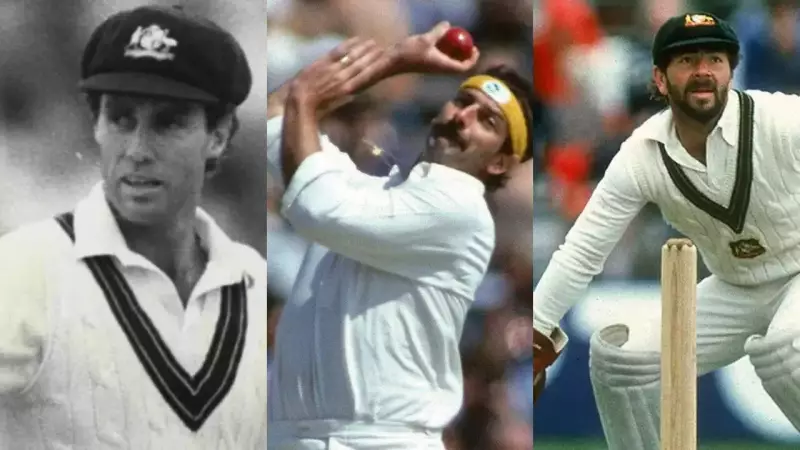
January 6, 1984, remains a date permanently etched in the annals of cricket history. On this day, exactly 42 years ago, the Australian cricket team witnessed the simultaneous retirement of three of its greatest icons – batting maestro Greg Chappell, fearsome fast bowler Dennis Lillee, and masterful wicketkeeper Rod Marsh. Their final act was the fifth Test against Pakistan at the Sydney Cricket Ground, marking the poignant end of a golden era.
A Trio of Titans Bows Out in Unison
It was a farewell of unparalleled significance. Rarely does the sport see three stalwarts, each a master of their distinct craft, walk away from the international stage together. Their departure wasn't just an exit; it was the closing of a defining chapter for Australian Test cricket. Each player left behind a legacy of excellence that shaped the team's aggressive and dominant identity for generations to come.
Greg Chappell signed off in the most emphatic style possible. In his final innings for Australia, the elegant right-hander crafted a magnificent 182 runs, his 24th Test century. This knock not only earned him the Player of the Match award but also allowed him to retire as Australia's highest run-scorer, surpassing the legendary Sir Don Bradman's tally. Chappell finished with 7,110 Test runs.

From the other end of the pitch, Dennis Lillee, the most feared fast bowler of his generation, delivered one last exhibition of relentless pace and skill. In his final Test, he claimed 8 wickets for 153 runs (4/65 and 4/88), a fitting finale for the man who ended his career as the world's leading wicket-taker with 355 scalps.
Behind the stumps, Rod Marsh bowed out with equal distinction. The gritty wicketkeeper ended his career with a then-world record of 355 Test dismissals. The iconic partnership between bowler and keeper was immortalised in the statistic that 95 of those dismissals came via the famous "caught Marsh, bowled Lillee" combination.
How the Historic Final Test Unfolded
The stage was set at the SCG with Australia leading the five-match series 1-0. After winning the toss, Australian captain Kim Hughes elected to field. Pakistan posted 278 all out in their first innings, thanks to half-centuries from Mudassar Nazar (84), Zaheer Abbas (61), and Saleem Malik (54). Geoff Lawson took 5/59, while Lillee claimed 4/65.
In response, Australia found themselves in a spot of bother at 83/3. This brought Greg Chappell to the crease, who first steadied the ship with a 171-run partnership with captain Hughes (76) and then added another 153 runs with Allan Border (64). Chappell's majestic 182 propelled Australia to a declaration at 454 for 6, securing a commanding 176-run lead.
Facing immense pressure, Pakistan were dismissed for 210 in their second innings, with Javed Miandad top-scoring (60). Lillee (4/88) and Lawson (4/48) once again spearheaded the attack. Australia then chased down the trivial target of 35 runs without losing a wicket in just 5.4 overs, sealing a 10-wicket victory and the series 2-0.
A Legacy That Transcends Numbers
While many of their individual records have been surpassed over the last four decades, the collective impact and the timing of their farewell remain unmatched. In their final series, Chappell amassed 364 runs at an average of 72.80, Lillee took 20 wickets, and Marsh effected 21 dismissals.
Today, Chappell's run tally is the 12th-highest for Australia, Lillee's wicket count is fifth among Australian bowlers, and Marsh's dismissal record stood for 15 years before being broken. However, the statistics only tell part of the story. January 6, 1984, symbolised more than just the end of three careers; it represented the passing of the torch and the conclusion of an era defined by skill, toughness, and an unwavering will to win. Their simultaneous walk into the sunset at the SCG remains one of cricket's most iconic and emotional moments.