Delhi High Court Shields Cricketer Gautam Gambhir from AI-Generated Impersonation and Deepfakes
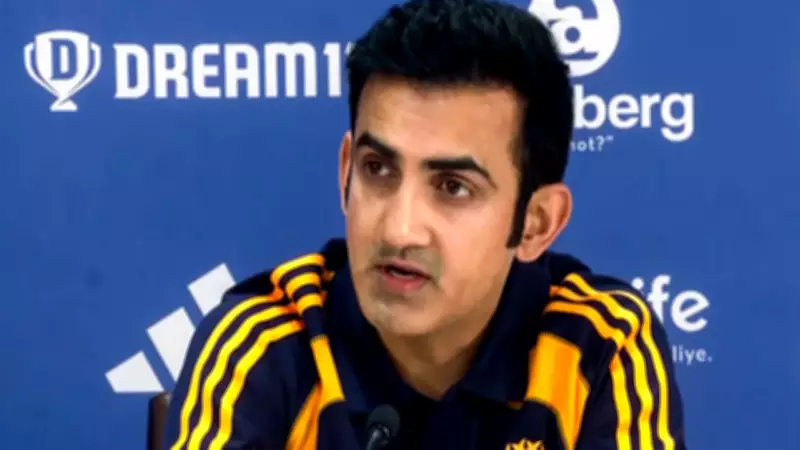
The Delhi High Court has stepped in to provide crucial interim protection to former Indian cricketer Gautam Gambhir, issuing a restraining order against multiple social media users and entities. The court has explicitly prohibited them from creating or disseminating any unauthorized artificial intelligence-generated content that exploits Gambhir's name, image, voice, or other personal attributes.
Court Upholds Personality Rights of a Decorated Cricketer
Justice Jyoti Singh, while adjudicating a lawsuit filed by Gambhir, made a significant observation regarding the cricketer's legal standing. The court recognized Gambhir as one of the "most decorated cricketers of this country" and affirmed his fundamental right to safeguard his name, likeness, and all other facets of his personality. The ruling emphasized that no third party possesses the authority to utilize these attributes without obtaining his explicit consent or authorization.
Gautam Gambhir, who proudly represented India in 58 Test matches, 147 One-Day Internationals, and 37 Twenty20 Internationals between 2004 and 2016, approached the judicial system seeking legal recourse. His plea highlighted a concerning coordinated campaign involving digital impersonation, sophisticated deepfake videos, and the unauthorized commercial exploitation of his identity across various social media platforms.

Detailed Allegations of AI Misuse and Commercial Exploitation
The legal petition presented to the court outlined specific instances of misuse. It stated that several online accounts were employing advanced artificial intelligence tools, including face-swapping technology and voice-cloning software, to produce highly realistic but entirely fabricated videos featuring Gambhir. Furthermore, the plea alleged that unauthorized merchandise bearing his image was being actively marketed and sold online without any permission, constituting clear commercial infringement.
In a comprehensive order passed on March 25, the court issued a clear directive. Until the next scheduled hearing, the identified defendants (numbered 1 to 10, including unknown entities) are restrained from using or exploiting Gambhir's attributes. This includes his names "Gautam Gambhir," "Gauti," and "GG"; his image; his voice; and his likeness or any other element of his persona.
The prohibition extends to any use for commercial or personal gain through technologies such as artificial intelligence, generative AI, machine learning, deepfakes, AI chatbots, face morphing, and other similar mediums that violate his personality and publicity rights.
Broad Restraints on Content Creation and Dissemination
The court order is notably extensive in its scope. The restrained parties are also forbidden from creating, publishing, uploading, sharing, resharing, disseminating, or amplifying in any manner any photographs, audio recordings, video recordings, or audio-visual depictions that feature or use any attributes of Gambhir's persona.
This includes content created through techniques like style of speech imitation, face swapping, morphing, superimposing, or any AI-generated or deepfake representation. The court has listed the matter for its next hearing on May 19, indicating ongoing judicial oversight.
Court Directs Tech Giants for Content Removal
In a related and impactful directive, the Delhi High Court also ordered major e-commerce and social media platforms to take swift action. The court instructed Amazon and Flipkart, alongside technology behemoths Google and Meta Platforms Inc., to remove certain identified objectionable content within a strict 36-hour timeframe. This move underscores the court's intent to enforce the order across digital ecosystems.
Legal Arguments Highlight Serious Misrepresentation
Advocate Jai Anant Dehadrai, representing Gautam Gambhir, presented compelling arguments before the court. He contended that the proliferation of fake content had "material consequence" on his client, citing specific examples of fabricated videos. These included deepfakes falsely showing Gambhir resigning from a head coach position or physically assaulting a fellow player.

In a particularly egregious instance highlighted during proceedings, one account had posted a face-swapped video that superimposed Gambhir's image onto that of Mahatma Gandhi. This video garnered lakhs of views and was presented as a serious case of misrepresentation and a blatant violation of his personality rights, demonstrating the potential for harm and confusion created by such AI-manipulated media.
This landmark interim order sets a significant precedent in India for protecting the personality rights of public figures against the rapidly evolving threats posed by artificial intelligence and deepfake technology on social media platforms.