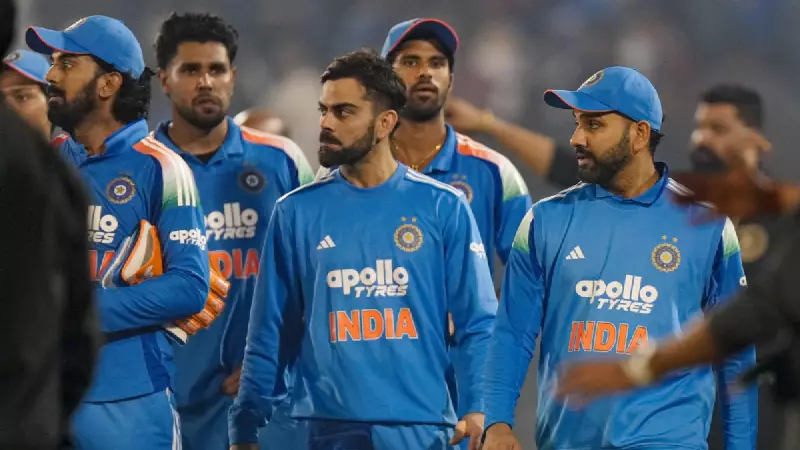
As the decisive third ODI between India and South Africa approaches in Visakhapatnam, a significant shift in weather conditions has offered a glimmer of hope for the bowlers, particularly those tasked with defending a total under lights. With the series tantalisingly poised at 1-1, the perennial menace of dew, which heavily influenced the second match in Raipur, is expected to make a later appearance at the ACA-VDCA Stadium on Saturday.
Late Dew Arrival Alters Team Calculations
During an optional training session on Friday, the Indian coaching staff and players made a deliberate effort to study the evening conditions, staying on the ground till 7:45 PM IST. Their observations brought a measure of relief. Unlike in Ranchi and Raipur, where dew settled in almost as soon as the second innings began, in the coastal city of Visakhapatnam, the moisture only became noticeable after 7:30 PM.
This delay could dramatically alter the game's dynamics. If the pattern holds during the match, the impact of a wet ball would be confined largely to the second half of the chase. This provides the team bowling second, likely India if they lose the toss again, a strategic window. They could deploy finger spinners like Washington Sundar in the early overs with a drier ball and manage their seam bowlers more judiciously throughout the innings.

Proactive Measures and Practical Preparations
The ground staff at the ACA-VDCA Stadium has been proactive, employing anti-fog and anti-dew sprays for two consecutive evenings to combat the hazy conditions and moisture. There are plans to use the anti-dew spray hours before the match's scheduled start on December 6, 2025. However, the team's experience in Raipur, where similar measures proved ineffective once dew enveloped the ground, has made them cautious.
India's assistant coach, Ryan ten Doeschate, shed light on the team's practical preparations. "We're actually trying to put a number on it (dew factor) and it varies between 10 percent and 20 percent in terms of what a big difference it makes," he said. The team has been simulating match conditions by having bowlers practice with deliberately wet balls to acclimatise to the challenge.
Ten Doeschate also acknowledged that an earlier start time, like the 11:30 AM starts used in past series against Pakistan (2012) and Sri Lanka (2017), could mitigate the dew's influence. "A different start time could bring that effect down a little bit... That is a solution but obviously there are so many moving parts at play in terms of broadcasting etc.," he added, calling it a "futile conversation" under current circumstances.
Team Composition and Selection Dilemmas
The optional net session, attended by Yashasvi Jaiswal, Washington Sundar, Tilak Varma, and Nitish Kumar Reddy, provided hints about the team's thinking for the final XI. Significant attention from the support staff, including head coach Gautam Gambhir, was focused on Sundar and Varma.
This has sparked speculation about a potential change at the crucial No. 6 batting slot. In the first two ODIs, Sundar's bowling was underutilised, primarily due to the wet ball negating his finger spin. There is a growing argument for including the specialist batting skills of Tilak Varma, who can also bowl part-time off-spin if conditions allow. The choice between an all-rounder and a specialist batsman remains a key decision for the team management.
This selection dilemma underscores a broader, unusual trend in the current Indian setup. While the Test team leans heavily on multi-faceted players, the ODI squad presents a contrast. In the modern era where top teams prioritise players with all-round abilities to ensure balance and depth, India's playing XI in the first two ODIs featured only two genuine all-rounders—Ravindra Jadeja and Washington Sundar. The other nine were specialists, leaving the batting depth ending at No. 7 and offering no part-time bowling options from the top order.

Commenting on this anomaly, Ten Doeschate said, "I guess that is a bit of an anomaly... Ideally, in Test cricket, you have a more solid base of batters and bowlers but we feel at the moment the guys who are doing the job for us just happen to be all-rounders. I just think it is picking your best XI."
As both teams gear up for the series decider, the delayed dew in Visakhapatnam has added a new, strategic layer to the contest. It offers India's bowlers a chance to redeem themselves after a tough outing in Raipur and could influence the toss decision and final team composition in a match where every advantage counts.