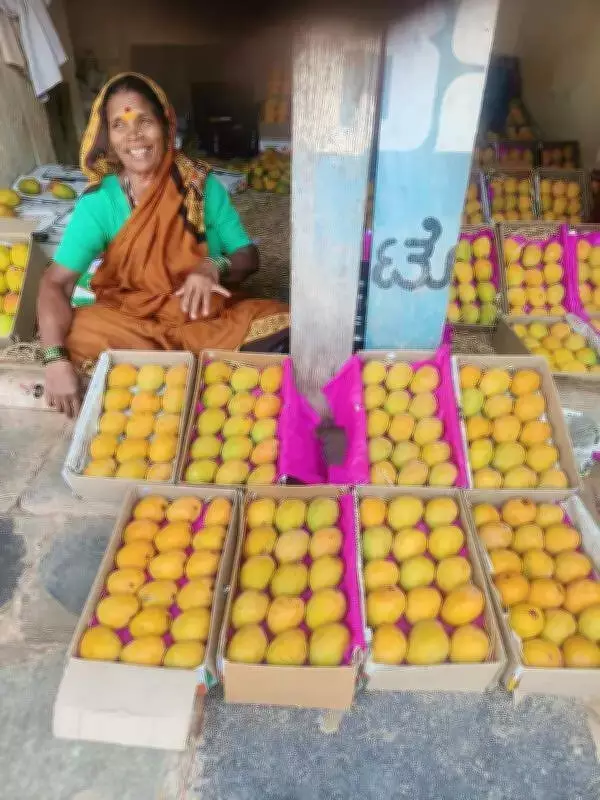
The annual Mango Mela in Dharwad, a vital platform that directly links mango growers with consumers and enhances farmers' earnings, will not be held this year due to a sharp decline in mango yield caused by erratic weather conditions.
Erratic Weather Leads to Crop Failure
The much-anticipated event, which played a key role in promoting the region's premium Alphonso mangoes, has been cancelled after untimely rains, strong winds, mist, and extreme heat slashed yields to nearly 30% of normal levels. Over the years, the Mela evolved from a simple marketplace into a crucial bridge between farmers and buyers, enabling growers to bypass middlemen, secure better prices, and strengthen Dharwad's reputation in domestic and international markets. However, this season's severe crop loss has made it unviable to organise the event, dealing a blow to both producers and mango enthusiasts.
Global Recognition and Economic Impact
Dharwad is renowned for its high-quality Alphonso mangoes, which are exported to markets in the Middle East, Europe, Australia, Singapore, and the United States. Launched in 2015, the Mango Mela significantly contributed to this global recognition while serving as a promotional platform under the Centre's 'One District, One Product' scheme. Officials stated that although preparations for the Mela had initially commenced, the steep fall in production and reduced farmer participation forced authorities to call it off. Last year, the five-day event recorded sales of over 90 metric tonnes, generating close to Rs 90 lakh, underscoring its economic importance.

Farmers Express Disappointment
Farmers have expressed deep disappointment over the cancellation. Dr. Anand Patil, an Alphonso grower from Dharwad taluk, said, "The Mango Mela is something we eagerly wait for. It helps us earn better and connect with buyers directly. But this time, there is hardly any yield." According to K.C. Bhadrannavar, Joint Director of the Horticulture Department, adverse weather conditions damaged the crop despite good flowering in November and December. "In a normal year, an acre yields about three quintals. This season, it has dropped to less than one quintal, and fruit size has also been affected," he explained.
Local Shortage and Alternative Arrangements
With limited produce available, much of the stock has been diverted to metro markets and juice-processing units, resulting in a local shortage. A drop in farmer registrations also contributed to the cancellation. In an effort to sustain direct marketing, a group of growers under the banner of Mavu Belegarara Balaga has organised a smaller mango festival at the Gandhi Peace Foundation near Court Circle. Though modest, this event continues to offer farmers a platform to sell directly, keeping alive the spirit of the larger Mela.