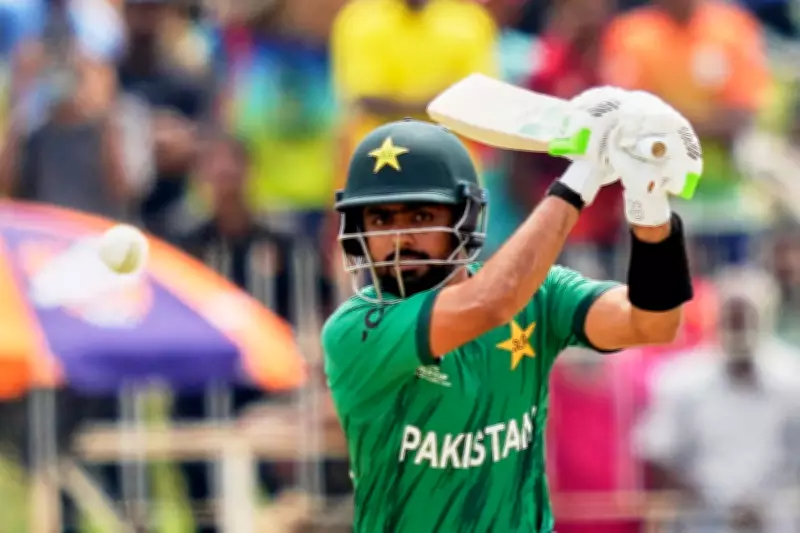
Faf du Plessis Endorses Strategic Move for Babar Azam in T20 World Cup
Pakistan's star batter Babar Azam has encountered significant challenges during the ongoing ICC Men's T20 World Cup, accumulating a mere 66 runs across four matches with a notably modest strike rate. This underwhelming performance has prompted a strategic adjustment by the team management, moving him from his customary opening position to the middle order—a decision that has ignited considerable debate among cricket analysts and fans worldwide.
Du Plessis Analyzes the Evolution of T20 Cricket
Former South Africa captain Faf du Plessis has publicly endorsed the decision made by Pakistan head coach Mike Hesson, asserting that it is a logical response to the rapid evolution of T20 cricket. Du Plessis emphasized that the modern game demands substantially higher strike rates, particularly during the powerplay overs, where scoring has accelerated dramatically in recent years.
"Look, I think first of all, all great players evolve their careers at different points. Someone like Babar, we have known him as one of the world's best players for a very, very long time. I believe the game of T20 cricket has progressed so rapidly in terms of strike rates that he has found himself slightly behind the curve," Du Plessis explained in a detailed analysis.

The Critical Need for Accelerated Scoring
Du Plessis further elaborated on the shifting demands of the format, highlighting the stark contrast in required scoring rates. "Observing him over the last couple of years, especially in the powerplay, the game has advanced too quickly to sustain a strike rate around 120. Nowadays, batters need to operate at 160 to 200-plus to truly maximize those first six overs," he stated, underscoring the pressure on openers to adopt a more aggressive approach from the outset.
Babar Azam's Enduring Value on Specific Pitches
Despite acknowledging the need for this tactical shift, Du Plessis was quick to affirm Babar Azam's continued importance to the Pakistani lineup. He pointed out that the batter's classical technique and ability to rotate strike make him exceptionally valuable on slower, turning pitches where anchoring the innings is crucial.
"Therefore, I think if you're someone like Mike Hesson, what he's attempting to do is find the optimal method to integrate Babar into the game. On spinning pitches in the middle overs, that's where someone of his caliber is worth his weight in gold," Du Plessis remarked, illustrating the nuanced thinking behind the decision.
He added a caveat regarding different playing conditions: "When you encounter flat wickets, those traditional anchoring roles have diminished in importance in contemporary T20 cricket... So I can imagine Hesson meticulously evaluated how to extract the maximum potential from Babar Azam in this tournament context."
Strategic Implications for Pakistan's Campaign
This batting order change represents a significant strategic pivot for Pakistan as they navigate the high-stakes environment of the T20 World Cup. The move aims to leverage Babar's strengths in situations that demand stability and intelligent stroke play, rather than the explosive power-hitting required at the top of the order. Cricket experts will be closely monitoring whether this adjustment yields improved results for both the player and the team in their upcoming fixtures.
The broader discussion also touches on how established stars must adapt to the ever-increasing pace of the shortest format, where innovation and flexibility are becoming as important as technical prowess.