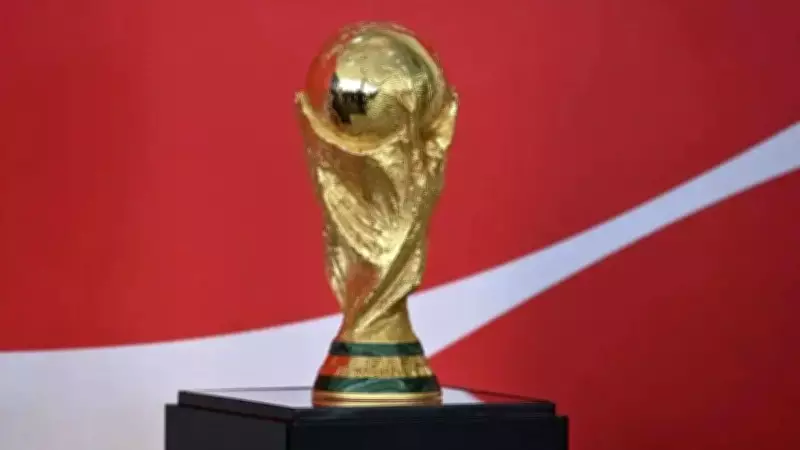
The FIFA World Cup Trophy, officially named the FIFA World Cup Trophy, was designed by Italian sculptor Silvio Gazzaniga and introduced at the 1974 tournament after Brazil's 1970 third title retired the Jules Rimet Trophy. Standing 36 centimetres tall and weighing 6.175 kilograms of solid 18-carat gold with two malachite rings at its base, the trophy cost approximately $9,390 to produce in 1974 (roughly $130,500 today). Its raw gold value is now estimated at US$713,000, while its insured and cultural valuation exceeds US$20 million. The original is permanently housed at the FIFA Museum in Zurich, Switzerland.
What is the FIFA World Cup Trophy made of?
Gazzaniga built the trophy around a central idea: the globe, held aloft by two human figures representing the competing teams, their arms reaching skyward at the moment of victory.
The design deliberately captures motion, the dynamism of football, and the labour required to reach its pinnacle. The globe's continents are polished gold; the human figures beneath are matte, a deliberate contrast between the earned and the celebrated. At the base, two rings of green malachite encircle the structure, inlaid with 20 rectangular spaces where each tournament winner's name is engraved.

That takes the current trophy to the 2030 World Cup. Gazzaniga's son Giorgio confirmed to The Athletic in 2022 that his father consciously broke from the art nouveau style of the Jules Rimet Trophy to express a 20th-century artistic sensibility, rooted in abstraction and human achievement rather than decorative elegance.
How much does the FIFA World Cup Trophy cost, and who actually keeps it?
The gap between production cost and current valuation is one of football's starkest financial contrasts. When commissioned in 1974, fabricating the trophy cost the equivalent of US$9,390 in contemporary dollars, or around US$130,500 adjusted for inflation. The surge in global gold prices since then has driven the raw metal value alone to approximately US$713,000.
Factor in its singular cultural and historical status, and independent valuations place the insured figure above US$20 million. But no winning nation gets to test that figure. Until 2006, champions held the original trophy for four years.
FIFA ended that practice entirely. The winners now receive a gold-plated bronze replica called the Winner's Trophy, while the original returns immediately to FIFA headquarters in Zurich. Strict protocols govern who may even touch it: World Cup winners, heads of state, and select dignitaries only. The 2022 final in Qatar produced one of football's more peculiar controversies when celebrity Salt Bae physically handled the trophy and posed with players after Argentina's victory, violating those protocols and prompting a formal FIFA review.
A brief history of the FIFA World Cup Trophy
The current trophy only exists because Brazil has won too many times. Jules Rimet, FIFA's longest-serving president, decreed in the competition's founding rules that the first nation to win three World Cups would permanently keep the trophy bearing his name. Brazil achieved that in 1970, claiming the original gilded statuette designed by Abel Lafleur in 1930. FIFA immediately launched a replacement design competition. Gazzaniga, an Italian trophy-maker, won it. His design has been awarded at every World Cup since West Germany lifted it in Munich in 1974.
With the 20 engraving spaces on the malachite base projected to be filled by 2030, FIFA faces a practical decision about whether to commission a successor or continue with the existing trophy. No announcement has been made, and none is expected soon.
List of FIFA World Cup winners so far
Below is the list of FIFA World Cup winners from 1930 to 2022, including host countries indicated by an asterisk.

- 2022: Argentina (champion), France (runner-up), Croatia (third place)
- 2018: France (champion), Croatia (runner-up), Belgium (third place)
- 2014: Germany (champion), Argentina (runner-up), Netherlands (third place)
- 2010: Spain (champion), Netherlands (runner-up), Germany (third place)
- 2006: Italy (champion), France (runner-up), Germany* (third place)
- 2002: Brazil (champion), Germany (runner-up), Turkey (third place)
- 1998: France* (champion), Brazil (runner-up), Croatia (third place)
- 1994: Brazil (champion), Italy (runner-up), Sweden (third place)
- 1990: West Germany (champion), Argentina (runner-up), Italy* (third place)
- 1986: Argentina* (champion), West Germany (runner-up), France (third place)
- 1982: Italy (champion), West Germany (runner-up), Poland (third place)
- 1978: Argentina* (champion), Netherlands (runner-up), Brazil (third place)
- 1974: West Germany* (champion), Netherlands (runner-up), Poland (third place)
- 1970: Brazil (champion), Italy (runner-up), West Germany (third place)
- 1966: England* (champion), West Germany (runner-up), Portugal (third place)
- 1962: Brazil (champion), Czechoslovakia (runner-up), Chile* (third place)
- 1958: Brazil (champion), Sweden* (runner-up), France (third place)
- 1954: West Germany (champion), Hungary (runner-up), Austria (third place)
- 1950: Uruguay (champion), Brazil* (runner-up), Sweden (third place)
- 1938: Italy (champion), Hungary (runner-up), Brazil (third place)
- 1934: Italy* (champion), Czechoslovakia (runner-up), Germany (third place)
- 1930: Uruguay* (champion), Argentina (runner-up), United States (third place)
Indicates host countries.