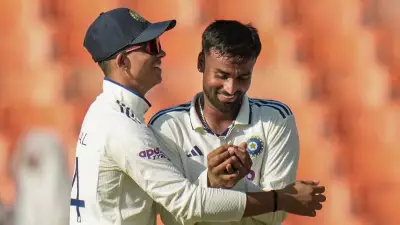
In the immediate aftermath of India's commanding 96-run victory over New Zealand in the most lopsided T20 World Cup final in history, the celebrations were understandably euphoric. Yet, amidst the confetti and cheers, newly appointed head coach Gautam Gambhir seized the moment to articulate a clear and uncompromising vision for the future of Indian cricket under his stewardship. He declared that individual milestones will never overshadow collective achievement as long as he holds the reins.
A Philosophy Forged in Victory
"My simple philosophy with Surya has always been that milestones don’t matter. Trophies matter," Gambhir stated emphatically. "For too long in Indian cricket we’ve spoken about milestones. I hope that till I’m here, we’re not going to talk about milestones. Stop celebrating milestones and celebrate trophies."
This emphatic win secured India's place in the record books, making them the first team to clinch three T20 World Cup titles (2007, 2024, 2026), the first to successfully defend the championship, and the first host nation to ever lift the coveted trophy. Gambhir reinforced his core message by highlighting the exemplary performance of Sanju Samson during the critical knockout stages.

Fearless Cricket Exemplified
"You saw what Sanju did in the last three matches. Imagine, if he was playing for milestones maybe we wouldn’t have got to 250. That’s the mindset needed in team sport," Gambhir explained, praising the batsman's aggressive and selfless approach that was instrumental in posting massive totals.
The High-Risk, High-Reward Mandate
Gambhir detailed that India's strategy throughout the tournament was straightforward and aggressive: attack relentlessly from the very first ball to the last. "The plan was simple — high risk, high reward," he revealed. "If you start fearing defeat, you will never win. I told the captain we won’t play for scores like 160-170. I’d rather accept getting bowled out for 100 because totals of 150-160 take you nowhere in T20 cricket."
This bold philosophy was spectacularly validated as India consistently posted scores exceeding 250 runs in both the semifinal and the final, showcasing a brand of cricket built on audacity and intent.
Ignoring the External Noise
In an era dominated by social media commentary, Gambhir firmly dismissed its relevance to his role. "My accountability is not towards social media. It is towards those 30 people sitting in the dressing room. Even if I win two ICC trophies as a coach, that doesn’t matter. Those 30 people matter the most during my tenure," he asserted, underscoring his focus on the team's internal environment and trust.
Paying Tribute to Predecessors
Gambhir, who made history by becoming the first Indian to win the T20 World Cup both as a player and now as a head coach, took a moment to honor the contributions of Rahul Dravid and VVS Laxman. "What Rahul bhai did for Indian cricket during his tenure deserves huge respect. And VVS Laxman has done tremendous work behind the scenes at the Centre of Excellence, which remains the pipeline for our cricket," he acknowledged, recognizing the foundations laid by his predecessors.
Acknowledging the Leap of Faith
The former opener candidly admitted his limited experience in a head-coaching role prior to this appointment, having previously served as a mentor for IPL franchises Lucknow Super Giants and Kolkata Knight Riders. "When I was given this job, I didn’t have experience as a head coach. For the BCCI to trust me with this responsibility means a lot," Gambhir expressed, showing gratitude for the board's confidence in his leadership capabilities.
As Indian cricket basks in the glory of a historic World Cup triumph, Gautam Gambhir's clear directive has set a new tone: a future where team trophies are the ultimate measure of success, boldly moving beyond the celebration of individual records.