The 2025 ICC Women's Cricket World Cup semifinal in Navi Mumbai was a crucible of pressure, where a single moment of spilled fortune arguably decided the fate of two cricketing giants. With India chasing a target and the match hanging in the balance, a straightforward chance went begging, altering the narrative of the contest and, perhaps, the tournament's destiny.
The Pivotal Moment in Navi Mumbai
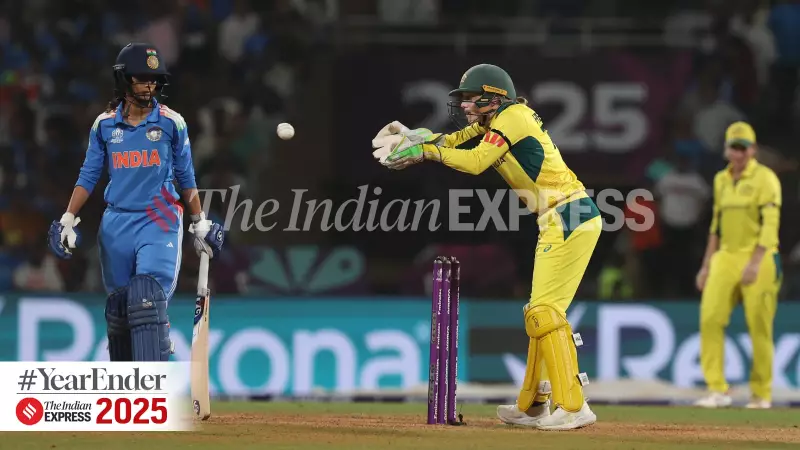
The match reached a critical juncture in the 33rd over of India's chase. Batswoman Jemimah Rodrigues, then at the crease, miscued a sweep shot off the bowling of Australian spinner Alana King. The ball ballooned into the night sky, presenting a clear opportunity. Australian captain and wicketkeeper Alyssa Healy, with gloves on, called for the catch and moved forward. However, under the immense pressure of the knockout fixture, Healy could not hold on, dropping what is widely considered a straightforward chance at that level.
At that precise moment, the equation was 133 runs required from 106 balls. A successful catch would have sent Rodrigues back to the pavilion and given the formidable Australian side a significant opening to tighten the screws on the Indian batting lineup. The drop, therefore, was not just a missed wicket but a massive psychological reprieve for India and a blow to Australian momentum.

Historical Echoes and Immediate Impact
The dropped catch evoked immediate fears among Indian supporters, reminding them of past World Cup heartbreaks. Notably, Rodrigues's dismissal had triggered a collapse in a T20 World Cup semifinal against Australia two years prior. Furthermore, a recent loss to England in Indore, sparked by a rash shot from Smriti Mandhana, was fresh in memory. Healy's error interrupted this potential pattern of collapse.
Rodrigues later admitted her energy was dipping at that stage. The lifeline, however, infused her with renewed vigor, spurred on by support from her teammates. She capitalized on the second chance to play a crucial role in guiding India to a historic victory, effectively ending Australia's reign in the tournament. In the post-match analysis, Healy herself acknowledged the lapse, stating there was "an element of we let ourselves down" in such key moments, without detracting from India's deserved win.
The Ripple Effect: What Could Have Been?
While cricket matches are rarely decided by a single event, this moment was undeniably transformative. The 'what if' scenario extends beyond Rodrigues's wicket. India's captain, Harmanpreet Kaur, was at the non-striker's end when the chance was spilled. Had the catch been taken, the pressure on Kaur would have skyrocketed.
One possibility is that it might have forced her into a more cautious approach, potentially recalling the unfortunate run-out in Cape Town where her bat got stuck. Conversely, it could have provoked the opposite reaction, galvanizing Kaur to attack more fiercely to secure the win. The dropped catch removed the immediate threat and allowed the Indian pair to rebuild and control the chase on their terms.
The incident on December 29, 2025, in Navi Mumbai thus stands as a defining 'sliding doors' moment in women's cricket history. It underscored how fine the margins are at the highest level, where a split-second action—or inaction—can rewrite the script of a World Cup and alter the legacies of those involved.