New Zealand Fight Back with Convincing Victory in Fourth T20I
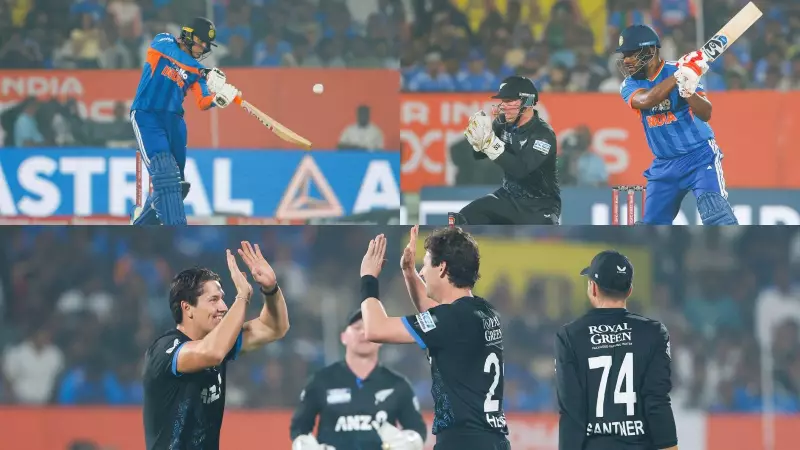
In a match that served as a reality check for the already series-winning Indian team, New Zealand pulled off a remarkable 50-run victory in the fourth T20 International. The visitors posted a formidable total of 215/7, which proved to be well beyond India's reach as they were bowled out for 165.
India's Batting Woes Exposed in High-Pressure Chase
The Indian chase got off to the worst possible start when Abhishek Sharma was dismissed on the very first ball of the innings. The young opener came down the track and slashed at Matt Henry's delivery, only to find the fielder at deep point. The situation worsened in the next over when captain Suryakumar Yadav fell to Jacob Duffy, leaving India reeling at two wickets down within the first two overs.
India's team selection raised eyebrows as they fielded a batter less than usual, with Ishan Kishan missing due to a niggle. This imbalance, rarely seen in a team blessed with multiple all-rounders, put additional pressure on the batting lineup. The decision appeared to be an experimental move ahead of the T20 World Cup, but it clearly backfired in this dead rubber encounter.

Sanju Samson's T20 World Cup Hopes Dim Further
The spotlight was firmly on Sanju Samson, who had another disappointing outing that exposed significant concerns about his game with the T20 World Cup just around the corner. After showing promise with three boundaries and a six, Samson fell to left-arm spinner Mitchell Santner in a dismissal that highlighted technical deficiencies.
Santner delivered a quicker ball followed by a slower one that landed on middle stump. Samson, attempting to punch with hard hands, failed to reach the pitch of the ball, which spun just enough to beat the bat and hit the timber. This dismissal further dented Samson's hopes of securing the opener's slot for the upcoming global tournament.
Shivam Dube's Lone Resistance
The only bright spot in India's batting performance came from Shivam Dube, whose explosive 65 off just 23 balls provided some entertainment for the local crowd. His innings included seven massive sixes and three boundaries, showcasing the power-hitting capability that has made him a valuable asset in the T20 format. Without Dube's pyrotechnics, the margin of defeat would have been significantly larger.
Tim Seifert's Blazing Innings Sets Up New Zealand's Win
Earlier in the match, Tim Seifert played a match-winning innings that set the foundation for New Zealand's victory. The globe-trotting T20 specialist, who has turned down a national contract, demonstrated why he's considered one of the format's most dangerous batters. With a high backlift reminiscent of Faf du Plessis, Seifert bludgeoned India's attack during the Powerplay overs.
Seifert's hockey background was evident in his strong square-of-the-wicket play, though he showed particular preference for the leg side. After two streaky boundaries off Arshdeep Singh, he settled into a rhythm that left the Indian bowlers searching for answers. It took Kuldeep Yadav's arrival to finally slow him down, but by then the damage had been done.
Middle Overs Collapse and Mitchell's Steadying Hand
New Zealand experienced a brief wobble in the middle overs, losing four wickets including Seifert's. However, Daryll Mitchell provided the steadying influence needed to push the total beyond 200. While other power-hitters failed to capitalize on Seifert's blazing start, Mitchell soldiered on in his typical composed manner, ensuring New Zealand posted a challenging total.
World Cup Selection Questions Loom Large
This match has raised several questions about India's approach heading into the T20 World Cup. The decision to include Rinku Singh in the squad was made specifically for scenarios like this one, where early wickets put pressure on the middle order. In his brief stay, Rinku attempted to balance aggression with restraint but found himself contained by the disciplined Kiwi attack.

The absence of balance in the team composition, with India playing a batter short, highlighted potential vulnerabilities that could be exploited in high-pressure World Cup matches. While this was essentially a dead rubber with the series already secured, the manner of defeat will give the team management plenty to ponder as they finalize their strategies for the global tournament beginning next week.
As both teams prepare for the final match of the series, India will be looking to address these concerns while New Zealand will aim to build momentum from this convincing victory. The performance has certainly given the Black Caps confidence that they can compete with the best as they too look ahead to the T20 World Cup.