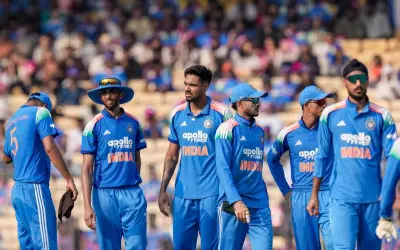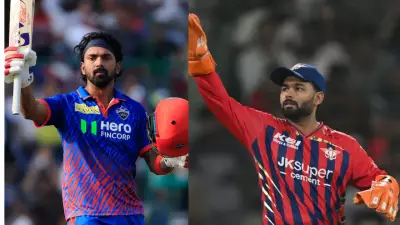
India vs Pakistan T20 Rivalry Heats Up in Colombo Amid Strategic Challenges
The toxic fumes of animosity still linger in the air, but for now, a temporary balm has been administered with millions at stake in this high-voltage cricket clash. On the surface, things are proceeding as planned, yet beneath the excitement, strategic complexities loom large.
Valentine's Weekend Adrenaline and Overconfidence
It's the Valentine's Day weekend, and if you're on that morning flight from Chennai to Colombo, the chatter is unmistakable. Conversations revolve around India's playing XI against Pakistan, blending love on Saturday with a dash of competitive 'hate' on Sunday. Spectators from across the country are trooping in to soak in the adrenaline rush that only an India-Pakistan clash can deliver.
Eavesdrop on these discussions, and the "aaram sey jitenge" (we will win easily) narrative is unmissable. This confidence likely stems from India's recent domination in T20 cricket over Pakistan and a convincing victory against Namibia in New Delhi. However, the reality on the ground may be far more nuanced.

Premadasa Pitch: A Game-Changer for Strategies
The match is set on the same Premadasa track where Zimbabwe humbled Australia with their slow bowlers just hours before India landed in Colombo. Slam-bang cricket, India's go-to weapon in recent times, may not prove as effective here. The pitch tends to get slower and slower, and the side-boundaries at Premadasa are larger, making clearing the fence a challenging task.
At Delhi's Kotla ground, little-known off-spinner Gerhard Erasmus troubled India with his round-arm off-spin, a style quite similar to Pakistan's Usman Tariq. Tariq, a slinger, is even more canny. He stops in his run-up and delivers a ball that turns significantly, leading a four-man Pakistan spin attack that could pose serious worries for India's middle-order.
Fitness Concerns and Bowling Dynamics
Ishan Kishan, one of India's bright spots with the bat, acknowledged the learning from Erasmus's bowling, stating that at this level, teams study videos to anticipate bowling strategies. However, fitness remains a concern for India. Abhishek Sharma is recovering from a stomach infection and has lost significant weight, missing the last game. His absence could advantage Pakistan, especially with pacer Shaheen Shah Afridi seeking confidence.
With Sanju Samson not at his best, pressure mounts on Kishan and captain Suryakumar Yadav to post a par total of 180 on the Premadasa track. On the bowling front, India may consider playing off-spinning allrounder Washington Sundar over Rinku Singh, who has struggled in the first two matches. Sundar's intelligence could add variety to a spin attack currently centered around Varun.
Weather Threats and Pakistan's Tactical Adjustments
The meteorological department has issued a warning for Saturday, with a low-pressure system likely to develop over the southeastern Bay of Bengal, bringing significant rainfall to Colombo. A washout on Sunday would be a major dampener for fans and teams alike.
Pakistan's strategy hinges on Usman Tariq, whose economy rate of 5.93 in T20Is makes him a trump card. Debates swirl around his bowling action, with Indian media questioning its legality, while Pakistan media defends it by citing R Ashwin's approval. Ashwin, in his latest YouTube show, suggested batters could move away if Tariq pauses before delivery, adding a psychological edge.
If rain curtails the game, Pakistan might drop two spinners to play pacers Naseem Shah and Salman Mirza alongside Shaheen Afridi. Additionally, the team is considering Fakhar Zaman, despite his poor form, with coach Mike Hesson spending time on his preparation. Former batter Ahmed Shahzad emphasized the need for another proper batter, potentially requiring Sahibzada Farhan to keep wickets if Fakhar plays.
As clouds loom on the horizon, this match promises not just rivalry but a test of adaptability and resilience in the face of pitch conditions, spin threats, and unpredictable weather.