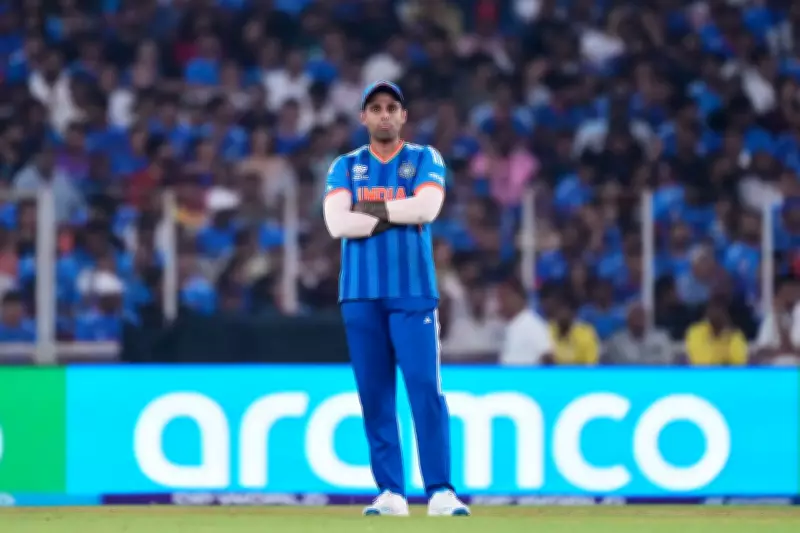
India's Crushing Defeat to South Africa Uncovers Critical Team Weaknesses
India's recent 76-run loss to South Africa in the T20 World Cup has laid bare significant tactical shortcomings, selection dilemmas, and execution failures. This defeat serves as a stark reminder of the adjustments needed to compete at the highest level. Here, we delve into the essential corrections the team must implement to avoid future collapses.
Break the Left-Handed Top Order Cluster
The current batting lineup features an over-reliance on left-handed batsmen at the top, creating a predictable target for opposition bowlers. Even part-time off-spinners like Aiden Markram and Salman Agha have exploited this imbalance effectively. To counter this, India should introduce a right-handed batsman into the opening slot or at number three. This strategic shift would force opposing teams to rethink their match-up plans and disrupt their bowling strategies. Players such as Sanju Samson, Ishan Kishan, and Tilak Varma, known for their long-hitting capabilities, could be considered for these roles to add diversity and aggression.
Recall Axar Patel for Control and Depth
The absence of designated vice-captain Axar Patel was keenly felt during the match against South Africa. Axar's skill in bowling defensive lines during the Powerplay and stifling runs in the middle overs could provide the control India lacked in Ahmedabad. Additionally, his batting prowess adds valuable depth to the lower order, offering a dual threat that the team currently misses. His recall would bolster both the bowling attack and batting lineup, addressing key gaps in the squad.

Fix the Powerplay Batting Approach
India's Powerplay batting has been marred by a lack of clarity, leading to early scoreboard pressure and ineffective slogging. To improve, the team must balance aggressive intent with common sense, focusing on smart shot selection. This involves attacking favorable match-ups and enhancing strike rotation to minimize dot-ball pressure. By adopting a more calculated approach, India can build a solid foundation without resorting to mindless aggression that often backfires.
Rethink Hardik Pandya's Bowling Role
Hardik Pandya's bowling deployment requires immediate reassessment. It is crucial to ensure he completes his quota of overs before the 16th over, allowing specialists like Jasprit Bumrah and Arshdeep Singh to handle the death overs. Hardik should be utilized either with the new ball or as a middle-overs enforcer, where his effectiveness is higher. His tendency to leak runs in the final stages, exemplified by conceding 20 runs in the last over against South Africa, underscores the need for this tactical adjustment to optimize team performance.
Adopt Tunnel Vision to Manage Pressure
The intense scrutiny and 'knives-are-out' atmosphere surrounding the team can lead to panic and poor decision-making. The burden of being labeled 'favourites' has become a hindrance rather than a motivator. To prevent another implosion, India must focus on one ball at a time, adopting a tunnel vision approach that blocks out external noise. This mental discipline can help players stay composed under pressure and execute their skills more effectively in high-stakes situations.
As India reflects on this defeat, these strategic corrections could pave the way for a stronger comeback in future tournaments. The team's ability to adapt and learn from these flaws will be critical in reclaiming their competitive edge on the global stage.