India's T20 World Cup Defense Faces Critical Selection Decision
While India's transition under new management has seen turbulence in Tests and ODIs, the T20 format has remained remarkably stable. Even with significant structural changes and high-profile retirements following their 2024 T20 World Cup triumph in Bridgetown, India's T20I dominance has continued largely uninterrupted. However, as the defending champions gear up to host the 2026 edition alongside Sri Lanka, one major selection dilemma threatens to disrupt what should be a smooth preparation phase.
The Samson Conundrum: From Promising Start to Worrying Slump
On paper, India appears perfectly positioned to defend their crown. Since their dramatic World Cup victory over South Africa in June 2024, the team has won an impressive 33 of their 41 T20 Internationals, suffering only six defeats. A recent comprehensive 4-1 home series victory against New Zealand showcased their depth and adaptability in familiar conditions. With stalwarts like Virat Kohli, Rohit Sharma, and Ravindra Jadeja stepping away from T20Is, a new core has emerged that plays faster, more fearlessly, and with unapologetic aggression.
This philosophical shift was evident when India announced their 15-member squad for the 2026 T20 World Cup on December 20, 2025. Suryakumar Yadav leads a versatile side featuring Abhishek Sharma at the top, power through the middle with Tilak Varma, Shivam Dube, and Rinku Singh, all-round depth in Hardik Pandya, Axar Patel, and Washington Sundar, and a varied bowling attack spearheaded by Jasprit Bumrah and Arshdeep Singh. The boldest selection call involved leaving out Shubman Gill to reinstate the Samson-Abhishek opening partnership.

Initially, this decision drew little criticism. Sanju Samson's credentials as an opener were built on a spectacular run from October 2024 to February 2025, where he amassed 417 runs in 12 innings at an average of 37.91 and a phenomenal strike rate of 183.7. This period included three explosive centuries against Bangladesh and South Africa, each scored at a strike rate exceeding 190. Alongside Abhishek Sharma, Samson appeared liberated, decisive, and genuinely destructive.
The Momentum Shift: Kishan's Explosive Return
Unfortunately for Samson, this momentum proved fragile. During the Asia Cup in September 2025, he lost his opening position and was pushed down to No. 3 and No. 5, where his returns noticeably dipped. He managed just one fifty in five innings before being restored to the top order just before the World Cup squad announcement. A promising 37 off 22 balls against South Africa hinted at revival, prompting management to double down on their commitment by naming him as Abhishek's opening partner while dropping Gill.
The expectation was clear: Samson had one final audition to reaffirm his spot. Instead, the home series against New Zealand exposed significant cracks in his form. While India cruised to a 4-1 series victory, Samson endured a nightmare run with scores of 10, 6, 0, 24, and 6. Forty-six runs at an average of 9.2 from five innings represents alarming numbers by any measure, especially for a specialist top-order batter in home conditions.
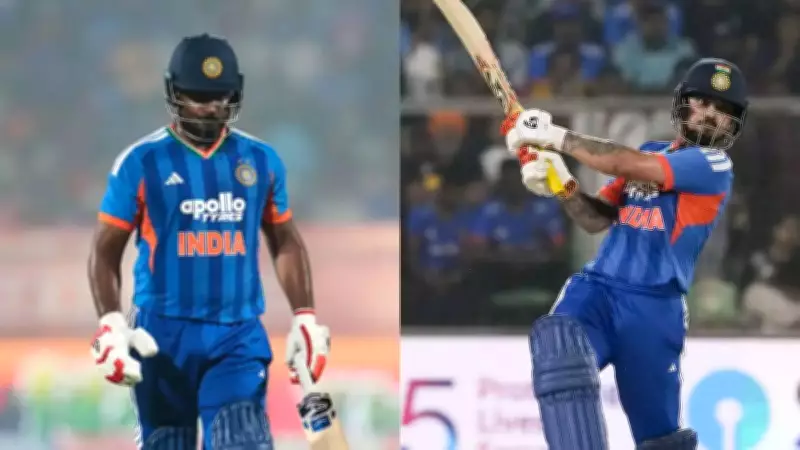
Compounding Samson's predicament has been the perfectly timed resurgence of Ishan Kishan. Recalled as the backup opener and wicketkeeper, Kishan seized his opportunity with ruthless clarity. Batting at No. 3 in Tilak Varma's absence, he hammered 76 off 32 balls in Raipur, followed by 28 off 13 in Guwahati and a blistering 103 off 43 in the series finale, with only a minor blip of 8 in Nagpur. His aggregate of 215 runs at 53.75 with a strike rate of 231.19 did more than strengthen India's top order; it directly challenged Samson's place at the top.
The Statistical Comparison and Selection Headache
The numbers from the New Zealand series tell a compelling story:

- Sanju Samson: 5 matches, 46 runs, average 9.20, strike rate 135.29, no fifties or centuries
- Ishan Kishan: 4 matches, 215 runs, average 53.75, strike rate 231.19, one century and one fifty
Selection dilemmas are often considered a luxury for strong teams, but this particular conundrum cuts deep. With Tilak Varma, Axar Patel, and Washington Sundar returning from injury, the team management already faces reshuffling challenges. When a fit-again Tilak returns to the playing XI, accommodating Kishan becomes a genuine headache. Dropping a left-hander in such devastating form, particularly one who offers valuable wicketkeeping flexibility, contradicts the management's recent emphasis on momentum and favorable match-ups.
Samson's broader record adds another layer to this complex debate. He has now played 57 T20Is for India, with 33 of those appearances coming since the 2024 World Cup. In a format where only four Indians have crossed 100 appearances, Samson's sample size can no longer be considered small. Opportunities have been plentiful, and the New Zealand series was meant to be a statement phase, not a regression.
The Crucial Decision Ahead
As Team India prepares to open their campaign on February 7 against the USA at Mumbai's Wankhede Stadium, the question becomes unavoidable: does the management persist with Samson based on past promises and potential, or do they ride the present form of Ishan Kishan? For a team otherwise operating in cruise control, this decision could shape not just the opening combination, but potentially the entire tone of India's title defense on home soil.
The final squad for the 2026 T20 World Cup includes:
- Suryakumar Yadav (Captain)
- Abhishek Sharma
- Tilak Varma
- Sanju Samson
- Shivam Dube
- Ishan Kishan
- Hardik Pandya
- Arshdeep Singh
- Jasprit Bumrah
- Harshit Rana
- Varun Chakaravarthy
- Kuldeep Yadav
- Axar Patel
- Washington Sundar
- Rinku Singh
This selection dilemma represents more than just a choice between two talented cricketers; it reflects the broader challenges of managing transition while maintaining winning momentum in the world's most competitive T20 environment.