IPL Commentary Under Fire: Bishop's Approach Highlights Divide
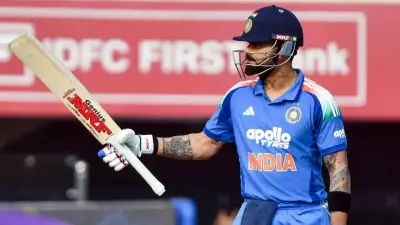
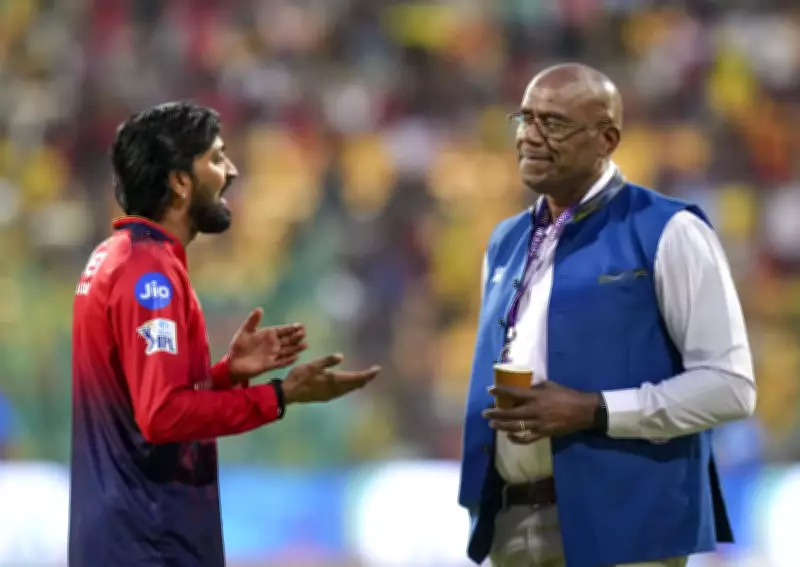
In the ongoing Indian Premier League (IPL), commentators Harbhajan Singh, Aakash Chopra, and Navjot Singh Sidhu have faced severe criticism on social media for their Hindi commentary, with fans demanding a better broadcast product. This backlash contrasts sharply with the praise for ex-West Indies player Ian Bishop, whose research-driven style has set a high benchmark.
Joy Bhattacharjya's Call for Credit to Ground Reporters
Former Kolkata Knight Riders Team Director Joy Bhattacharjya addressed the issue on X, emphasizing the role of journalists in enhancing commentary. "I am all for the credit given to Ian Bishop for the research he puts into the junior cricketers," he wrote. "Demanding why other commentators are not picking up such stories is irrelevant. I am asking you, as cricket lovers, to also go and read and celebrate the reporters who make Bishop and other commentators look good on air with great reporting from the ground." He added that acknowledging these reporters does not diminish Bishop's contributions, noting Bishop's decency and professionalism.
Ian Bishop's Research Philosophy and Influences
Bishop, recommended as a commentator by Michael Holding to Channel 4, openly credits ground journalists for his insights. In an interview with TimesofIndia.com, he explained his approach: "As a broadcaster and as a human being... I am interested in numbers, but numbers are widely available. What I am interested in is the person behind the cricketer." He researches every player's background, including family and career origins, to inspire young viewers. Bishop revealed he learned from mentors like Michael Holding, Gary Francis, and Tony Cozier, and expressed gratitude to the media for their profiles that feed his commentary.

The 58-year-old, who played 43 Tests for the West Indies, transitioned to commentary after injuries ended his playing career in 1999. He avoids coaching, preferring the microphone, and spends extensive time on preparation, even exploring AI to streamline research. "I spend, to the chagrin of my wife and children, far too much time preparing for a game," he admitted, stressing the importance of not disserving the audience.
Commentary Delivery and Format Adaptations
Bishop highlighted how commentary delivery varies by format. "Test match cricket is a slower pace; you have time for storytelling. Whereas T20 cricket, on the other extreme, has to provide that energy most of the time," he said. He adapts by bringing high energy to T20s, sometimes preferring silence when appropriate, though producers may prompt more engagement. On preparing for iconic moments, like Ravi Shastri's "Dhoni finishes off in style!" or Martin Tyler's "Agueroooo," Bishop advised a balanced approach: "The best commentary is having a sort of an idea of the moment, but more ad-libbing those through bullet points."
Perspective on Criticism and Market Preferences
Addressing the criticism faced by IPL commentators, Bishop shared wisdom from legendary commentator Richie Benaud. "When there was a vote for the best commentator, and he won, he said, 'Don't worry about that. I didn't get all the votes... [there's a] part of the market that likes volume, they like words, they like high-pitched calling to excite them, and there's another part of the market that likes calm,'" he recounted. This perspective underscores the diverse audience preferences in cricket commentary.
As the IPL continues, this debate highlights the evolving expectations for commentators, with Bishop's methodical research and adaptability serving as a model amid ongoing scrutiny of others in the booth.