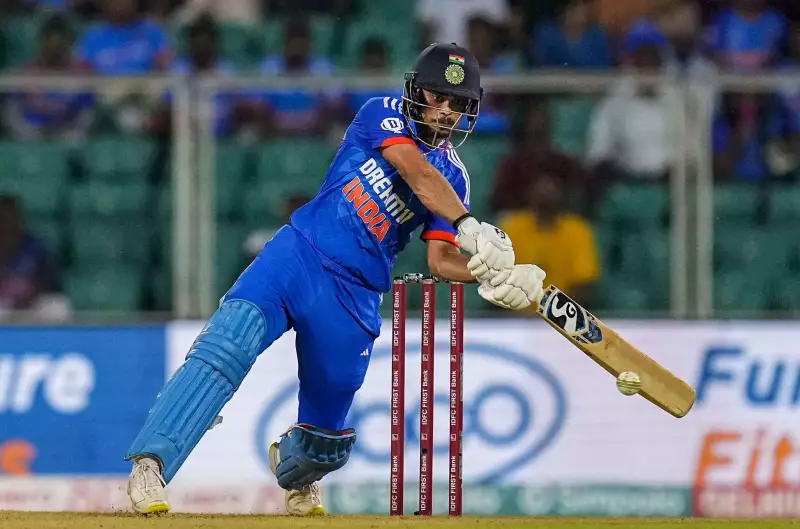
In a selection announcement filled with bold decisions, the return of Ishan Kishan to India's squad for the 2026 T20 World Cup stands out as a narrative of hard-earned redemption. While headlines focused on Shubman Gill's omission and Axar Patel's elevation to vice-captain, Kishan's inclusion marked a personal triumph over a challenging period that had once threatened his international career.
The Fall from Grace: A Series of Missteps
Just two years ago, Ishan Kishan was a fixture in India's white-ball plans. An aggressive left-handed batter capable of opening or playing in the middle order, he was viewed as a like-for-like backup for Rishabh Pant and even made his Test debut in July 2023 against the West Indies. However, his trajectory took a sharp downward turn.
In late 2023, Kishan cited personal reasons and mental fatigue to step away from India's tour of South Africa. The timing and explanation were poorly received. The situation worsened when he made himself unavailable for domestic cricket thereafter. The Board of Control for Cricket in India (BCCI) responded decisively by omitting his name from the central contracts list for 2024. In an unusually direct statement, the board emphasized that players must prioritize domestic cricket when not on national duty.

This action aligned with a warning from BCCI secretary Jay Shah to all centrally contracted players against prioritizing the IPL over domestic and national commitments. Kishan, along with Shreyas Iyer, became a visible example of this policy being enforced. India's then head coach Rahul Dravid stated Kishan needed to play domestic cricket to be considered again, while captain Rohit Sharma spoke about the necessity of hunger. In Kishan's absence, Dhruv Jurel seized his opportunity, debuting impressively in Tests.
The Silent Grind: The Road to Redemption
Instead of public rebuttals or emotional appeals, Kishan chose a path of quiet determination. He returned to his home state of Jharkhand and committed fully to domestic cricket. His 2024 IPL season with Sunrisers Hyderabad was a mixed bag—it began spectacularly with a century against Rajasthan Royals but yielded only 354 runs overall.
The true turning point came immediately after. Leading Jharkhand in the Syed Mushtaq Ali Trophy (SMAT), Kishan played with renewed clarity and purpose. He amassed 517 runs in just 10 innings, finishing as the tournament's highest run-scorer. His phenomenal campaign, which included two centuries and two fifties at a strike rate nearing 200, culminated in a match-winning century in the final against Haryana, powering Jharkhand to their maiden SMAT title.
A Comeback Forged in Performance, Not Sympathy
Two days after that triumphant final, the national selectors announced India's T20 World Cup squad. Kishan's selection was a cold, calculated decision based on team balance and specific needs. With India opting to open with a wicketkeeper-batter, the team required a second gloveman who could also take on the new ball. Sanju Samson is the first-choice keeper, but Kishan's ability to open edged out Jitesh Sharma for the backup role.
Chief selector Ajit Agarkar clarified that Shubman Gill's exclusion was due to a lack of runs and team balance in the T20 format, stressing it was not a long-term judgement. Kishan's words after his selection were tellingly simple—he spoke of happiness, Jharkhand's team effort, and avoided any talk of redemption. His selection was a reward for performance, not a sentimental gesture.
India's T20 World Cup Squad: Suryakumar Yadav (captain), Abhishek Sharma, Tilak Varma, Hardik Pandya, Shivam Dube, Axar Patel (vc), Kuldeep Yadav, Jasprit Bumrah, Arshdeep Singh, Harshit Rana, Sanju Samson (wk), Washington Sundar, Varun Chakravarthy, Ishan Kishan (wk), Rinku Singh.
Ishan Kishan's journey from being a cautionary tale about commitment to a World Cup hopeful underscores a fundamental sporting truth: performance, persistence, and timing can script the most compelling comebacks.