The Jaipur Connection to Cricket's Premier Trophy
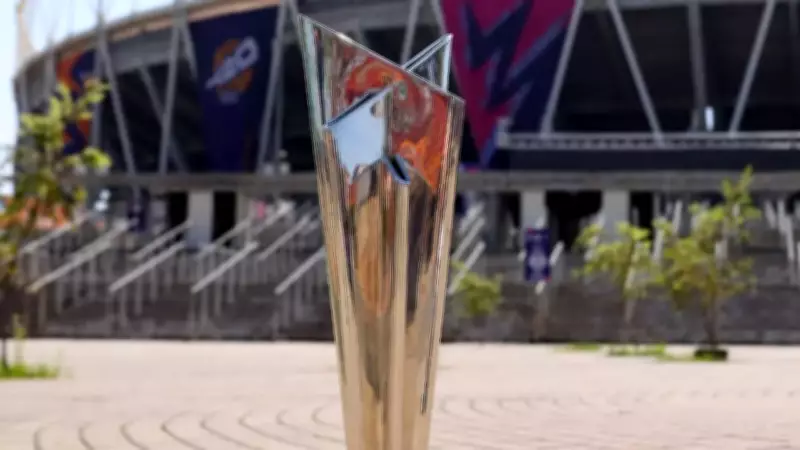
As global attention focuses on the ICC Men's T20 World Cup final, an intriguing backstory emerges about the tournament's iconic trophy, which has deep roots in Jaipur's craftsmanship. The prestigious award was meticulously crafted by Jaipur-based designer Amit Pabuwal, who transformed an initial design concept prepared by Australia's renowned design firm Minale Bryce into the physical trophy that now symbolizes T20 cricket excellence.
From Design Concept to Physical Reality
Amit Pabuwal revealed that the design outline for the T20 World Cup trophy was originally prepared in 2007, coinciding with the inaugural edition of the tournament. "Once the design outline was finalized, the International Cricket Council assigned me the work of making the trophy," Pabuwal explained to news agency PTI. "That is how the ICC T20 World Cup trophy was produced in 2007."
The designer's journey to this prestigious commission began with his creation of the world's largest silver "Friendship Cup" cricket trophy, which garnered significant attention within cricketing circles. This remarkable achievement ultimately led the ICC to approach Pabuwal for the T20 World Cup trophy project, recognizing his exceptional skill in trophy craftsmanship.

Technical Challenges and Material Innovation
The trophy's creation involved overcoming significant technical challenges. "The ICC had initially planned to create the trophy using a combination of titanium and glass so that the design would reflect the fast and modern style of T20 cricket," Pabuwal disclosed. However, this ambitious concept proved difficult to execute practically.
"Several prototypes were prepared, but the glass components repeatedly broke when being integrated with the metal structure, making the concept technically difficult to execute," he continued. "After several experiments, I advised that the combination would not work technically."
The final solution emerged through material innovation. The trophy was ultimately crafted from silver with platinum plating, ensuring both durability and aesthetic appeal suitable for an international sporting event of this magnitude. This combination guarantees the trophy's longevity while maintaining its visual splendor.
Trophy Specifications and Distribution
The completed trophy stands approximately 21 inches tall and weighs around six kilograms, featuring the distinctive silver-platinum construction. Pabuwal clarified an important detail about trophy distribution: "The original trophy is kept at the ICC headquarters, while the winning team receives an identical replica." This practice ensures the preservation of the original masterpiece while allowing champion teams to celebrate with an authentic reproduction.
India's Historic Pursuit in the Tournament
As the current tournament reaches its climax, India stands on the brink of achieving multiple historic milestones. The Indian cricket team aims to become:
- The first host nation to win the T20 World Cup
- The first side to successfully defend the T20 World Cup title
- The first team to win the tournament three times
India's impressive tournament history includes reaching the final four times, the highest number among all participating nations. Statistical analysis reveals interesting patterns: of the nine previous finals, six were won by the side chasing the target. Among the remaining three finals, India secured victory in two—both occurring in 2007 and 2024, with both matches being decided in the dramatic final over.
The craftsmanship behind the T20 World Cup trophy represents a fascinating intersection of international design collaboration and traditional Indian artistry, creating a symbol that now represents the pinnacle of achievement in cricket's fastest format.