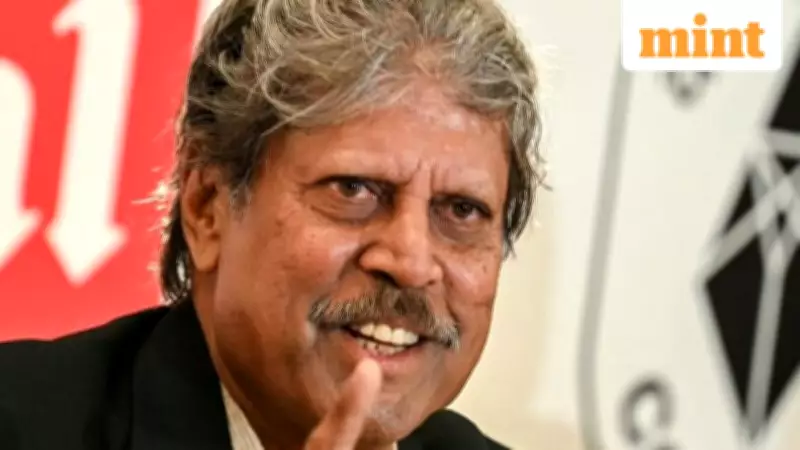
Kapil Dev Voices Disappointment Over Pakistan's India Match Boycott
Cricket icon Kapil Dev has expressed profound disappointment regarding Pakistan's decision to boycott the highly anticipated India match in the upcoming ICC T20 World Cup 2026. The Group A clash between the arch-rivals was scheduled to take place in Colombo on February 15, but Pakistan's government has officially prohibited their team from participating in the encounter.
Surprise and Sympathy for Pakistani Players
In an exclusive conversation with Mid-day, Kapil Dev revealed his surprise at what he described as a last-minute withdrawal by Pakistan. The legendary cricketer emphasized his sympathy for the Pakistani players who find themselves caught in this political crossfire.
"I'm a little surprised that Pakistan pulled out at the last moment. I feel sorry for the Pakistan players. They have not committed any mistake here," stated India's World Cup-winning captain, highlighting his belief that athletes should not bear the consequences of political decisions.

Historical Context of India-Pakistan Cricket Relations
Kapil Dev reflected on the cyclical nature of cricket relations between the two neighboring nations, drawing parallels to his own experiences. He recalled making his Test debut in Faisalabad back in 1978, a period that followed significant political tensions between India and Pakistan.
The cricket veteran noted that the current situation echoes past disruptions in bilateral cricket. Following the 1965 Indo-Pak War, which was triggered by Pakistan's Operation Gibraltar aimed at inciting insurgency in Kashmir, and the subsequent 1971 Bangladesh Liberation War where India emerged victorious under Field Marshal Sam Manekshaw's leadership, cricket between the two nations suffered immensely.
Nearly seventeen years passed without a Test series between India and Pakistan before cricket resumed with India's tour to Pakistan in 1978. Kapil Dev's debut occurred during this historic resumption of cricketing ties.
The Unfortunate Pattern Continues
According to Kapil Dev, such fluctuations have consistently characterized India-Pakistan cricket relations throughout history. While acknowledging that the present turmoil isn't unprecedented, he expressed regret for the players who are directly affected by these developments.
"Such things continue to happen. Politics is thy name. Cricket lovers will miss an Indo-Pak match, and we can't do much about it," he added with resignation, recognizing the disappointment this creates for millions of cricket enthusiasts across both nations.
Concerns About Pakistan's Cricket Future
During a discussion on NDTV, Kapil Dev expanded on his concerns, particularly focusing on the impact such decisions have on Pakistan's cricketing talent and future generations.
"One man's ego should not be bigger than the country. If one man thinks he can destroy Pakistan's talent, ability and cricket, I think it's wrong," asserted the cricket legend, emphasizing that individual decisions shouldn't overshadow national interests.
He distinguished between players voluntarily opting out and board-mandated withdrawals, noting that "if the board says you don't play, then the reputation of the country goes down." Kapil Dev further clarified that government-imposed restrictions represent "an entirely-different story altogether."
Worrying Implications for Pakistan's Cricket
While admitting uncertainty about the International Cricket Council's current stance on the matter, Kapil Dev expressed concern that "things were not looking very bright" for Pakistan cricket in the immediate future.
His most poignant remarks focused on the generational impact of such decisions: "You're killing the generation, the young boys who want to play for Pakistan tomorrow. Pakistan have given us fantastic talent over the years... Pakistan can't be proud of many things these days, last 15-20 years. But, I feel sorry for the next generation."

Kapil Dev's comments underscore the complex intersection of sports and politics, particularly in the context of one of cricket's most storied rivalries. His perspective as both a former player who experienced the resumption of India-Pakistan cricket and as a concerned observer adds depth to the ongoing discussion about how political decisions affect athletes and the sport's future development.