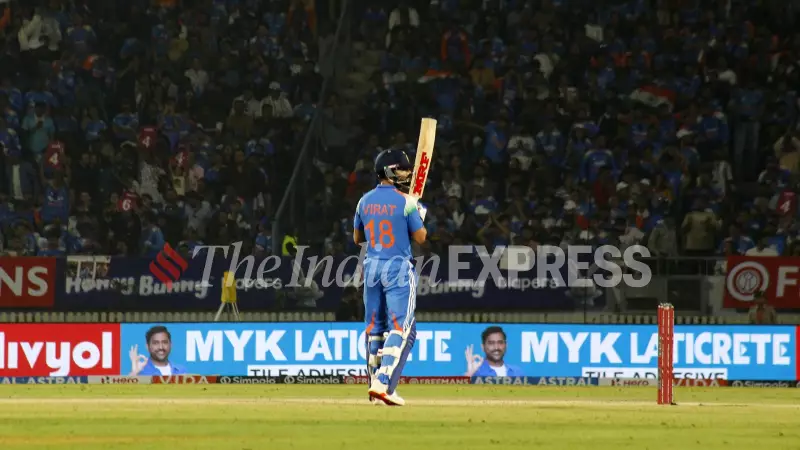
In a display of timeless batting, Virat Kohli silenced doubts about his ODI form with a commanding 93-run knock, steering India to a thrilling four-wicket victory over New Zealand in the first match of the three-game series. The encounter, held at the BCA stadium in Vadodara on Sunday, January 11, 2026, saw the host nation successfully chase down a target of 301, largely thanks to the former captain's composed innings.
A Phoenix Rises from the Ashes
Kohli's return to the international arena in October last year was marked by a pair of ducks against Australia, sparking concerns about a potential decline. However, the champion batsman has emphatically quashed those notions. His 91-ball 93 in Vadodara was not just a score; it was a statement—a deliberate and successful return to the classical methods that built his legendary career. Walking in at No. 3 after the early dismissal of Rohit Sharma, with India at 39/1 in the ninth over, Kohli took control of the chase with serene authority.
He forged a crucial 118-run partnership with Shubman Gill, who scored 56, effectively dismantling the New Zealand bowling attack. When Kohli finally departed, caught at mid-off off Kyle Jamieson's bowling, he had taken India to the brink of victory at 247/4 in the 39th over. His dismissal triggered a mini-collapse, but the foundation he laid was enough for KL Rahul and Harshit Rana to see the team home in the 49th over.

The Anatomy of a Classical Knock
This was not an innings of reckless aggression. It was a calculated, risk-averse masterclass in chasing. Kohli batted with emphatic precision, relying on cricketing shots played along the ground. Sublime on-drives, fierce cover drives, and an imperious pull shot regaled the Vadodara crowd. Even the occasional lofted shot felt like a tactical move to disrupt the bowler's length rather than a wild slog.
"If we were batting first, I'd have gone harder. The experience does kick in, but the main thing was to get the team ahead and to a winning position," Kohli explained after the match. His approach was clear: assess, build, and dominate without playing "outrageous shots." He reached his fifty in just 44 balls, showcasing a slight but significant shift in mindset where he now looks to dominate the powerplay rather than merely survive it.
Bowlers Forced into Reactive Mode
Kohli's aura and control forced the Black Caps' bowlers into constant reactive adjustments. Fields were shuffled, lengths were altered, but to little avail. He punished anything short or over-pitched with alarming consistency. The pressure was relentless, built not just by the runs but by the sheer inevitability of his march towards the target. His presence also allowed Shreyas Iyer, on his own comeback trail, to settle in and play a smart cameo of 49.
For New Zealand, Daryl Mitchell's 84, Tom Latham's 62, and Devon Conway's 56 had propelled them to a competitive 300/8. The pick of their bowlers was Kyle Jamieson, who took 4 for 41, including the prized wicket of Kohli. For India, Mohammed Siraj (2/40), Prasidh Krishna (2/60), and Harshit Rana (2/65) shared the bulk of the wickets.
Ultimately, the night belonged to Virat Kohli. His 93-run ode to his classical self was a potent reminder of his genius and a crucial contribution that gave India a 1-0 lead in the series. The innings proved that faith in fundamental, time-tested methods can still triumph in the modern game.