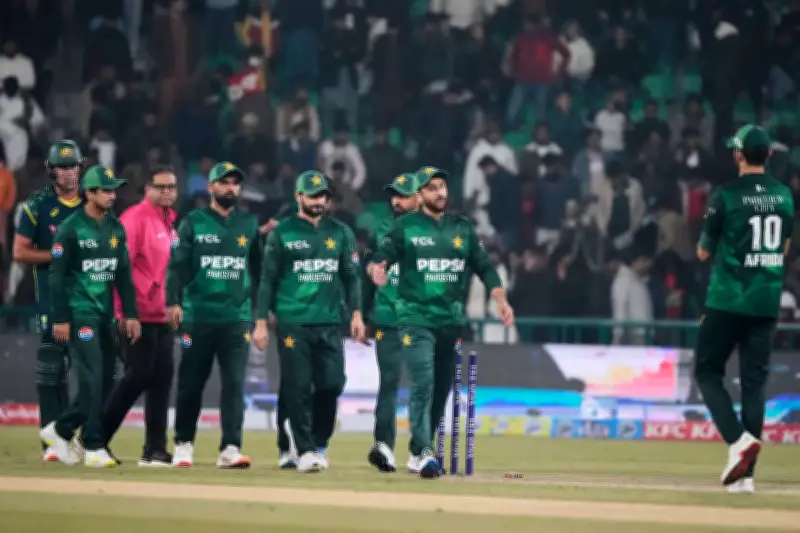
Former Pakistan cricket captain Rashid Latif has significantly moderated his previous position regarding a potential boycott of the upcoming T20 World Cup, acknowledging that the optimal timing for such a dramatic protest has now elapsed. The ex-wicketkeeper-batsman, while dismissing the possibility of a complete tournament withdrawal, has proposed an alternative form of demonstration. He suggests that the Pakistan national team could still participate in the global event but choose to forfeit any scheduled matches against their arch-rivals, India.
Government Decision Over Cricket Board
Latif emphasized that any directive to abstain from playing India must originate from the Pakistani government itself, rather than the Pakistan Cricket Board (PCB). He stated clearly that the cricket board lacks the ultimate authority for such a politically charged decision. "If the government says we won't play against India, the ICC will have to accept it," Latif asserted during an interview. "If they don't, that's where the real confrontation begins." When questioned about a hypothetical scenario where India and Pakistan were to meet in the tournament final, Latif's response was unequivocal: "nahi khelenge" (we won't play).
Missed Opportunity for a Full Boycott
The former skipper had initially advocated for Pakistan to boycott the entire T20 World Cup as a means to challenge what he perceives as India's disproportionate influence over international cricket governance. However, on Wednesday, he conceded that this window of opportunity closed when the PCB failed to act immediately following the controversial exclusion of Bangladesh from the event. "The time for a strike has passed," Latif declared on the YouTube channel CaughtBehind. "Every decision has a timing. When the iron is hot, that's when you strike. That time was last week during the ICC meeting."

Bangladesh was replaced by Scotland in the tournament lineup after fourteen votes went against their participation. The International Cricket Council cited logistical complexities and contractual issues as the primary reasons for this decision. While Pakistan publicly supported Bangladesh during the voting process, they ultimately acquiesced to the ICC's final ruling. "We showed our support. We voted for them. That chapter is over," Latif explained. "If we boycott now, it won't have the same impact."
PCB's Ambiguous Position and Tournament Logistics
Earlier this week, PCB Chairman Mohsin Naqvi had hinted that the board might consider taking a principled stand similar to Bangladesh's situation, yet no formal announcement materialized. Meanwhile, the T20 World Cup is confirmed to proceed with Pakistan's participation under a hybrid model. Notably, all matches involving the Indian cricket team are scheduled to be held at neutral venues, an arrangement that is set to continue until at least 2027.
This development highlights the ongoing geopolitical tensions that frequently spill over into the sporting arena, particularly between the two South Asian cricketing giants. Latif's revised proposal reflects a pragmatic, albeit still contentious, approach to registering protest while ensuring Pakistan's presence on the global cricket stage.