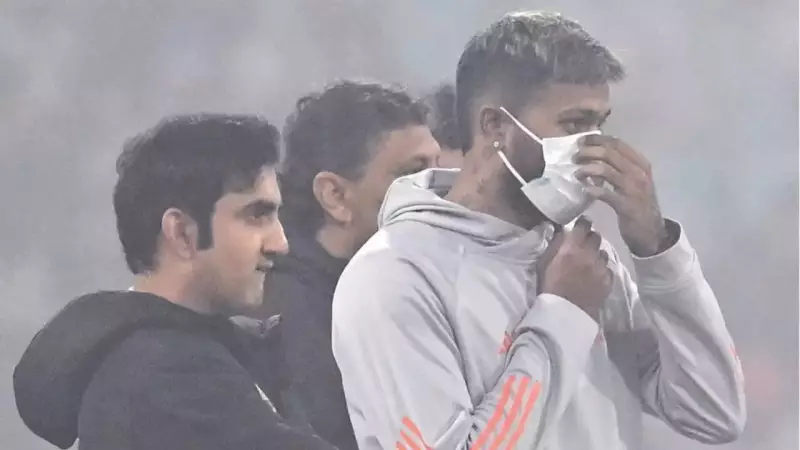
The much-anticipated fourth T20 International between India and South Africa at Lucknow's Ekana Cricket Stadium met a dismal fate on Wednesday, as hazardous levels of smog forced the complete abandonment of the match without a single delivery being bowled. The decision highlighted a recurring and dangerous problem plaguing winter cricket in North India.
A Match Lost in the Haze
What started with a delayed toss quickly descended into a familiar and frustrating scenario. A thick, grey blanket of smog enveloped the stadium from late afternoon, causing visibility to deteriorate rapidly. Despite six separate inspections conducted by umpires KN Ananthapadmanabhan and Rohan Pandit over more than two hours, conditions were deemed unsafe for play. In consultation with match referee Richie Richardson, the officials had no choice but to call off the game.
The visuals were stark. Stadium floodlights glowed hazily through the dense pollution, with the far end of the ground almost invisible. Fielding, especially in the deep, would have been perilous guesswork. In a sport where reactions are measured in split-seconds and bowlers deliver at high speeds, such compromised visibility is not just an inconvenience—it is a genuine safety hazard.

Adding scientific weight to the decision, the Air Quality Index (AQI) in Lucknow's Ahimamau area, where the stadium is located, remained between 400 and 500 throughout the evening—a level classified as 'severe' and hazardous to health. The severity was underscored by Indian all-rounder Hardik Pandya, who was seen wearing a surgical mask during the team's warm-up.
A Predictable and Recurring Crisis
While the abandonment itself was unavoidable, it reignited a critical and uncomfortable debate: why does international cricket continue to be scheduled in North India from late November through January? Cities like Delhi, Lucknow, Dharamshala, Jaipur, Chandigarh, and Mohali routinely battle dense fog, biting cold, and dangerously polluted air during this period. This is no longer an occasional anomaly but an annual certainty.
The Board of Control for Cricket in India (BCCI) has long advocated spreading matches across regions to ensure equitable access for fans and state associations. While the principle is sound in theory, its practical application seems increasingly disconnected from on-ground realities. Well-documented climate patterns and pollution cycles make scheduling high-profile fixtures during peak smog season appear more like a reluctance to adapt than mere bad luck.
The evidence extends beyond international matches. Domestic Ranji Trophy games in December are frequently delayed, curtailed, or abandoned in northern centres due to fog and poor light, distorting competition and outcomes.
The Human Cost and Available Solutions
The human impact of playing in such conditions has been visibly distressing. In a notorious incident during a December 2017 Test against Sri Lanka in Delhi, fast bowler Mohammed Shami was seen vomiting on the field and later complained of chest discomfort while bowling in toxic smog. A 2019 T20I against Bangladesh in Delhi was also played under alarmingly poor air quality, with visibly uncomfortable players.
What makes the persistent scheduling in these regions more puzzling is the availability of viable alternatives. India boasts numerous world-class stadiums in areas far less affected by winter pollution, including:
- Ahmedabad, Mumbai, Chennai, Bengaluru, Hyderabad
- Coastal centres like Thiruvananthapuram
These venues offer better air quality, milder winters, and significantly more reliable playing conditions during the same period. Ironically, Ahmedabad is set to host the fifth and final T20I of this very series on Friday, demonstrating that better planning is possible within the same tour. India currently leads the five-match series 2-1.

The abandonment in Lucknow must not be dismissed as an unfortunate one-off. It is a stark warning signal. With cricket calendars planned years in advance and ample data available on weather and pollution trends, there is a pressing need for the BCCI to re-evaluate its scheduling philosophy to prioritize player safety and the integrity of the sport.